Dr. William Foege, a renowned figure in global health and instrumental in the eradication of smallpox, passed away on March 11, 2023, at the age of 89. His death was confirmed by the Task Force for Global Health, an organization he co-founded to improve health conditions worldwide.
Foege, who stood at an imposing 6 feet 7 inches, was known for his sharp intellect and calm approach to public health challenges. His career included a pivotal role as director of the U.S. Centers for Disease Control and Prevention (CDC) from 1977 to 1983. He also held significant positions in international health organizations, where he focused on combating infectious diseases.
His most notable achievement was the development of a strategy that led to the successful eradication of smallpox, a disease that historically claimed the lives of approximately one-third of those infected. Before Foege’s interventions, smallpox vaccination campaigns were already in place, but the disease persisted in several parts of the world.
While serving as a medical missionary in Nigeria during the 1960s, Foege and his colleagues devised the “ring containment” method. This approach involved identifying smallpox cases and vaccinating everyone who had come into contact with the infected individuals. Foege emphasized that this method was necessary due to the limited availability of vaccines at the time. His strategy not only proved effective but became a crucial component in the global campaign to eliminate smallpox.
The last naturally occurring case of smallpox was recorded in Somalia in 1977, and the World Health Organization (WHO) officially declared the disease eradicated in 1980. Dr. Tom Frieden, former CDC director, remarked, “If you look at the simple metric of who has saved the most lives, he is right up there with the pantheon. Smallpox eradication has prevented hundreds of millions of deaths.”
Born on March 12, 1936, in Colville, Washington, Foege was inspired to pursue medicine at the young age of 13 while working at a local drugstore. He earned his medical degree from the University of Washington in 1961 and later obtained a master’s degree in public health from Harvard University in 1965.
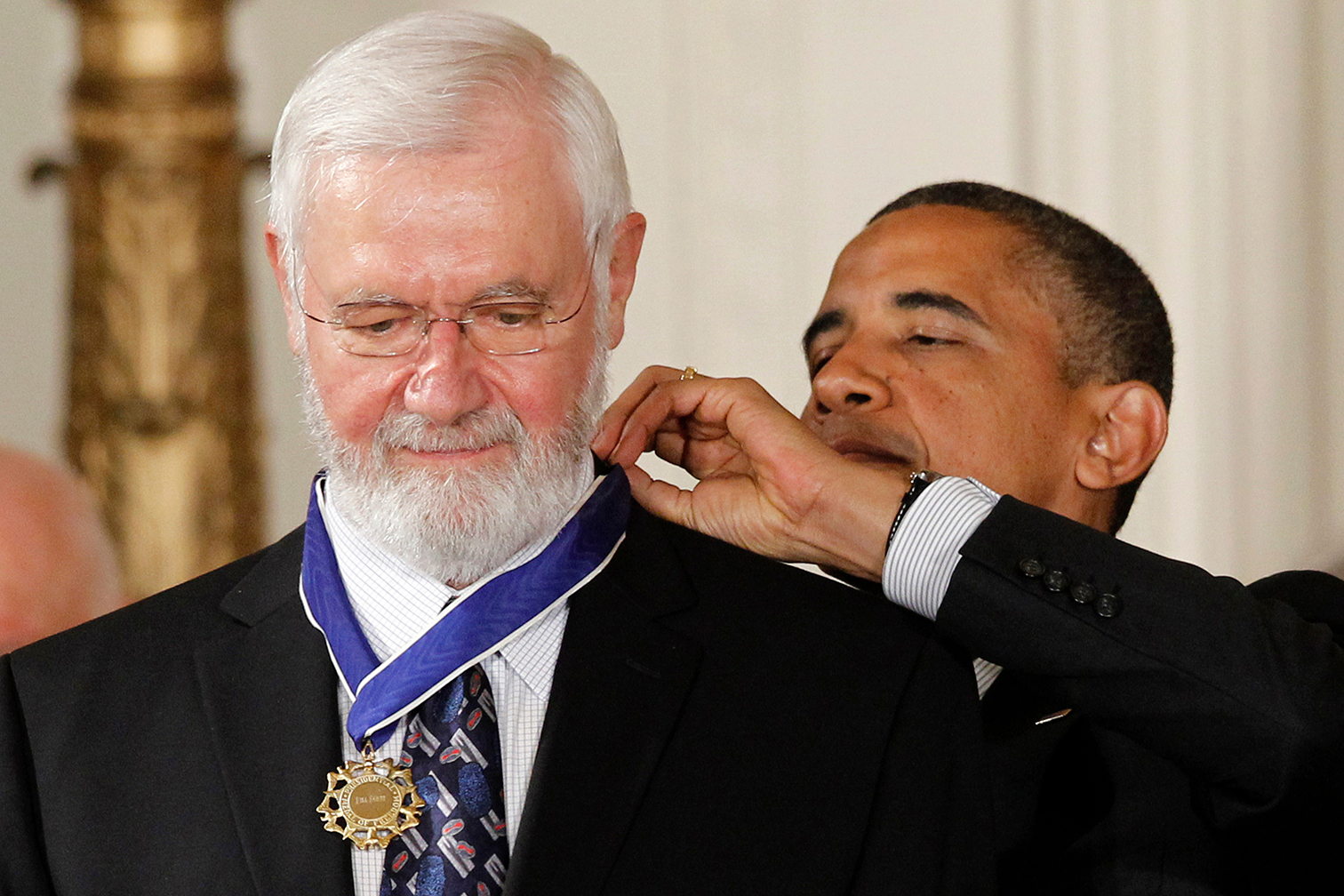
After his tenure at the CDC, Foege continued to make significant contributions to global health as the executive director at The Carter Center and as a senior fellow at the Bill and Melinda Gates Foundation. His dedication to improving public health earned him numerous accolades, including the Presidential Medal of Freedom, awarded by President Barack Obama in 2012.
In a statement honoring Foege, Dr. Patrick O’Carroll, CEO of the Task Force for Global Health, described him as having an “unflagging commitment to improving the health of people across the world.” He added, “We try to honor that commitment in every one of our programs, every day.”
Foege’s legacy as a pioneer in public health will endure, inspiring future generations to continue the fight against infectious diseases and improve global health standards.