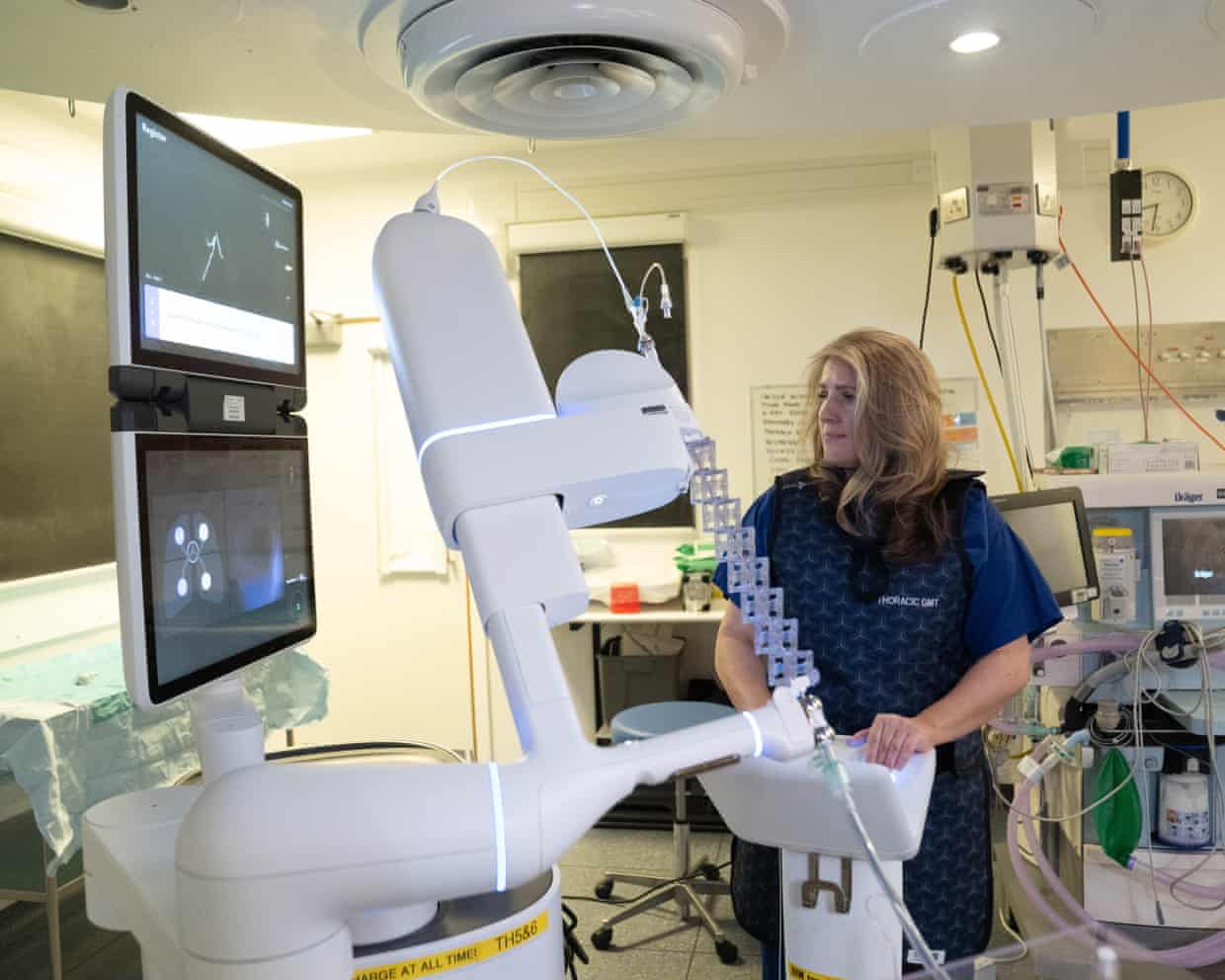
NHS England is initiating a trial that will utilize artificial intelligence (AI) and robotic technologies to enhance the detection and diagnosis of lung cancer, a disease that claims approximately 33,100 lives annually in the UK. This initiative aligns with the health service’s commitment to provide lung cancer screening to all smokers and ex-smokers by 2030, a move projected to lead to the diagnosis of an estimated 50,000 lung cancers by 2035, with about 23,000 cases identified at an early stage.
This trial is crucial as lung cancer remains the leading cause of cancer-related deaths in the UK, reflecting the historical prevalence of smoking. The government is prioritizing lung cancer in its forthcoming national cancer plan due to the stark health disparities associated with the disease. It disproportionately affects individuals in lower socioeconomic groups, contributing significantly to the nine-year gap in life expectancy between England’s wealthiest and least affluent areas.
At the heart of the trial, which will take place at Guy’s and St Thomas’ NHS trust in London, AI software will analyze lung scans to identify small nodules that may be cancerous, some as tiny as 6mm, roughly the size of a grain of rice. Following this analysis, a robotic camera will guide miniature biopsy tools to extract tissue samples for laboratory analysis, a method expected to offer greater precision than traditional techniques.
“This is a glimpse of the future of cancer detection,” stated Prof Peter Johnson, NHS England’s national clinical director for cancer. The hope is that this advanced approach will enable earlier treatment, enhancing patients’ chances of survival.
NHS England has indicated that if proven effective, this technology could revolutionize lung cancer diagnosis, particularly as the screening program identifies more patients with small nodules that typically go unnoticed until later stages. “For many patients, weeks of repeat scans and procedures could be replaced with a single half-hour cancer biopsy, reducing prolonged uncertainty and avoiding more invasive surgery,” the organization noted.
The team conducting the trial has previously performed approximately 300 robotic biopsies, resulting in 215 patients receiving cancer treatment. “Lung cancer is the leading cause of cancer death in the UK, but diagnosing it at an earlier stage can significantly improve people’s chances of survival,” said Michelle Mitchell, chief executive of Cancer Research UK. She emphasized the potential of such new technologies, advocating for rapid testing to ensure their accuracy and benefit to patients.
As the NHS moves towards integrating AI and robotic assistance into healthcare, the ongoing trial represents a significant step forward in addressing one of the most pressing public health challenges. By leveraging innovative technology, the aim is to not only improve diagnosis but ultimately save lives and reduce health inequalities across the UK.