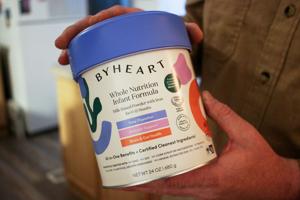
Two companies are at the center of an investigation involving dried milk powder that may have contributed to a botulism outbreak linked to ByHeart infant formula, which has affected 51 infants across 19 states. Officials from the U.S. Food and Drug Administration (FDA) confirmed that the organic whole milk powder in question tested positive for Clostridium botulinum, the bacteria responsible for botulism. The powder was produced by Organic West Milk Inc., based in California, and processed at a facility operated by Dairy Farmers of America in Fallon, Nevada.
The specific source of the contamination remains undetermined. Bill Van Ryn, an owner of Organic West Milk, indicated that he was informed last week about a positive test result for the bacteria from a sample of his company’s milk powder collected by the FDA. However, he emphasized that this does not definitively identify his product as the outbreak’s source. “Nothing has been proven about our milk yet,” he stated, highlighting that issues may have arisen during the conversion of liquid milk into powder and subsequently into infant formula.
Investigation and Immediate Responses
Organic West Milk, which sources milk from approximately 55 farmers, has ceased sales of the affected powder intended for baby products until further clarity is achieved regarding the outbreak. The company does not sell organic whole milk powder to any other infant formula manufacturers aside from ByHeart, according to Van Ryn.
The processing of powdered milk involves pasteurizing liquid milk, concentrating it through evaporation, and then spraying it into a hot chamber to create dry particles. The Dairy Farmers of America stated that their Nevada facility processes around 1.5 million pounds of raw milk daily, yielding about 250,000 pounds of whole milk powder. They confirmed that Organic West was the source of the milk for the FDA’s positive test sample, but asserted that the processed powder met all required safety tests.
In a statement, the Dairy Farmers of America emphasized the responsibility of product manufacturers to properly handle ingredients to ensure safety for consumers. The FDA noted on January 23, 2024, that the sample of organic whole milk powder collected from a supplier was linked genetically to a sample taken from finished ByHeart formula. Additionally, the bacteria was also identified in an unopened can of ByHeart formula, which matched a sample from an affected infant.
Health Implications of Botulism
Botulism spores are ubiquitous in the environment and often found in low levels in various foods. According to Kristin Schill, a botulism expert at the University of Wisconsin-Madison, healthy adults regularly consume these spores without falling ill. However, infants possess immature digestive systems that may allow the spores to germinate, leading to the production of a toxin that can result in paralysis and potentially death.
Although pasteurization is effective against many pathogens, it does not eliminate all spores. Past incidents have identified botulism spores in infant formula, but this outbreak marks the first significant incidence linked to such products. The risk of contamination has historically been deemed low, which is why routine testing for botulism in infant formula is not mandatory, though some manufacturers conduct voluntary screenings for signs of microbiological contamination.
The FDA continues to investigate the outbreak, and ByHeart has recalled all its products as a precautionary measure. As the situation develops, both Organic West Milk and Dairy Farmers of America remain committed to ensuring product safety and transparency.
The Associated Press Health and Science Department is supported by the Howard Hughes Medical Institute’s Department of Science Education and the Robert Wood Johnson Foundation. The AP is solely responsible for all content.