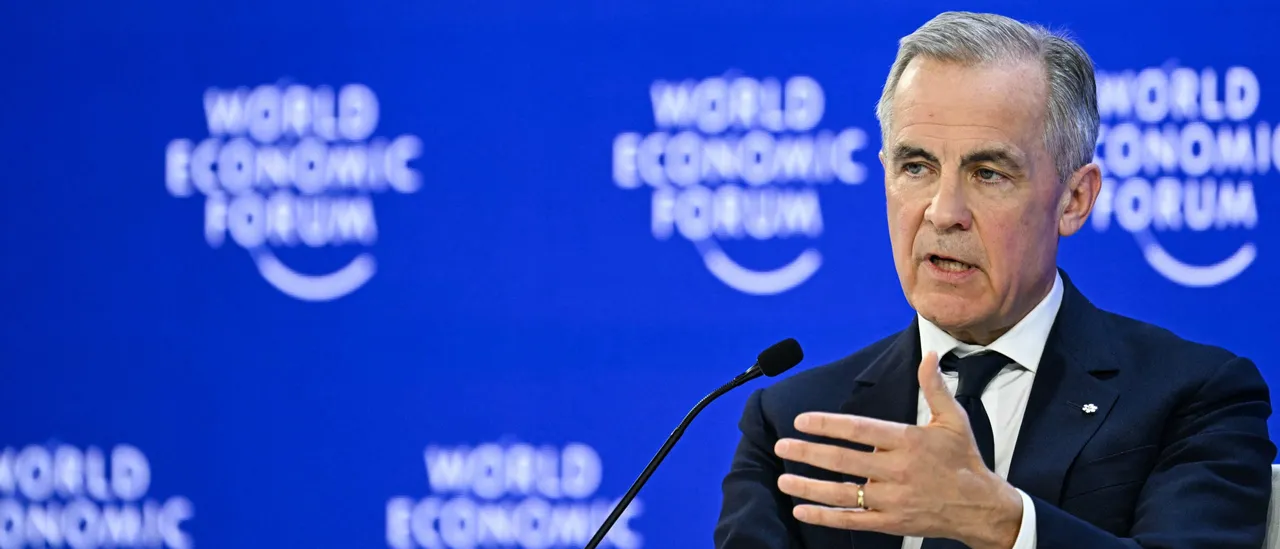
Canadian Prime Minister Mark Carney has publicly endorsed President Donald Trump’s nomination of Kevin Warsh to succeed Jerome Powell as Chairman of the Federal Reserve. Trump announced Warsh’s nomination on January 30, 2026, via a post on Truth Social, stating that he would be remembered as “one of the GREAT Fed Chairmen, maybe the best.” Carney described Warsh as “a fantastic choice to lead the world’s most important central bank at this crucial time” in a statement shared on X.
Carney, a prominent member of the Liberal Party of Canada, has a long-standing relationship with Warsh, having recruited him for a significant review of the Bank of England’s transparency during his tenure as governor from 2013 to 2020. The two have collaborated closely over the years, and Carney’s endorsement carries considerable weight given his experience in global economic governance.
During his recent visit to Beijing, Carney highlighted a “new strategic partnership” with China, which focuses on energy, agri-food, and trade. He expressed optimism about the leadership of Chinese President Xi Jinping and the swift progression of Canada-China relations. Carney’s remarks came shortly before Trump threatened to impose a 100% tariff on Canada if it pursued deals with China, referring to Carney as “Governor” in his post.
Warsh served on the Federal Reserve’s Board of Governors from 2006 to 2011 and is currently the Shepard Family Distinguished Visiting Fellow in Economics at the Hoover Institution, as well as a lecturer at the Stanford Graduate School of Business. His extensive background in economics and governance makes him a notable figure in discussions surrounding U.S. monetary policy.
The endorsement from Carney, who is known for his liberal stance and international engagement, raises questions about the dynamics of U.S.-Canada relations and the potential implications of Warsh’s leadership at the Federal Reserve. As the world continues to navigate economic recovery amidst geopolitical challenges, Warsh’s nomination could play a pivotal role in shaping monetary policy in the coming years.
While Warsh could not be reached for immediate comment, the response to his nomination has garnered significant attention from both sides of the political spectrum. The upcoming confirmation process will likely examine his views on inflation, interest rates, and economic stability, especially in light of his previous tenure at the Fed.
As the nomination process unfolds, the international community will be watching closely to see how Warsh’s leadership could influence global economic policy, particularly in relation to Canada and China.