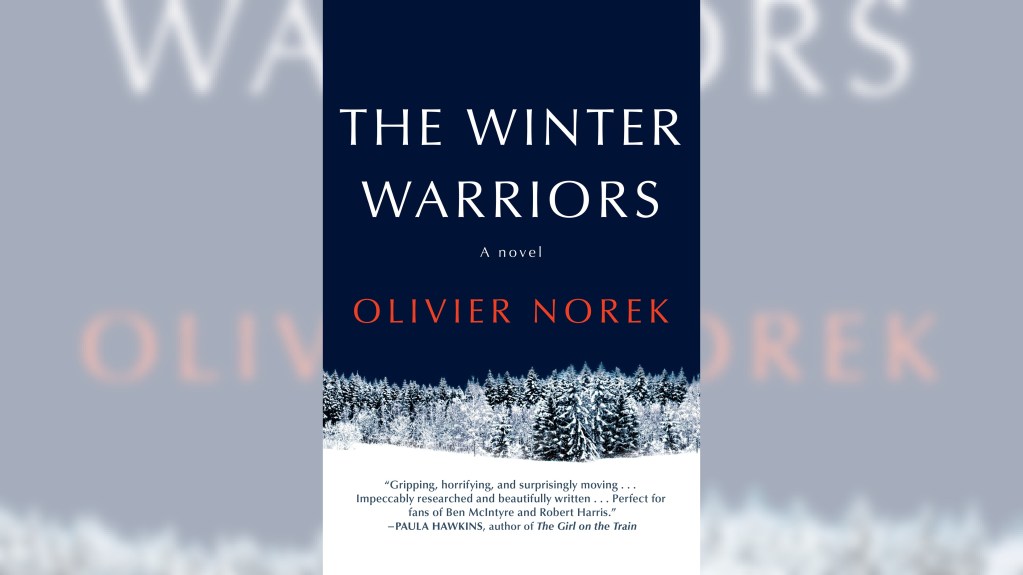
A new novel titled “The Winter Warriors” by French author Olivier Norek has been released this week, drawing parallels between historical events and contemporary conflicts. Translated from French by Nick Caistor, the book recounts the harrowing tale of the Soviet Union’s invasion of Finland in 1939, known as the Winter War. This narrative of resilience amid overwhelming odds resonates strongly with current global events, particularly the ongoing conflict in Ukraine.
Set against a backdrop of severe winter conditions, the story illustrates how a small, newly independent nation was subjected to brutal military aggression. Over a span of 100 days, Finland faced a staggering assault, with the Soviet forces firing more than 20 million artillery shells. In a striking detail, Norek notes that Finland’s total supply of artillery was equal to what the Soviets could fire in a single day.
Faced with an army of tanks and vastly superior firepower, the Finnish people were determined to defend their homeland. Despite lacking adequate weapons and uniforms, they rallied to form a defense against the invading forces. A central figure in this resistance was Simo Häyhä, a sniper whose extraordinary effectiveness earned him the nickname “the White Death.” His contributions were pivotal in slowing the Soviet advance, showcasing the unexpected strength of a seemingly outmatched nation.
Norek, a former police officer turned crime writer, has conducted extensive research to ensure the accuracy of the historical events depicted in the novel. He has drawn upon archival materials, interviews, and historical accounts to present a narrative that emphasizes both clarity and authenticity. The author’s note at the beginning of the book stresses that “none of the battle scenes has been invented,” underscoring the commitment to factual representation.
In a recent interview, Nick Caistor shared his thoughts on translating Norek’s work. He noted the challenges of capturing the complex emotions of characters like Simo Häyhä and the bewildered Russian soldiers. “Translating it was a real pleasure,” Caistor remarked, highlighting the depth of Norek’s research and the emotional weight of the story.
The translation aims to maintain an English that is both accurate to its time and relevant to modern readers. Caistor focused on using a neutral tone, which was facilitated by the precision of Norek’s original French text. He emphasized the book’s relevance, stating it serves as a stark reminder of the destructive consequences that arise from the belief in the superiority of might over justice.
As global readers engage with “The Winter Warriors,” they may find echoes of current struggles, particularly in light of Russia’s invasion of Ukraine. The themes of resilience and the fight against oppression are timeless and resonate deeply in today’s context.
Caistor has also translated several of Norek’s previous works, including the popular Captain Coste trilogy, and expressed enthusiasm for the broader impact of translated literature. He encouraged readers to explore various genres and translations, as they can provide unique insights into different cultures and experiences.
As the book hits shelves, it invites readers not only to reflect on a turbulent chapter of history but also to consider the ongoing challenges faced by nations across the globe. In a world where the lessons of the past continue to unfold, “The Winter Warriors” serves as a poignant reminder of the enduring human spirit in the face of adversity.