
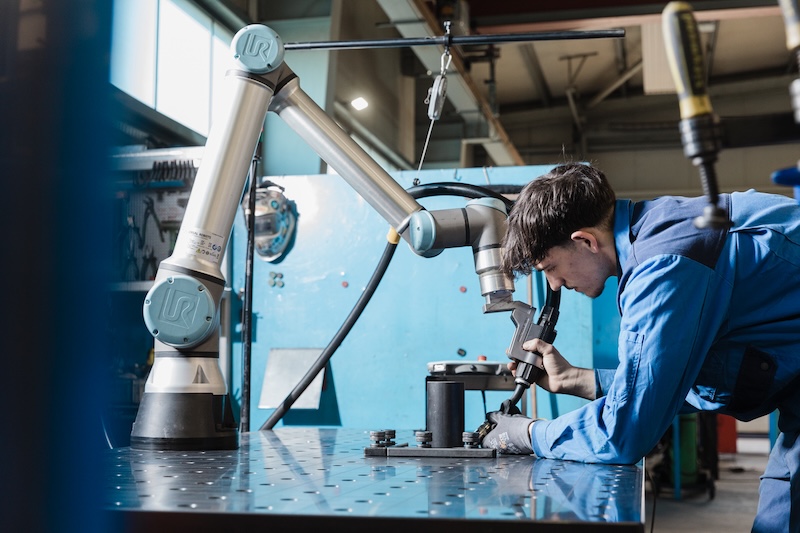
The robotics industry stands on the brink of a significant transformation, driven by advancements in artificial intelligence. In a recent overview, Anders Billesø Beck, Vice President of AI Robotics Products at Universal Robots, outlined four key predictions for the future of robotics, particularly focusing on the years leading up to 2026. These predictions highlight trends that could reshape how robots function and cooperate in various environments.
Billesø emphasizes the importance of smarter algorithms as a cornerstone of this evolution. Enhanced computational capabilities will enable robots to process data more efficiently and make real-time adjustments during operation. This improvement will not only increase productivity but also enhance safety protocols within industrial settings. As robots become more adept at interpreting their surroundings, the potential for collaborative work alongside human counterparts expands significantly.
Cooperative Behaviors and Human-Robot Interaction
An essential aspect of future robotics is the development of cooperative behaviors. Billesø suggests that robots will increasingly work together, sharing data and tasks seamlessly. This interconnectivity will allow for more complex operations to be carried out, particularly in environments such as manufacturing and logistics.
The ability for robots to communicate and collaborate will also lead to improved human-robot interaction. As robots become more intuitive in understanding human actions and intentions, they will be able to assist workers more effectively. This relationship will not only boost efficiency but also foster a safer workplace environment, as robots can take on tasks that may pose risks to human workers.
The Role of AI in Robotics Advancement
According to Billesø, the integration of artificial intelligence will be a game changer for the robotics industry. AI will enhance the decision-making capabilities of robots, enabling them to learn from experiences and adapt to new tasks without extensive programming. This shift towards autonomous learning will reduce operational downtime and increase overall productivity.
Moreover, the implications of AI in robotics extend beyond mere task execution. Billesø foresees a future where robots can analyze complex data sets, providing valuable insights for businesses. This capability will empower organizations to make informed decisions based on real-time data, optimizing their processes and resource allocation.
In summary, the robotics industry is poised for significant advancements by 2026, driven by smarter algorithms, enhanced cooperation, and the growing role of artificial intelligence. As Universal Robots continues to innovate, the potential for robots to create value in various sectors becomes increasingly apparent. With these predictions, the future of automation looks promising, setting the stage for a new era of efficiency and collaboration in the workplace.


