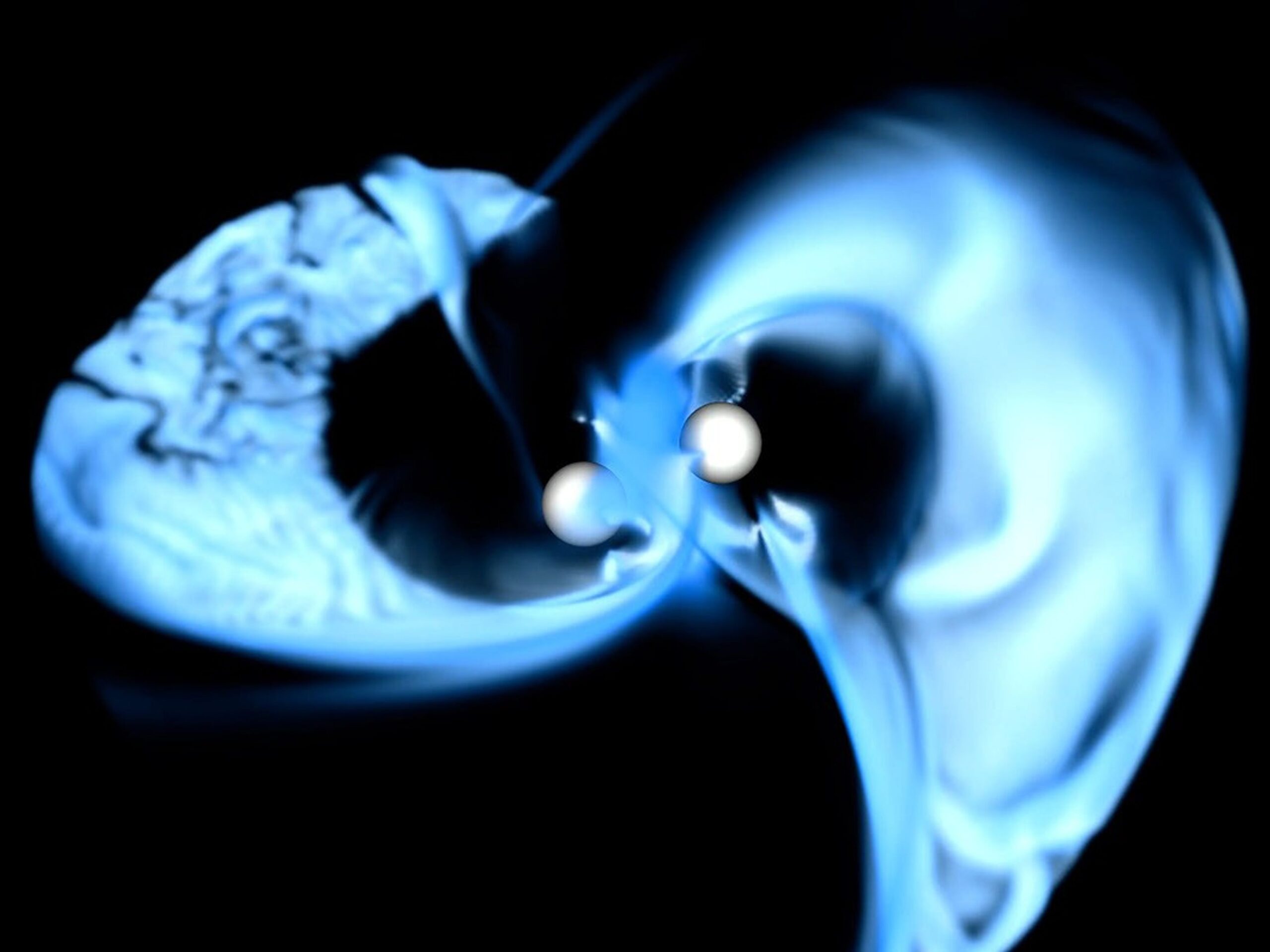
NASA has made significant strides in understanding the events leading up to the collisions of neutron stars, a phenomenon that has intrigued astrophysicists for decades. Researchers utilized data from gravitational waves and electromagnetic radiation to analyze what takes place mere milliseconds before these cosmic events occur. The findings were detailed in a study published in The Astrophysical Journal in October 2023.
New Insights into Neutron Star Collisions
Neutron stars are incredibly dense remnants of massive stars that have undergone supernova explosions. When two neutron stars collide, they can produce various cosmic phenomena, including gravitational waves and heavy elements essential for the universe’s evolution. Understanding the dynamics leading to these collisions is crucial for astrophysics, as it sheds light on the fundamental processes that govern these celestial bodies.
The research team, including scientists from NASA and the University of California, Berkeley, focused on the behavior of neutron stars in the moments leading up to their merger. Using advanced simulations, they were able to observe the gravitational interactions and the emission of electromagnetic radiation, providing a clearer picture of the pre-collision environment.
This study is particularly important because it offers a glimpse into the conditions that lead to the creation of gravitational waves, which were first detected in 2015. The ability to predict these waves is crucial for future observations and understanding the broader implications of neutron star collisions.
Implications for Future Research
The implications of this research extend beyond theoretical astrophysics. By understanding the processes occurring milliseconds before neutron star collisions, scientists can improve models for predicting the resulting gravitational waves. This knowledge can enhance the capabilities of observatories worldwide, allowing them to capture these rare cosmic events more effectively.
Moreover, the findings could influence how astrophysicists approach the study of other stellar interactions and the formation of heavy elements in the universe. As neutron star mergers are responsible for creating elements such as gold and platinum, gaining insights into their collisions can enhance our understanding of elemental formation.
NASA’s ongoing research into neutron stars and their collisions exemplifies the agency’s commitment to unraveling the mysteries of the universe. As technology advances and observational capabilities improve, the potential for new discoveries in astrophysics continues to grow.
As researchers build upon these findings, the scientific community is eager to see how these insights will shape our understanding of the universe and the fundamental forces at play within it. The study marks a crucial step forward, paving the way for future investigations into the enigmatic life cycles of neutron stars and their dramatic interactions.