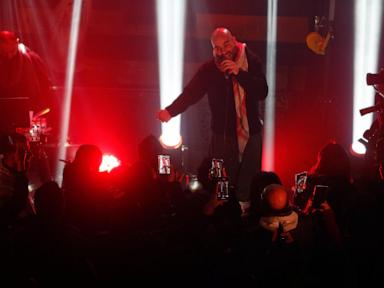
Hani Al Sawah, the Syrian rapper known by his stage name Al Darwish, returned to his home city of Damascus for the first time in 13 years, marking a significant moment in his personal and artistic journey. After performing politically charged songs on January 16, 2025, Al Sawah expressed his disbelief and joy at being back in Syria, a country he left in 2012 amidst the turmoil of civil war.
The atmosphere at his sold-out concert was electric, with fans singing along to every lyric. “Never in my wildest dreams did I think I could ever return to Syria,” Al Sawah told The Associated Press after the show. His music, which gained traction during the ongoing conflict, resonated with many Syrians both inside and outside the country, reflecting their struggles and aspirations.
From Exile to Homecoming
Al Sawah’s journey began in Homs, where he discovered rap music in 2001. He became part of an underground scene, using music to voice dissent against the oppressive regime of Bashar Assad. His lyrics celebrated the spirit of the 2011 protests that swept Syria, and after fleeing to Lebanon and later Germany, he continued to produce music that challenged the status quo.
Despite the fall of the Assad dynasty in December 2024, Al Sawah hesitated to return for over a year. He wanted to reconnect with his roots and evaluate the changes in Syria. “What happened here were fast and sudden changes, and we’re only talking about Damascus,” he remarked, acknowledging the contrasting state of other cities like Aleppo and Homs, which suffered extensive destruction during the war.
Confronting New Realities
Upon returning, Al Sawah found a lingering atmosphere of fear among the populace regarding the new authorities. He noted that this apprehension was a remnant of decades spent under Assad’s regime. “If we want to say that the regime really did fall, then so should this fear,” he asserted.
His concerns extended beyond apprehension about the new political landscape. Al Sawah expressed alarm over rising sectarian violence that has plagued the country since the regime’s collapse. He criticized both the previous and current governments for their role in escalating tensions. “If you can justify what happened on the coast — which of course you can’t — by saying they were armed (Assad) loyalists and so on, then you cannot justify what happened in Sweida,” he stated, referring to violent incidents involving various religious groups.
During his performances, Al Sawah honored victims from affected regions, including the coastal province and Sweida. He was heartened by the audience’s positive response, which fueled his hope for reconciliation and healing within the country.
Al Sawah’s return to Syria is not just a personal milestone; it symbolizes a broader narrative of resilience and the yearning for change in a nation that has endured years of conflict. As he looks towards the future, he remains committed to using his music as a tool for social commentary and unity in a time of transition.