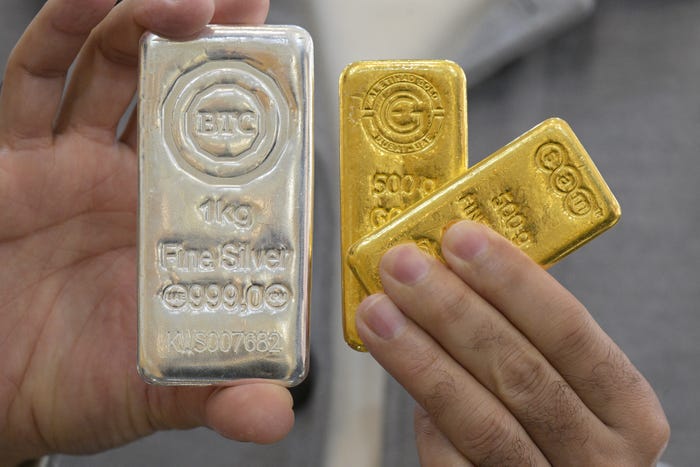
URGENT UPDATE: Hedge funds are swiftly exiting precious metals as gold and silver prices plunge dramatically. Positioning data reveals a significant shift from metals to energy markets, coinciding with a surge in volatility that has left investors reeling.
As of 12:56 a.m. ET on Tuesday, spot gold was trading around $4,829 per troy ounce, marking a staggering decline of over 10% from its recent peak above $5,500. Meanwhile, silver prices fell to approximately $83.40 per ounce, over 30% lower than its record high of more than $121. This swift downturn has stunned market observers, particularly as hedge funds had begun reallocating their investments away from precious metals prior to the crash.
The latest data from the Commodity Futures Trading Commission’s weekly Commitments of Traders report highlights this trend. The report, released every Friday, indicates that hedge funds significantly reduced their long positions in metals like gold, silver, and platinum, as volatility escalated. Ole Hansen, head of commodity strategy at Saxo Bank, stated that funds were pivoting toward energy markets, where oil prices have recently shown resilience after years of pressure due to oversupply and weak demand growth.
With geopolitical tensions rising, especially following the Trump administration’s actions in Venezuela and renewed concerns with Iran, US West Texas Intermediate crude oil futures are trading at around $62 per barrel, up by 8% this year. Long positions in crude oil futures have surged to their highest levels since August, while net long silver positions have plummeted to a two-year low.
Hansen noted that the drastic pullback in silver positions leaves hedge funds with substantial room to re-enter the market once volatility stabilizes. However, he cautioned that recovery could take time following the recent market meltdown.
Concerns over the sustainability of precious metal rallies have been echoed by analysts. Jeffrey Christian, a prominent commodities analyst, pointed out that the remarkable price increases for both gold and silver were largely driven by speculative trades rather than traditional long-term investments. He emphasized that extreme trading volumes across futures and ETFs have strained market mechanisms, ultimately leading to the current crisis.
Despite the sharp corrections, the fundamental factors supporting precious metals—such as ongoing geopolitical tensions and central bank accumulation—remain intact. Analysts warn that the recent sell-off serves as a cautionary tale for momentum traders and those driven by fear of missing out (FOMO). Hansen remarked, “When gold and silver become hot topics at dinner tables, it often signals an exhaustion phase in the rally.”
As the situation develops, market participants are advised to monitor these shifts closely. The volatility in precious metals markets underscores the importance of staying informed and adapting to rapid changes in investor sentiment.
Stay tuned for further updates as this story unfolds.