Iran has tentatively agreed to resume nuclear negotiations with the United States, marking the first discussions since military strikes by the Trump administration targeted Iranian nuclear facilities last summer. This decision comes as Iran seeks to mitigate the threat of further military actions amidst rising tensions in the region.
According to multiple sources, Iran’s Deputy Foreign Minister Abbas Araghchi is set to meet with US Special Representative Steve Witkoff and former White House adviser Jared Kushner in Istanbul on March 15, 2025. Following the announcement, Iranian President Masoud Pezeshkian confirmed the country’s pursuit of negotiations, albeit under specific conditions.
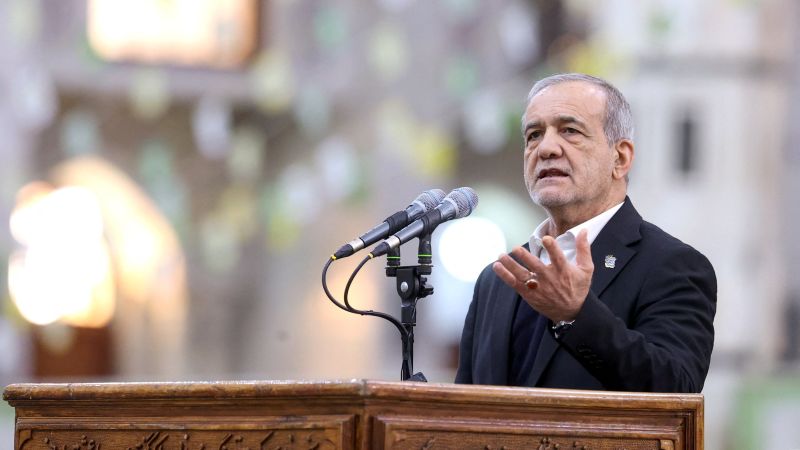
“I have instructed my Minister of Foreign Affairs, provided that a suitable environment exists — one free from threats and unreasonable expectations — to pursue fair and equitable negotiations, guided by the principles of dignity, prudence, and expediency,” Pezeshkian stated on social media. He noted that the decision to engage in talks was influenced by “requests from friendly governments in the region.” The President emphasized that any discussions would uphold Iran’s national interests.
While Pezeshkian holds the presidency, ultimate authority remains with Iran’s Supreme Leader Ayatollah Ali Khamenei. Khamenei recently warned that any military strike by the US would provoke a regional conflict, further escalating the already heightened tensions between the two nations.
In recent weeks, the situation has intensified, particularly after US President Donald Trump deployed a naval strike group to the area, coupled with renewed threats of military action if Iran does not engage in a new nuclear agreement. Earlier in January, Trump indicated the possibility of airstrikes in response to widespread protests in Iran, which led to violent crackdowns by security forces.
The US has expressed a willingness to negotiate, with Trump commenting that Iran is “talking to us, seriously talking to us.” Araghchi also conveyed optimism regarding the potential for a deal, declaring, “I am confident that we can achieve a deal.”
Despite this optimism, other Iranian officials have adopted a more rigid stance. Ali Bagheri, head of foreign policy at Iran’s Supreme National Security Council (SNSC), asserted that the country has “no intention” of negotiating over its enriched uranium stockpiles, as reported by Press TV. The International Atomic Energy Agency (IAEA) has previously expressed serious concerns regarding Iran’s uranium enrichment levels, which reportedly reached up to 60%, making Iran the only non-nuclear weapon state to do so.
Khamenei’s advisor, Ali Shamkhani, indicated that the US must offer concessions if Iran is to consider reducing its enrichment levels. Reports suggest that following the US strikes on Iranian nuclear facilities last summer, Iran has been fortifying its nuclear sites to make them more resilient to future attacks. Moreover, Iran has restricted the IAEA from accessing its nuclear sites for inspections.
The upcoming talks in Istanbul are anticipated to draw participation from foreign ministers of several countries, including Egypt, Oman, Pakistan, Qatar, Saudi Arabia, and the United Arab Emirates, reflecting the urgency of finding a diplomatic resolution to the ongoing tensions.
As diplomatic efforts intensify, all eyes will be on the negotiations in Istanbul, with the potential for significant implications for regional stability and international relations. The outcome of these discussions could shape the future of nuclear policy in the Middle East, underscoring the delicate balance of power in a region marked by conflict and uncertainty.