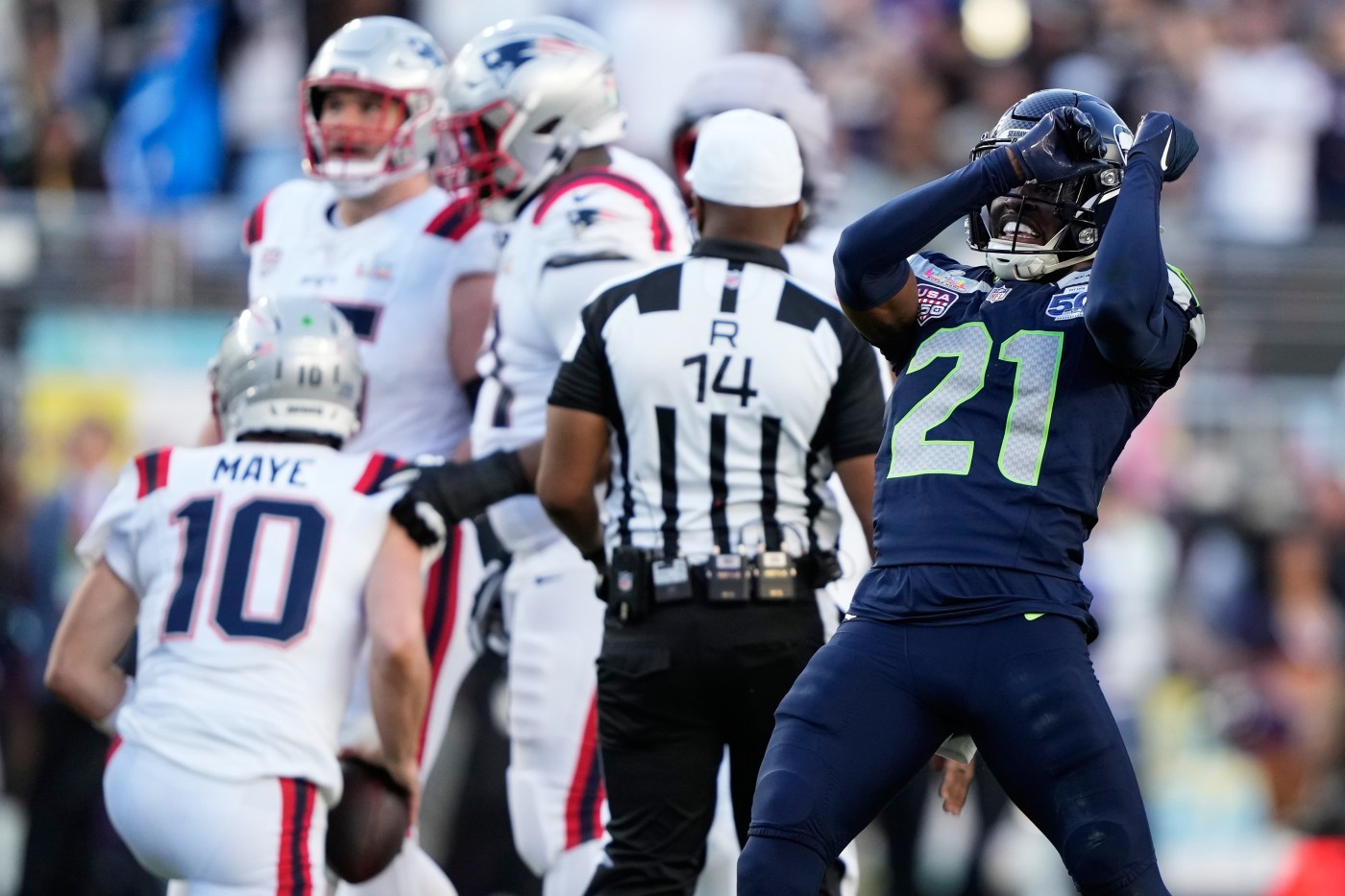
The Seattle Seahawks executed a surprising defensive strategy that overwhelmed the New England Patriots, leading to a decisive 29-13 victory in Super Bowl LX held in Santa Clara, California, on March 11, 2024. Despite preparations for blitz pressure in critical passing situations, the Patriots were unprepared for the frequency and timing of Seattle’s aggressive blitzing throughout the game.
Patriots players, including quarterback Drake Maye, acknowledged that the Seahawks’ early game plan caught them off-guard. The Seahawks applied relentless pressure, resulting in six sacks against Maye and forcing him to operate under duress for more than half of his dropbacks, according to Next Gen Stats. “We saw a good amount of variety of blitzes,” Maye stated. “They were heating us up.”
The Seahawks initiated their blitzing strategy immediately, catching the Patriots off balance. Maye’s first drive ended in a throwaway pass against an all-out blitz, commonly known as Cover Zero, which allowed Seattle to generate unblocked pressure. Backup quarterback Joshua Dobbs noted that while the Seahawks liked to employ blitzes, the timing was unexpected. “They’d like to bring Cover Zero, but maybe not that early. This is the Super Bowl, though. You’re gonna get some different looks,” he remarked.
A critical moment occurred late in the first quarter when Seahawks cornerback Devon Witherspoon executed a rare blitz from his nickelback position, resulting in a 10-yard loss for Maye. Witherspoon had blitzed only 21 times during the season, but he unleashed his potential on the grand stage, blitzing six times and generating four pressures, including a hit that contributed to Maye’s interception later in the game. “That was one of the wrinkles they had,” Dobbs added.
The Seahawks’ defensive game plan involved overloading the left side of the Patriots’ offensive line early on, followed by adding rushers to the right in the second quarter. After realizing the effectiveness of Seattle’s blitzing, the Patriots attempted to adjust their approach, focusing on short-yardage plays to avoid third-and-long situations. Despite these efforts, the Patriots struggled to maintain possession, punting six times consecutively over the course of the game.
Initially, the Patriots aimed to exploit Seattle’s two-high coverages but found themselves unable to execute effectively. Maye’s only significant completion in the first three quarters came from a play-action pass involving six offensive linemen, resulting in a 21-yard gain for Kayshon Boutte. However, the Patriots did not return to this successful formation, and their receivers faced difficulties against the NFL’s top-ranked pass defense.
As the game progressed, Dobbs noted that the Seahawks made it a one-on-one contest on third downs, a tactic they had demonstrated in previous matchups. Patriots center Garrett Bradbury conceded that the team was aware of the Seahawks’ capability to utilize overload pressures, but they were unable to counter effectively. “They pressured at a high clip in the first half, and they had a good plan,” he stated. “They’re a good defense. Certainly, give them credit.”
The Seahawks’ strategic success in Super Bowl LX showcased their ability to adapt and surprise, leaving the Patriots with valuable lessons to learn as they regroup for the upcoming season.