Efforts to restore the native Olympia oyster along the Southern California coast have gained momentum through collaborative initiatives led by California State University, Fullerton (CSUF) professor and marine ecologist Danielle ZacherlOrange County Coastkeeper, this ongoing project is integrating local restaurants into its restoration strategy.
In this latest phase, participating restaurants are donating their discarded oyster shells to aid in the recovery of oyster beds. The shells are collected, cleaned, and dried before being attached to strings. During the oyster reproductive season, which typically spans from April to September, Zacherl’s students, alongside volunteers from OC Coastkeeper, deploy these shell strings at public docks. This process allows oyster larvae to attach and grow, ultimately enhancing the local ecosystem.
Collaborations and Community Engagement
“This spring, OC Coastkeeper, with my students assisting, will deploy shell strings in Alamitos Bay, Huntington Harbor, and Newport Bay,” Zacherl stated. Since joining CSUF in 2003, she has focused on science-based oyster restoration efforts, beginning in 2010. The impact of pollution, overharvesting, and habitat destruction has led to a significant decline in native Olympia oysters, as noted by the Native Olympia Oyster Collaborative.
The Olympia oyster is unique to the West Coast and plays a vital role in the marine ecosystem by filtering water, reducing shoreline erosion, and creating habitats through their natural behavior of cementing themselves together over time. Zacherl humorously comments that the location where an oyster chooses to settle is critical, as they permanently attach to the surface.
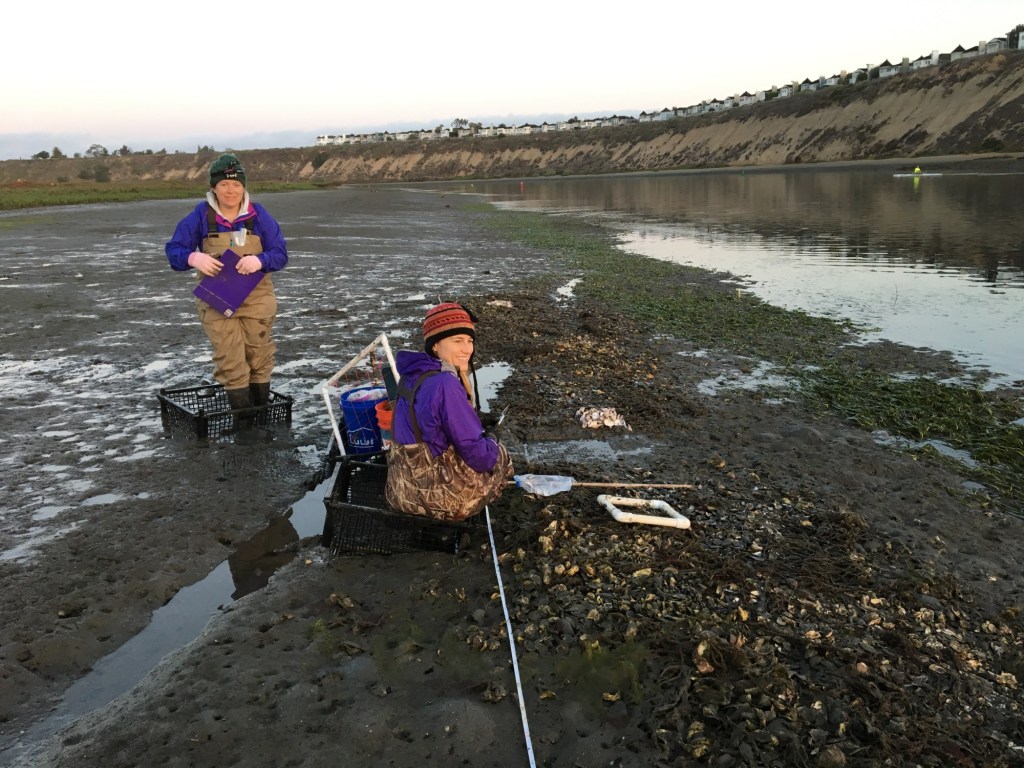
Graduate students Leeza-Marie Rodriguez and Dan Gifford are actively involved in assessing oyster recruitment strength at the Seal Beach National Wildlife Refuge, where they evaluate plates designed to attract oyster larvae. Zacherl emphasizes the importance of oysters as a foundation species, noting their ability to thrive on human-made structures and their role in maintaining healthy ecosystems.
Raising Awareness and Expanding Partnerships
One of Zacherl’s primary objectives is to increase public awareness regarding the significance of oysters. “We wanted to get the public interested and learn how important the oyster shell is,” she explained. This goal aligns seamlessly with Orange County Coastkeeper’s mission to protect local waters. A pivotal moment occurred when Zacherl’s former student, Kaysha Kenney, became the marine restoration director at OC Coastkeeper in 2024. Together, they expanded the oyster restoration efforts significantly.
Kenney initiated partnerships with local restaurants to facilitate oyster shell collection. “I currently partner with 10 local restaurants and OC Coastkeeper staff,” she noted, highlighting the involvement of volunteers in shell collection. To date, thousands of pounds of shells have been gathered for the restoration project.
This initiative presents a mutually beneficial scenario: restaurants can responsibly dispose of shells, the restoration project gains essential materials for habitat revitalization, and students engage in hands-on research that enhances oyster survival. The oyster restoration project forms part of OC Coastkeeper’s broader Living Shorelines Project, which includes several key collaborators.
“The Living Shorelines Project is a true collaboration between OC Coastkeeper, Dr. Zacherl at CSUF, and Dr. Christine Whitcraft at California State University, Long Beach,” Kenney explained. Whitcraft’s research emphasizes the importance of wetland habitats in this collaborative effort.
Zacherl is encouraged by the heightened public awareness surrounding the oyster restoration project and the meaningful contributions of her students. For instance, one student is investigating the causes behind the degradation of oyster beds, while another is researching optimal local environments for oyster growth.
The collective efforts of Zacherl, her students, and local organizations not only aim to restore the native oyster populations but also foster a deeper understanding of the ecological importance of these foundational species in Southern California’s coastal waters.