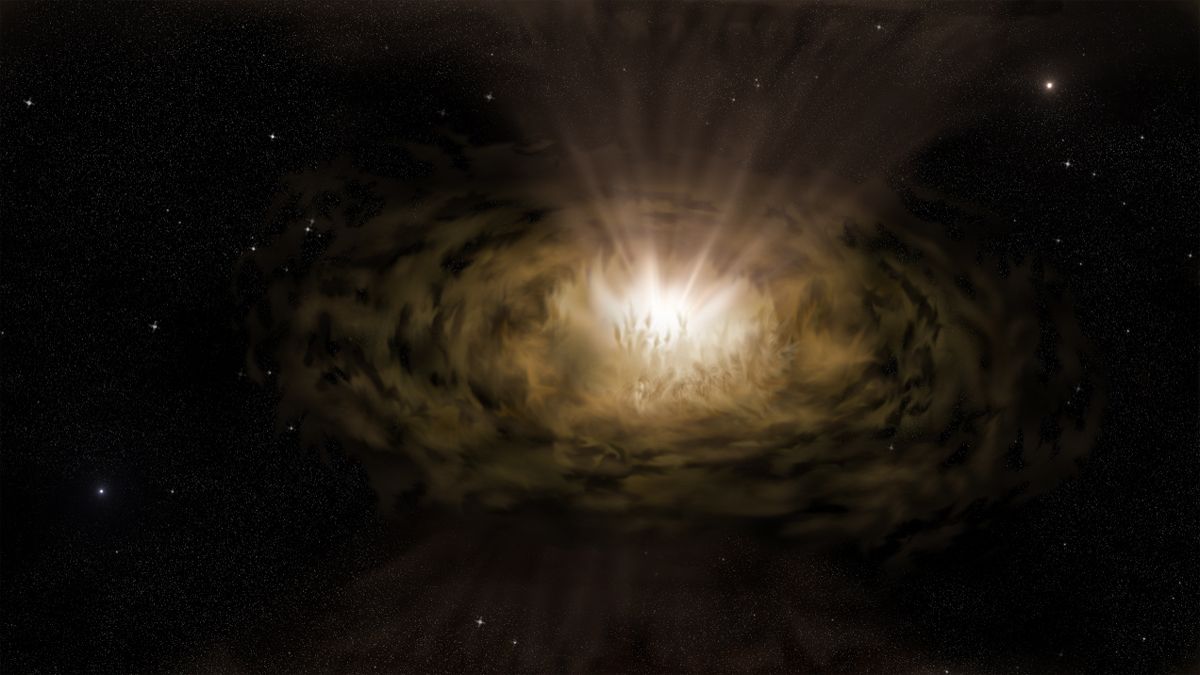
The James Webb Space Telescope has uncovered evidence of supermassive black holes that have evaded traditional detection methods. This groundbreaking discovery sheds light on the role these hidden giants play in shaping galaxies. The findings were published in a study released in March 2024, providing fresh insights into the complex dynamics of the universe.
Revolutionary Insights into Galactic Formation
Researchers utilized the advanced capabilities of the James Webb Space Telescope, a collaborative effort between the National Aeronautics and Space Administration (NASA) and the European Space Agency (ESA), to observe faint signals from previously undetected black holes. The telescope’s infrared technology makes it possible to identify these celestial objects, which can be obscured by dust and gas in their host galaxies.
According to the study, these supermassive black holes are not only pivotal in their own right but also influence the formation and evolution of their surrounding galaxies. The research emphasizes that understanding these quiet galactic engines can reveal new information about the cosmic landscape and the forces that govern it. The study indicates that these black holes can have a profound impact on star formation rates and galactic structure, fundamentally altering our understanding of cosmic evolution.
Technical Advancements Driving Discovery
The capacity of the James Webb Space Telescope to peer deep into the universe has been instrumental in this research. Its advanced instruments allow astronomers to detect the faint light emitted from these black holes, providing a clearer picture of their characteristics and behaviors. This capability represents a significant advancement over previous telescopes, which struggled to identify such elusive objects.
As scientists analyze the data collected from Webb, they are beginning to piece together the intricate connections between supermassive black holes and their host galaxies. The findings suggest that these black holes may exist in a state of relative quiescence, making their detection challenging but not impossible. Researchers are excited about the implications of these discoveries, as they could lead to a deeper understanding of the universe and its fundamental processes.
With ongoing observations and further studies, the James Webb Space Telescope is expected to continue revealing the mysteries of the cosmos, offering insights that could redefine our understanding of black holes and their roles in galactic formation.
As this research progresses, it enhances our comprehension of the universe’s architecture and the critical components that govern it. The implications of these discoveries extend beyond astronomy, influencing fields such as physics and cosmology, and inspiring future explorations into the depths of space.