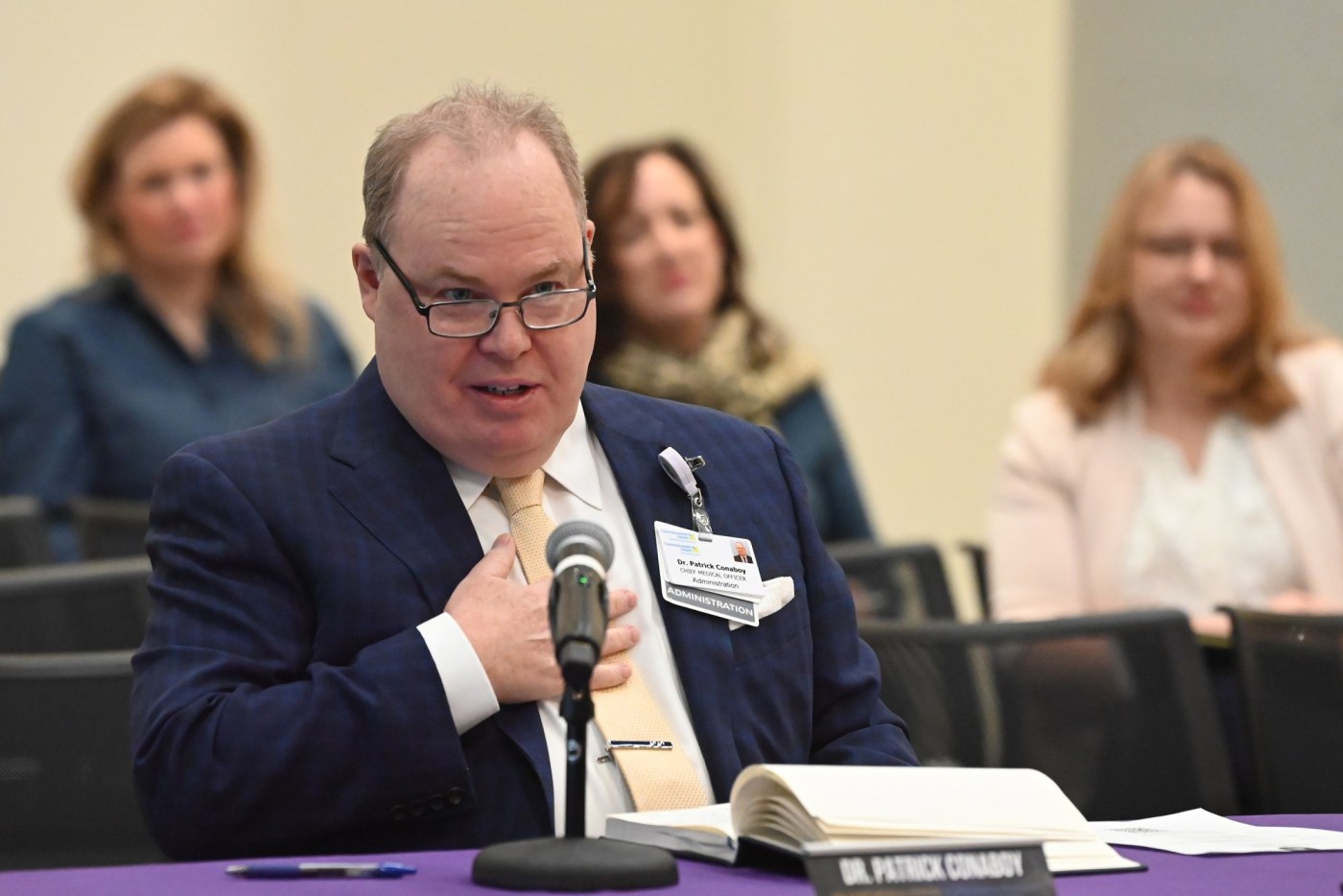
SCRANTON — A recent hearing at the University of Scranton revealed significant challenges facing local hospitals, including a critical workforce crisis and financial strains. Dr. Patrick Conaboy, chief medical officer for the Regional Hospital of Scranton and the Moses Taylor Hospital campus, stated that recruitment across all hospital positions is the primary obstacle they currently confront.
During the session held by the state House Democratic Policy Committee on February 11, 2026, Conaboy emphasized the difficulties hospitals face in attracting qualified personnel. He noted that the acquisition of Commonwealth Health by the nonprofit Tenor Health Foundation prevented the closure of the Regional and Moses Taylor hospitals, which would have severely impacted patient care in the region.
“The biggest challenge for the hospitals right now is recruitment,” Conaboy explained. “That’s not just recruitment of physicians, which is a huge problem for us, but it’s recruitment for every position in the hospital, top to bottom.” He highlighted that financial pressures are making it increasingly difficult to offer competitive salaries, saying, “We are competing with Chewy, which will pay you $20 an hour to drop a dog bone in a box.”
Conaboy pointed out that potential employees, including physicians and nurses, consider job stability as much as salary. “They’re investing in me also,” he stated, stressing the importance of demonstrating that the hospital will remain financially viable in the future.
The hearing also addressed broader financial challenges impacting healthcare delivery. Conaboy mentioned that rising health insurance costs lead to an increase in uninsured individuals seeking care at emergency departments, exacerbating existing capacity issues. “A massive number of people in our community aren’t getting what they need, and they all end up knocking on the door of the hospital,” he added.
The situation has worsened with the recent temporary closure of the emergency room at Lehigh Valley Hospital-Dickson City due to a fire. This incident has further strained resources, as the region now has one less emergency room available. Conaboy noted that the emergency room at Regional would have closed without the intervention of Tenor Health, which stepped in to retain operations after the previous owner, Community Health Systems, planned to shut it down.
The panel heard from Jen Huber, a registered nurse and president of the Northeast Pennsylvania Nurses Association. Huber discussed the local nursing workforce crisis, emphasizing that retaining experienced nurses has become a pressing issue. “We’re losing nurses to burnout, unsafe staffing, and working conditions,” she stated.
She described a normalization of short-staffing in hospitals, which compromises patient care and affects staff morale. “This isn’t just a workforce issue; it is a patient-care issue,” Huber explained, warning that reductions in staff lead to longer wait times and decreased access to services.
Sue Wiggins, a medical laboratory technologist at Regional and a local vice president with the SEIU Healthcare PA union, echoed these concerns. She highlighted a workforce shortage impacting almost every job title in healthcare, a situation aggravated by the COVID-19 pandemic. “Health care work is very tough physically, mentally, and emotionally,” she noted, adding that rising living costs have made attracting qualified staff even more challenging.
During the hearing, lawmakers, including State Rep. Bridget Kosierowski, State Rep. Kyle Donahue, and State Rep. Jim Haddock, engaged with testimony from health professionals about these urgent issues. Huber poignantly remarked, “At the end of the shift, we’re looking at each other and it’s not ‘great shift guys, we did great,’ it’s ‘we survived.’ Everyone is in survival mode right now.”
The discussions at the hearing underscored the urgent need for targeted solutions to address the healthcare workforce crisis and financial challenges faced by hospitals in the region. As local healthcare providers navigate this complex landscape, the emphasis remains on ensuring accessible and quality care for the communities they serve.