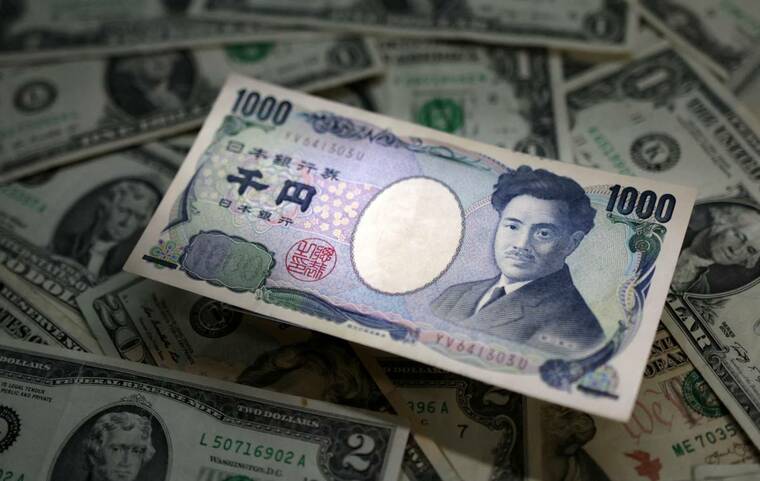
UPDATE: The yen is in freefall, dropping 0.5% to 153.43 per U.S. dollar today, following disappointing growth figures from Japan. This shift comes after the yen experienced a remarkable 3% surge last week, marking its largest weekly gain in 15 months. As markets react, today’s economic data reveals significant hurdles ahead for Prime Minister Sanae Takaichi and her administration.
Japan’s economy barely expanded last quarter, with an annualized growth rate of just 0.2%. Analysts warn that the political stability following Takaichi’s recent landslide election victory is already facing challenges. “The political dust may be settling, and the yen is increasingly sensitive to data,” noted Mohamad Al-Saraf, FX associate at Danske Bank.
In a critical meeting today, Takaichi and Bank of Japan (BOJ) Governor Kazuo Ueda discussed economic conditions. Ueda emphasized there were no specific requests regarding monetary policy from Takaichi. The BOJ’s next meeting on interest rates is scheduled for March, with traders assigning just 20% odds of a rate hike. Economists anticipate that the BOJ will maintain its current policy until at least July.
The U.S. dollar remains steady amid these fluctuations, bolstered by recent January inflation data which showed consumer prices rising less than anticipated. This data gives the Federal Reserve more room to consider interest rate cuts this year. “The markets are flirting with pricing in a third cut,” remarked Kyle Rodda, senior financial analyst at Capital.com, indicating that the next cut could happen as early as June.
Amid this backdrop, the euro dipped slightly to $1.1862, while the British pound eased to $1.3647. The U.S. dollar index, which tracks the currency against six major peers, edged up 0.1% to 97 after a 0.8% decline last week.
Today, U.S. bond markets are closed, but the ripple effects of the inflation data are evident. The yield on the U.S. two-year Treasury, a key indicator of Fed policy expectations, closed at its lowest since 2022, while the ten-year yield fell by 4.8 basis points.
The Swiss franc has softened slightly to 0.7696 per U.S. dollar, following a notable surge last week. Investors are wary of potential interventions from the Swiss National Bank (SNB) to counter the currency’s strength. As noted by OCBC strategists, “Further Swiss franc gains raise the risk of additional downside surprises relative to the SNB’s inflation forecasts.”
Meanwhile, the Australian dollar has firmed by 0.2% to $0.7083, hovering just below a three-year high of $0.71465. The New Zealand dollar remains unchanged at $0.6041 as the Reserve Bank of New Zealand prepares for its policy meeting on Wednesday, where a steady rate is widely expected.
As these financial dynamics unfold, market participants are advised to stay informed on upcoming developments, particularly as the BOJ and Federal Reserve navigate their respective monetary policies in response to shifting economic landscapes.