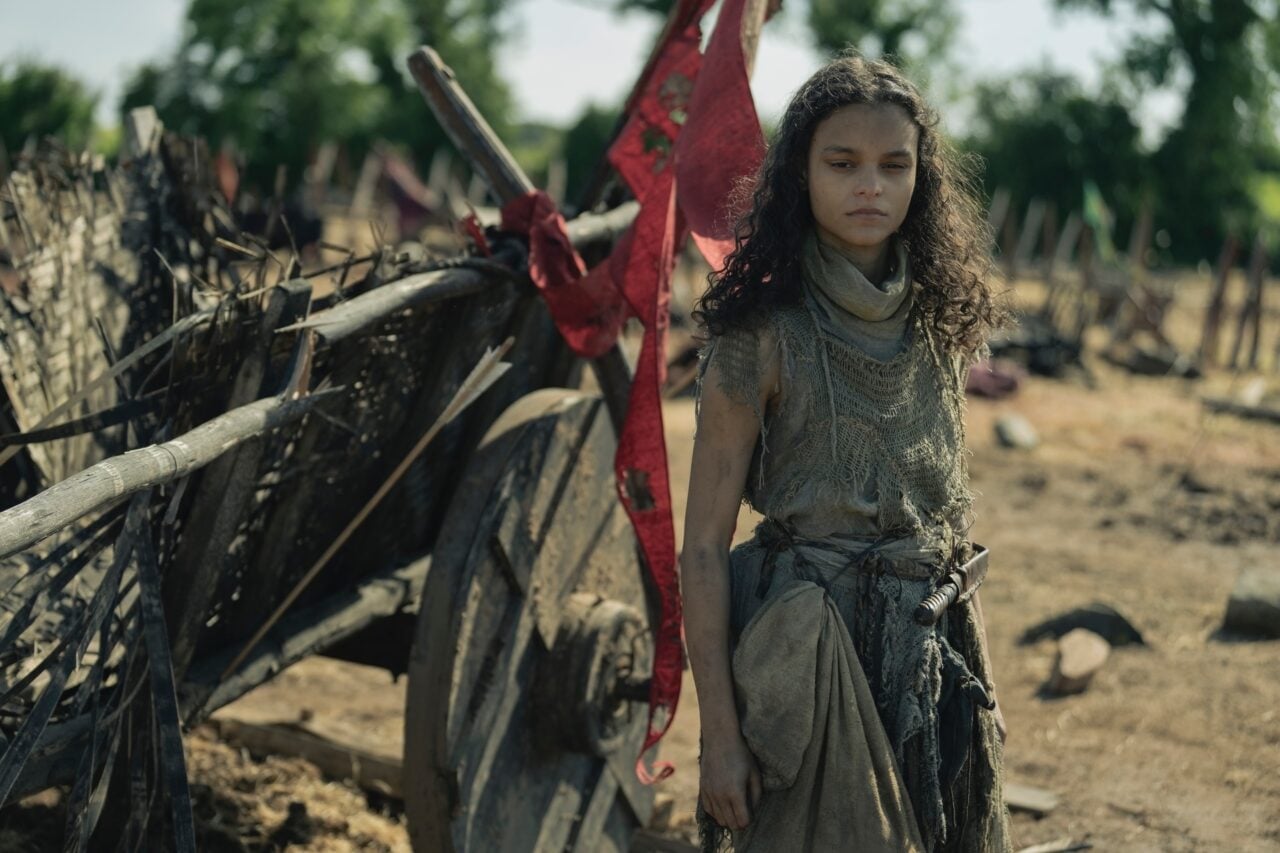
The legacy of House Targaryen, rulers of Westeros for centuries, is marred by a series of conflicts known as the Blackfyre Rebellions. These rebellions, ignited by the illegitimate son of a Targaryen king, would challenge the dynasty and alter the balance of power in the Seven Kingdoms. The recent episode of *Knight of the Seven Kingdoms* revisits this tumultuous period, shedding light on the events that shaped the Targaryens’ fate.
The Rise of Daemon Blackfyre
Daemon Blackfyre, originally named Daemon Waters, emerged as a pivotal figure in Targaryen history. Born to Aegon IV Targaryen, also known as Aegon the Unworthy, and his cousin Princess Daena, Daemon’s existence sparked turmoil within the royal family. Aegon IV’s reign was marked by corruption and a chaotic line of succession, exacerbated by his decision to legitimize all his bastards on his deathbed. This unprecedented move threw the stability of the Targaryen line into disarray and set the stage for conflict.
After ascending to the throne, Daeron II Targaryen faced widespread discontent among the nobility. His efforts to rectify the corruption of his father and successfully integrate Dorne into the realm were met with resentment. Many court members viewed his marriage alliances with House Martell as capitulation, leading to further unrest. This growing dissatisfaction, paired with questions about Daeron II’s legitimacy due to Aegon IV’s actions, created fertile ground for Daemon Blackfyre to challenge the throne.
The First Blackfyre Rebellion
In 196 AC, Daemon Blackfyre launched the first of the Blackfyre Rebellions, motivated by a decade of grievances against both his status as a bastard and Daeron II’s reign. Although detailed records of the rebellion are scarce, it is known that Daemon secured support from border lords discontented with Dorne’s rising influence. His campaign included minting his own coins, a significant demonstration of his claim to power.
The rebellion culminated in the bloody Battle of the Redgrass Field. Initially poised for victory, Daemon’s forces suffered a devastating blow when loyalist Brynden Rivers and his archers seized a strategic ridge, raining arrows down upon Daemon’s troops. The battle ended catastrophically for Daemon, who was killed alongside two of his sons, Aegon and Aemon Blackfyre. Despite the rebellion’s swift conclusion, the aftermath left a lasting impact on Westeros.
Lingering Resentments and Further Rebellions
The aftermath of the Battle of the Redgrass Field did not eliminate the threat posed by the Blackfyres. The harsh reprisals administered by Daeron II against surviving supporters fostered deep-seated animosity across the realm. Notably, Aegor “Bittersteel” Rivers managed to escape, taking Daemon’s wife and sons into exile in Tyrosh, ensuring that House Blackfyre would not fade into obscurity.
Over the following 60 years, multiple attempts to reclaim the throne were made by Daemon’s descendants. The second Blackfyre Rebellion in 212 AC was thwarted nearly before it began, while the third rebellion claimed the life of Daemon’s fourth son, Haegon Blackfyre. The fourth rebellion in 236 AC ended with the defeat of Daemon III Blackfyre, who was killed by Aegon V Targaryen‘s Kingsguard, Ser Duncan the Tall.
The Final Defeat and Its Consequences
The Blackfyre Rebellions reached their conclusion with the War of the Ninepenny Kings, which saw the final male heir of House Blackfyre, Maelys the Monstrous, slain in single combat by Ser Barristan Selmy. This decisive conflict extinguished the Blackfyre line, bringing a temporary peace to Westeros.
Despite this victory, House Targaryen’s strength was waning. Just two decades later, Robert Baratheon led a rebellion against the “mad king,” Aerys II Targaryen, successfully overthrowing the Targaryens after nearly 300 years of rule. While the Blackfyres’ attempts at usurpation had been quelled, the damage to Targaryen legitimacy had been profound, ultimately contributing to the dynasty’s downfall.
The Blackfyre Rebellions stand as a testament to the fragility of power in Westeros, illustrating how internal strife can undermine even the longest-standing dynasties. As the Seven Kingdoms continue to evolve, the echoes of these conflicts linger in the historical narrative of House Targaryen.