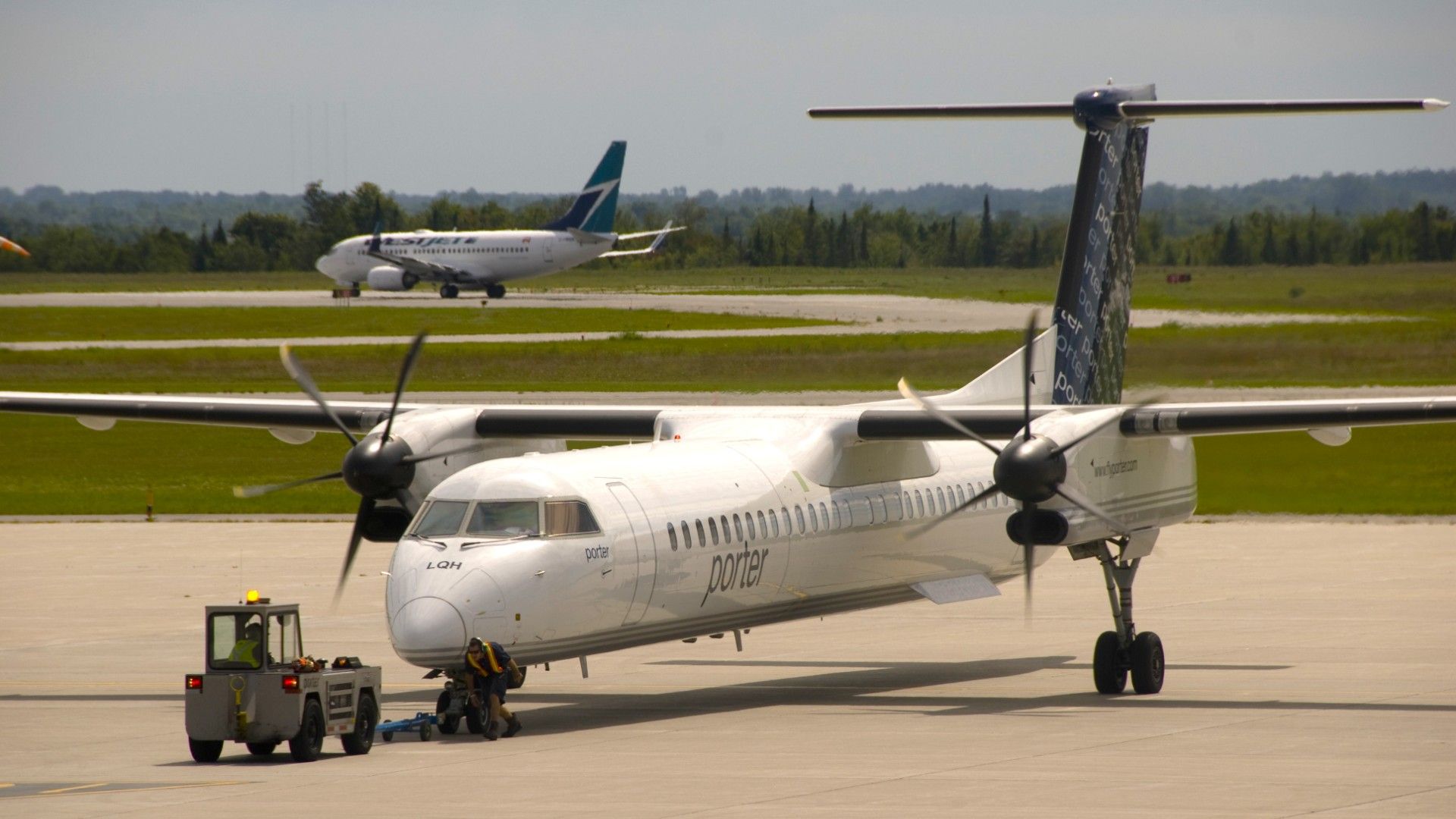
Air Canada, WestJet, and Porter Airlines each offer distinct onboard experiences, particularly concerning legroom available in their economy class. With Air Canada as the country’s largest airline, it operates a fleet of over 200 aircraft, while WestJet follows closely as Canada’s second-largest airline. Porter Airlines, a newer entrant to the market, operates a smaller fleet. This article examines the various aircraft types from these carriers, focusing on the legroom passengers can expect.
Air Canada: Fleet and Legroom Insights
According to data from ch-aviation, Air Canada operates a fleet of 265 aircraft, including models such as the Boeing 787-9 and Airbus A220-300. The Boeing 777-300ER, with a capacity of up to 450 passengers, is Air Canada’s largest aircraft, while the Airbus A319 seats just 136.
Passengers flying on Air Canada can find the best economy class legroom on the Airbus A320s, offering between 31 and 33 inches. In terms of seat width, the Airbus A220-300 leads with a comfortable 19 inches. The following table summarizes the legroom and seat specifications across Air Canada’s fleet:
| Aircraft | Number In Fleet | Legroom (Economy Class) | Seat Width (Economy Class) |
|---|---|---|---|
| Airbus A220-300 | 37 | 31 inches | 19 inches |
| Airbus A319 | 16 | 31 inches | 17.2 inches |
| Airbus A320 | 26 | 31 – 33 inches | 17.5 inches |
| Airbus A330-300 | 20 | 31 – 32 inches | 18 inches |
| Boeing 737 MAX 8 | 47 | 30 inches | 17 – 18 inches |
| Boeing 777-300ER | 19 | 31 inches | 17 inches |
| Boeing 787-9 | 32 | 30 inches | 17.3 inches |
Interestingly, the legroom in Air Canada’s widebody aircraft does not surpass that of its Airbus A320s. The widebody fleet, including the Boeing 787-8 and 787-9, provides 31 inches of legroom in economy class.
WestJet: Economy Class Experience
WestJet operates a fleet of more than 160 mainline aircraft, primarily from Toronto Pearson International Airport, Calgary International Airport, and Vancouver International Airport. The airline’s economy class seats generally provide consistent legroom comparable to industry standards.
The following table highlights the legroom on WestJet’s aircraft:
| Aircraft | Number In Fleet | Legroom (Economy Class) | Seat Width (Economy Class) |
|---|---|---|---|
| Boeing 737-700 | 38 | 31 inches | 17 inches |
| Boeing 737-800 | 55 | 31 – 33 inches | 17 inches |
| Boeing 737 MAX 8 | 59 | 31 – 34 inches | 17 inches |
| Boeing 787-9 Dreamliner | 7 | 31 – 35 inches | 17.3 inches |
WestJet’s Boeing 787-9s, used for long-haul routes, offer up to 35 inches of legroom in certain extra-legroom seats. This aircraft is employed on routes to destinations such as Seoul, Tokyo, and London.
Porter Airlines: A Growing Presence
Porter Airlines, operating since 2006, has made significant strides in the Canadian aviation market. With a fleet of 81 aircraft, the carrier serves both business routes and leisure destinations, expanding its reach to popular vacation spots.
The fleet includes the following aircraft types, along with their respective legroom:
| Aircraft | Number In Fleet | Legroom (Economy Class) | Seat Width (Economy Class) |
|---|---|---|---|
| De Havilland Canada Dash 8-400 | 29 | 30 inches | 17 inches |
| Embraer E195-E2 | 52 | 30 inches | 18.3 inches |
Porter Airlines aims to increase its fleet of Embraer E195-E2s, which offer a more comfortable seat width compared to its Dash 8-400 aircraft.
Comparing Business Class Options
Business class offerings differ across these airlines. Both Air Canada and WestJet provide lie-flat beds on long-haul services, enhancing passenger comfort on lengthy journeys. Air Canada’s longest route extends from Vancouver to Singapore, covering approximately 7,965 miles, while WestJet’s longest service connects Calgary to Rome, spanning 5,265 miles.
Porter Airlines does not operate widebody, long-haul services and offers limited business class seating on its Embraer E195-E2 aircraft, where each seat provides a pitch of 36 inches.
Conclusion: Which Airline Offers the Most Legroom?
After reviewing the legroom available in economy class across the three carriers, Air Canada provides the most legroom on its Airbus A320 and A321 flights, with up to 33 inches. For long-haul services, WestJet’s Boeing 787-9s offer generous legroom, reaching 35 inches in select seats.
Overall, the legroom provided by these airlines aligns with global industry standards, though passengers may find slightly more comfort compared to low-cost carriers.
As travelers consider their options, understanding legroom availability can significantly impact their flying experience. Which airline do you prefer for comfort? Share your experiences in the comments.