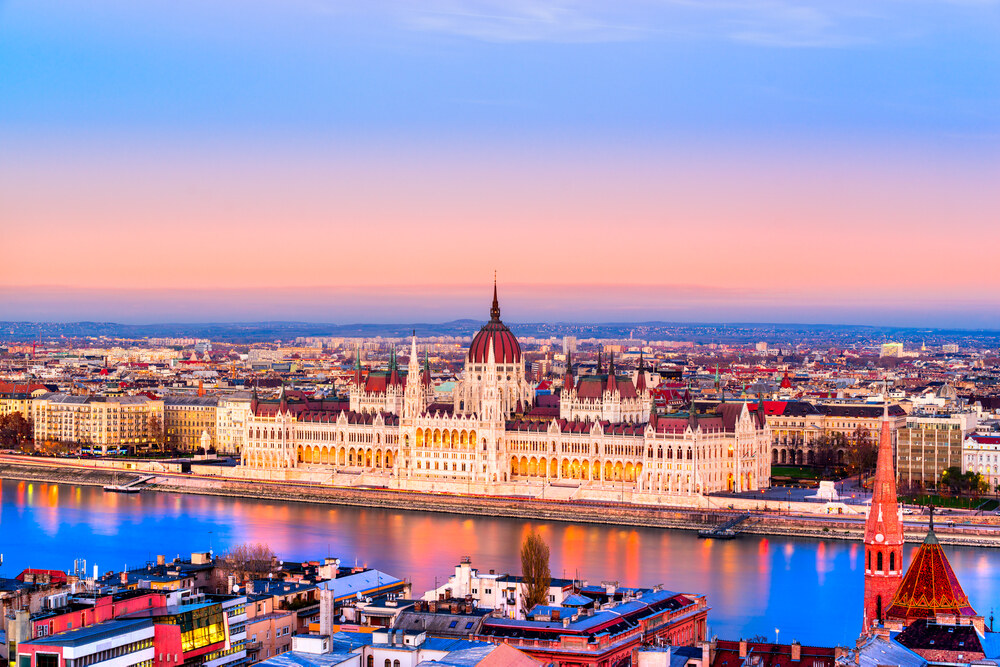
The official election campaign in Hungary officially commenced on February 21, 2026, as the ruling party, Fidesz, and its challenger, Tisza, secured the necessary signatures across all constituencies. This marks the beginning of a pivotal political period as both parties prepare for the upcoming parliamentary elections.
Despite the political landscape heating up, Hungary has faced significant challenges in recent days. A notable earthquake was reported near the Hungary-Slovakia border, raising concerns among residents about safety and infrastructure. Additionally, severe weather has caused the closure of the Hungary-Slovenia border crossing, with fallen trees obstructing transit routes.
Energy Tensions with Ukraine
Compounding the political climate is a brewing energy crisis involving Ukraine. Hungary has threatened to block an EUR 90 billion European Union loan intended for Ukraine, citing stalled oil supplies as the primary concern. Prime Minister Viktor Orbán emphasized that continuing the war is in Ukraine’s interest, hinting at potential energy measures Hungary might implement in response to the situation.
In a related development, Croatian oil company Janaf has rejected concerns raised by the Hungarian government, asserting its capability to supply Hungary with non-Russian oil. This assurance comes as Hungary seeks to diversify its energy sources amid escalating tensions in the region.
Budapest’s Historic Metro Overhaul
In a separate but significant initiative, Budapest is set to undertake a major overhaul of its historic M1 metro line. This project aims to modernize one of the oldest metro systems in the world while preserving its cultural heritage. The improvements are expected to enhance public transport efficiency and safety for residents and visitors alike.
As the election campaign unfolds, various issues including energy security, infrastructure, and public safety will likely dominate the discourse among Hungarian voters. The political landscape remains dynamic, and the outcomes of these developments could have lasting effects on Hungary’s future direction.
For ongoing updates, interested readers are encouraged to follow local news channels and social media platforms for the latest information regarding Hungary’s political climate and key events.