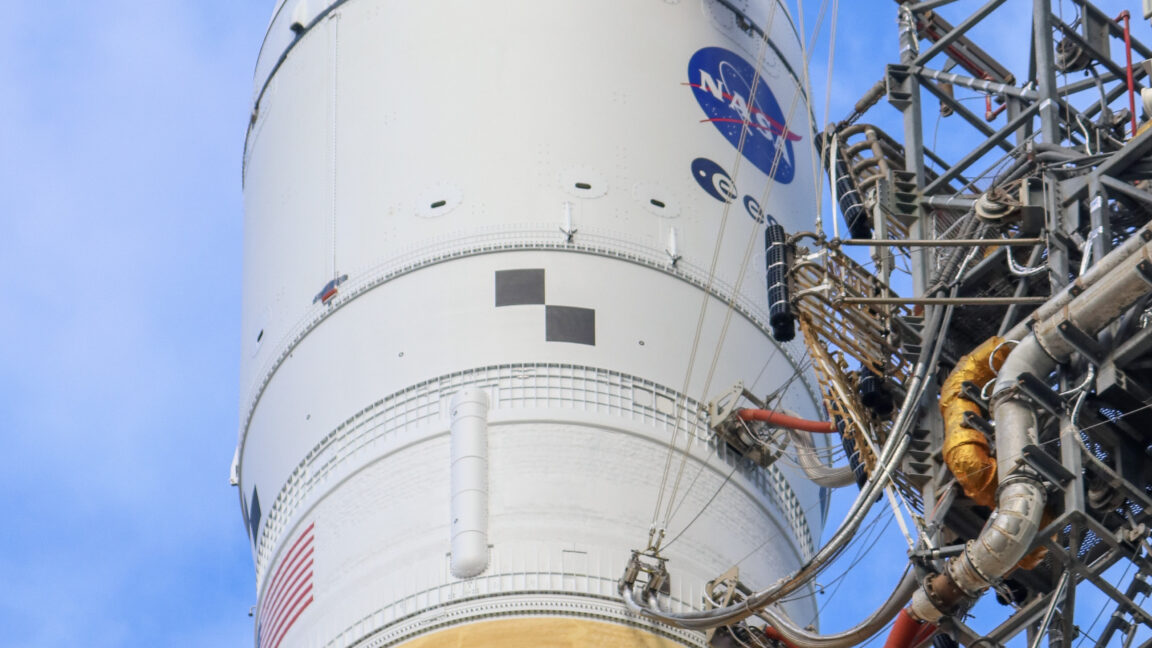
NASA has announced that the Artemis II rocket will be returned to its hangar for repairs, delaying the anticipated launch originally scheduled for early March 2024. The decision follows the detection of a helium flow issue affecting the upper stage of the Space Launch System (SLS) rocket. This setback was confirmed by NASA Administrator Jared Isaacman on social media, just a day after officials expressed optimism about the upcoming mission.
The problem emerged on the evening of March 1, when data indicated an interruption in helium flow into the rocket’s upper stage, known as the Interim Cryogenic Propulsion Stage (ICPS). Isaacman stated that engineers are investigating the cause of the malfunction and that any necessary repairs can only be conducted inside the Vehicle Assembly Building (VAB). Consequently, teams are preparing to transport the 322-foot-tall (98-meter) SLS rocket from Launch Complex 39B back to the VAB using NASA’s crawler-transporter, which will cover a distance of approximately four miles.
“The need to access and remediate any issues can only be performed in the VAB,” Isaacman explained. He acknowledged the disappointment felt by the mission team and the broader space community, noting that the March launch window is now no longer feasible. NASA had aimed for a launch attempt as soon as March 6, 2024, with several limited launch opportunities available throughout the month.
The space agency had previously encountered issues that postponed launch attempts, including a hydrogen leak detected during earlier fueling tests. After successfully replacing seals in the fueling line leading to the SLS core stage, a second fueling test was completed with no significant leaks, raising hopes for a timely launch. However, the recent helium issue has dashed those plans.
Helium plays a critical role in purging the upper stage engine and pressurizing its propellant tanks. According to NASA, while the rocket is currently in a “safe configuration,” a backup system is providing necessary purge air to the upper stage. Isaacman noted that the helium flow problem arose during routine operations to repressurize the system.
NASA’s experience with similar issues dates back to the Artemis I mission in 2022. During that launch, engineers identified a failed check valve on the upper stage as the source of a similar malfunction. Currently, NASA officials are evaluating whether the recent helium issue stems from a valve failure, an umbilical interface problem, or a fault with a filter.
The inability to access the affected area while the rocket is on the launch pad necessitates the return to the VAB, where ground teams will extend work platforms around the rocket for physical access to the upper stage and its connections. The agency aims to complete the necessary repairs efficiently, with hopes of preserving the next launch window beginning on April 1, 2024.
It remains uncertain whether NASA will conduct another fueling test before returning the SLS rocket to Launch Pad 39B or if further work will be done on the hydrogen umbilical that has caused recurring leaks. Although the performance of newly installed seals was satisfactory during the recent countdown demonstration, NASA has expressed concerns that vibrations during transport could potentially damage these seals.
NASA also plans to replace batteries in the rocket’s flight termination system during the stay inside the VAB. The current batteries are nearing expiration next month.
The Artemis II mission is poised to be significant, marking the first human spaceflight to the vicinity of the Moon since 1972. It will also be the inaugural flight of astronauts aboard NASA’s SLS rocket and the Orion spacecraft. Astronauts Reid Wiseman, Victor Glover, Christina Koch, and Jeremy Hansen have entered NASA’s standard preflight medical quarantine but will now return to regular training activities.
This mission is a precursor to future Artemis missions targeting landings at the Moon’s south pole, with NASA aiming for a historic lunar landing by 2028. However, the timeline is subject to various uncertainties, including the readiness of a human-rated lander and suitable spacesuits.
With ongoing questions regarding the overall readiness of the Artemis program elements, Isaacman has hinted at a more comprehensive briefing on Artemis II and NASA’s lunar program in the coming days.