Mexican authorities announced the capture and death of Nemesio Oseguera Cervantes, known as “El Mencho,” the notorious leader of the Jalisco New Generation Cartel (CJNG). On March 10, 2024, a special forces operation, aided by U.S. intelligence, located Oseguera Cervantes in his home state of Jalisco. The operation culminated in a series of violent confrontations that left significant casualties among both security forces and cartel members.
According to Mexican Defense Secretary Gen. Ricardo Trevilla, military investigators traced Oseguera Cervantes through a romantic partner’s associate. This individual helped facilitate a meeting between the cartel leader and his partner in Tapalpa, Jalisco, which proved pivotal in the operation. The intelligence shared by U.S. authorities was crucial in confirming Oseguera Cervantes’ location, marking a significant moment in the long-standing efforts by both nations to capture one of the most wanted fugitives.
Ground and air support were mobilized as the operation unfolded. Mexican army units and the National Guard established a cordon around the area, while six helicopters were on standby. The Mexican Air Force provided vital reconnaissance support. The operation commenced in the early hours of Sunday, with President Claudia Sheinbaum receiving real-time updates during her tour of northern Mexico.
As forces closed in, the confrontation escalated rapidly. Oseguera Cervantes attempted to flee, accompanied by two bodyguards, while a heavily armed group engaged the military. The initial death toll rose to eight, including well-armed cartel members and security personnel. Among the seized weapons were two rocket launchers, one of which had been used in a previous attack on a military helicopter.
During the operation, Oseguera Cervantes attempted to hide in the underbrush of a wooded area near Tapalpa. Despite the cartel’s heavy armament, including rocket launchers, special forces managed to locate him. In the ensuing engagement, both Oseguera Cervantes and his bodyguards sustained injuries. Following their capture, they were transported by helicopter for medical assistance; however, they succumbed to their wounds en route to a hospital.
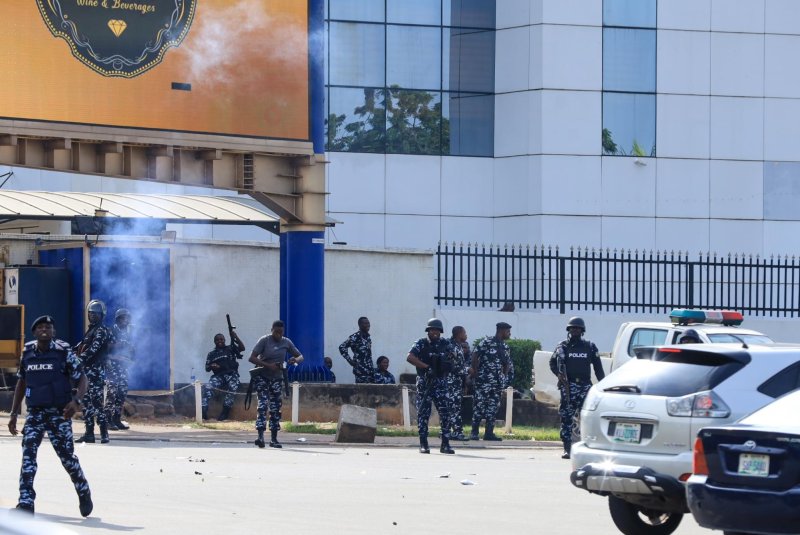
In total, the operation and subsequent violence resulted in over 70 deaths, including members of security forces and suspected cartel affiliates. The aftermath of the operation has sparked fears of increased violence, as a source briefed on the situation indicated that the CJNG is likely to maintain operational capabilities despite the loss of its leader.
Since the operation, a succession struggle within the CJNG is reportedly underway, with various regional commanders vying for control. Historically, the removal of cartel leaders in Mexico has led to infighting and violence, often resulting in further destabilization rather than dissolution.
In response to the heightened tensions, “El Tuli,” an operator within the cartel, has allegedly offered a bounty of 20,000 pesos (over $1,000) for every soldier killed. The violence has already claimed the lives of 25 National Guard members and other civilians, with additional fatalities reported in surrounding states.
As the dust settles from this operation, the implications for both the CJNG and security forces in Mexico remain uncertain. Authorities will likely face ongoing challenges as they navigate the complex landscape of cartel power dynamics and potential retaliatory actions in the wake of Oseguera Cervantes’ death.