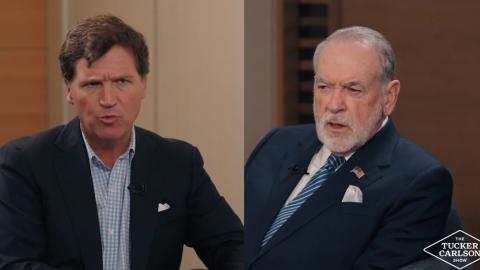
The recent interview between Tucker Carlson and Mike Huckabee has sparked significant debate, particularly concerning statements made by political commentator Abelow. During the discussion, Abelow raised concerns about the implications of questioning Israel’s right to exist, a topic that remains highly sensitive in international discourse.
In the interview aired in October 2023, Carlson and Huckabee explored various political issues, but it was Abelow’s comments that captured the most attention. He stated that questioning the legitimacy of a nation, especially one with a complex historical and geopolitical background like Israel, can lead to dangerous narratives. This assertion reflects a broader concern among many observers regarding anti-Semitic rhetoric and its potential consequences.
Context of the Interview
Tucker Carlson, a noted figure in American media, has often been at the center of controversial discussions. His interviews frequently provoke strong reactions, both supportive and critical. In this instance, Mike Huckabee, a former governor and well-known political commentator, joined Carlson to discuss the current political landscape. Abelow’s remarks emerged as a focal point, highlighting the delicate balance between free speech and responsible discourse.
Abelow emphasized that questioning Israel’s right to exist is not merely a political position but a statement that can undermine the legitimacy of the state itself. His comments resonate with historical context, as discussions surrounding Israel often evoke deep-seated emotions and complex narratives rooted in decades of conflict.
The implications of such discussions extend beyond political circles. They affect public perception and can influence the actions of governments and organizations worldwide. Abelow’s intervention serves as a reminder of the responsibility that comes with discussing contentious issues.
Reactions and Implications
The interview has spurred a range of reactions from various quarters. Supporters of Abelow argue that his stance is necessary to combat rising anti-Semitic sentiments that have gained traction in recent years. Critics, however, may view his comments as an infringement on free speech, arguing that political debate should encompass all viewpoints, including those that challenge the status quo.
The conversation around Israel’s legitimacy is not new; it is part of a broader dialogue about national identity and human rights. As the global community grapples with these issues, the role of media personalities like Carlson and Huckabee becomes increasingly significant. Their platforms amplify certain narratives, which can shape public opinion and policy.
In conclusion, the Carlson-Huckabee interview, framed by Abelow‘s critique, underscores the complexities of discussing national legitimacy and identity. As this dialogue continues, it will be crucial for commentators and the public alike to navigate these discussions with care, acknowledging the historical weight of the issues at hand.