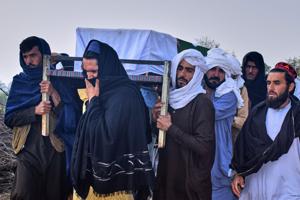
Pakistan’s military has launched extensive airstrikes on Afghan military installations, claiming to have killed more than 300 Afghan forces during these operations. The strikes, which have persisted over several days, are reportedly a response to escalating border clashes between the two nations. These developments have prompted heightened international concern regarding stability in the region.
The airstrikes primarily targeted military bases in eastern Afghanistan, according to official statements from the Pakistan Armed Forces. The military’s operations have intensified amid ongoing tensions along the Durand Line, the contentious border that divides Pakistan and Afghanistan. Pakistani officials assert that the airstrikes were necessary to protect their national security and to counter perceived threats from Afghan military actions.
Details of the Airstrikes
According to the Pakistan Army, the operations began on October 1, 2023, and involved multiple strikes over several days. The military claims to have successfully neutralized key military assets belonging to Afghan forces, which they accuse of cross-border attacks. As a result, Pakistan has expressed its commitment to ensuring the safety of its border regions.
Afghan officials have not confirmed the casualty figures reported by Pakistan, but they have acknowledged ongoing clashes. The Afghan military has stated that they are responding to what they describe as unprovoked attacks. The situation remains fluid, with both sides exchanging accusations over the escalation of violence.
The international community has taken notice of these events, with calls for restraint coming from various quarters. Observers warn that the conflict could further destabilize an already volatile region, where decades of strife have left deep-rooted tensions. Diplomatic efforts are underway to ease the situation, though the effectiveness of these initiatives remains uncertain.
Regional Implications and International Response
The recent escalation in violence has raised alarm bells among nations concerned about the impact on regional stability. The United Nations has urged both Pakistan and Afghanistan to engage in dialogue to prevent further loss of life. International actors, including the United States and China, have called for immediate ceasefire agreements and the resumption of peace talks.
The implications of these airstrikes extend beyond the immediate conflict. Analysts suggest that continued military actions may hinder efforts toward a peaceful resolution in Afghanistan, particularly as the nation grapples with internal challenges. The potential for a larger military confrontation poses risks not only to the two countries involved but also to neighboring regions.
As the situation unfolds, the world watches closely, aware that the consequences of this conflict could resonate far beyond the borders of Pakistan and Afghanistan. The need for a diplomatic solution is more pressing than ever, as both nations navigate the complexities of their historical ties and contemporary security challenges.