
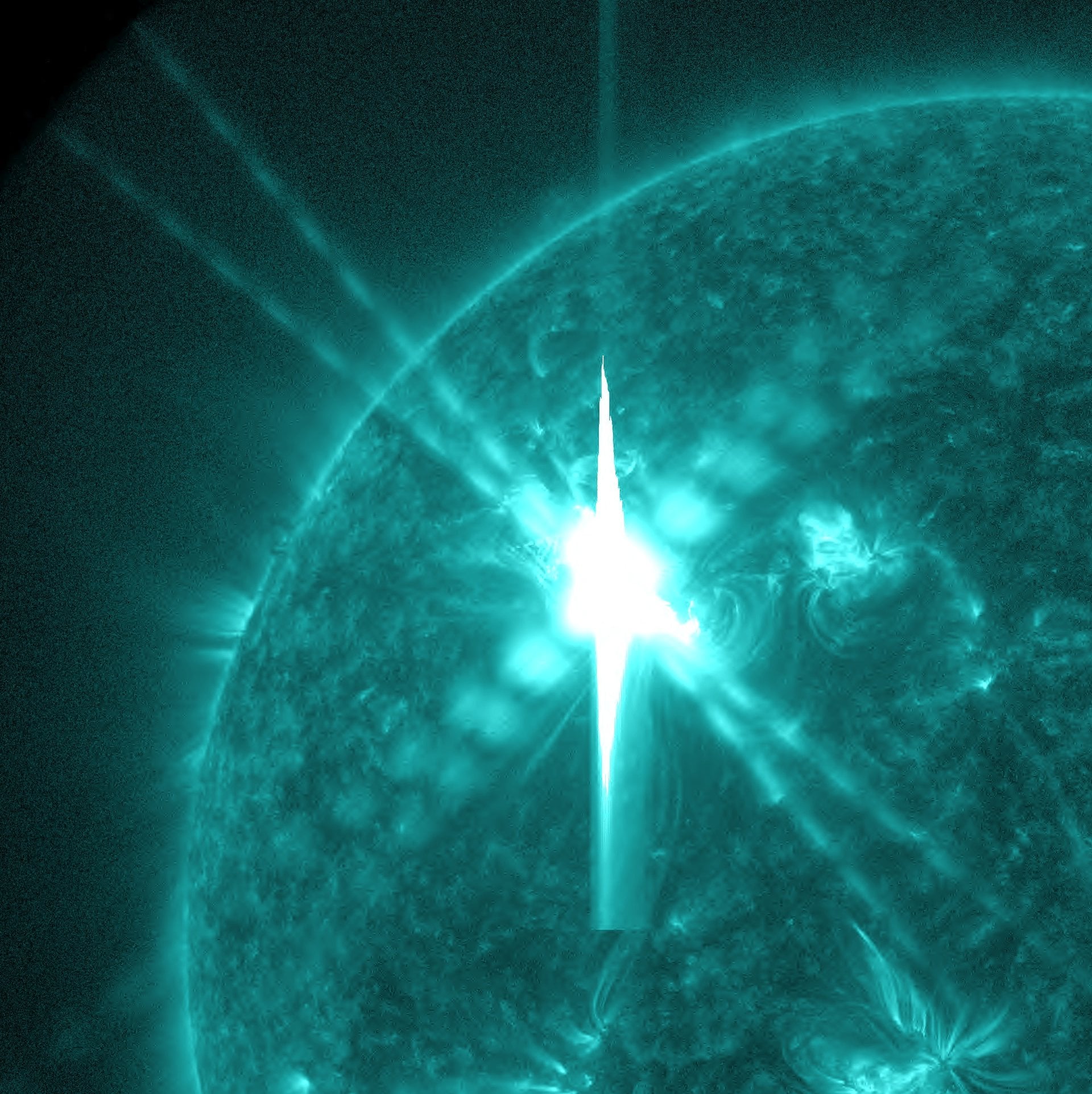
The Sun has recently displayed its dynamic nature, releasing six powerful X-class solar flares within the first four days of February 2024, including an X8.1 flare, the strongest seen in several years. These eruptions disrupted radio signals and created stunning auroras, serving as a reminder of the Sun’s unpredictable behavior. For solar physicists, this marks a critical confirmation that we are currently experiencing one of the most hazardous phases of solar activity in a generation.
Solar flares vary in intensity, with super flares classified as those rated above X10. Should one of these powerful events strike a populated area on Earth, the consequences could be severe, including widespread power outages, satellite failures, and heightened radiation exposure for airline passengers at high latitudes. Although such events are rare, they pose real threats, and until recently, predicting them more than a few hours in advance was nearly impossible.
Breakthrough in Solar Flare Forecasting
A multinational research team led by Victor Velasco Herrera from the National Autonomous University of Mexico has developed an innovative forecasting system capable of identifying potential super flare risks months to a year in advance. This pioneering research, published in the Journal of Geophysical Research: Space Physics, is based on a comprehensive analysis of fifty years of X-ray data collected by the Geostationary Operational Environmental Satellites (GOES) from 1975 to 2025.
The team discovered two previously unidentified rhythmic cycles within the Sun’s behavior: one that recurs every 1.7 years and another every seven years. These cycles appear to correlate with the accumulation of magnetic energy in specific regions on the solar surface. When these cycles align in particular configurations, the likelihood of a super flare significantly increases.
Utilizing these patterns along with advanced machine learning techniques, the researchers can now predict not only when the risk is elevated but also pinpoint which areas of the Sun are likely to be the source of potential eruptions. For the current Solar Cycle 25, the model identifies two peak danger periods: the first from mid-2025 to mid-2026, concentrated in the Sun’s southern hemisphere, and the second in early to mid-2027, focusing further north.
Validation of Forecasting Methodology
The significance of this research was further underscored during the peer review process. After the team submitted their findings, scientists working with data from the European Space Agency’s Solar Orbiter spacecraft reported the detection of massive super flares that had erupted on the far side of the Sun in May 2024. These included an X11.1, X9.5, X9.7, and an extraordinary X16.5 flare, all of which were initially undetected due to their location on the solar hemisphere hidden from Earth.
Upon comparing these concealed eruptions with their predictive model, the forecasting team found an astonishingly close match. The scientists described this alignment as a fortunate coincidence but also a profound validation of their approach. The forecasts were created without prior knowledge of the far-side super flares, yet the patterns accurately reflected the observed phenomena, demonstrating the effectiveness of their physics-based methodology across the entire Sun, not just the hemisphere visible from Earth.
With this advanced warning capability, satellite operators can adjust orbits proactively, power grid managers can implement protective measures, and space agencies can schedule missions by considering solar activity rather than relying on chance. The Sun has maintained its own rhythm for approximately 4.5 billion years, and humanity is just beginning to decipher its complex signals.


