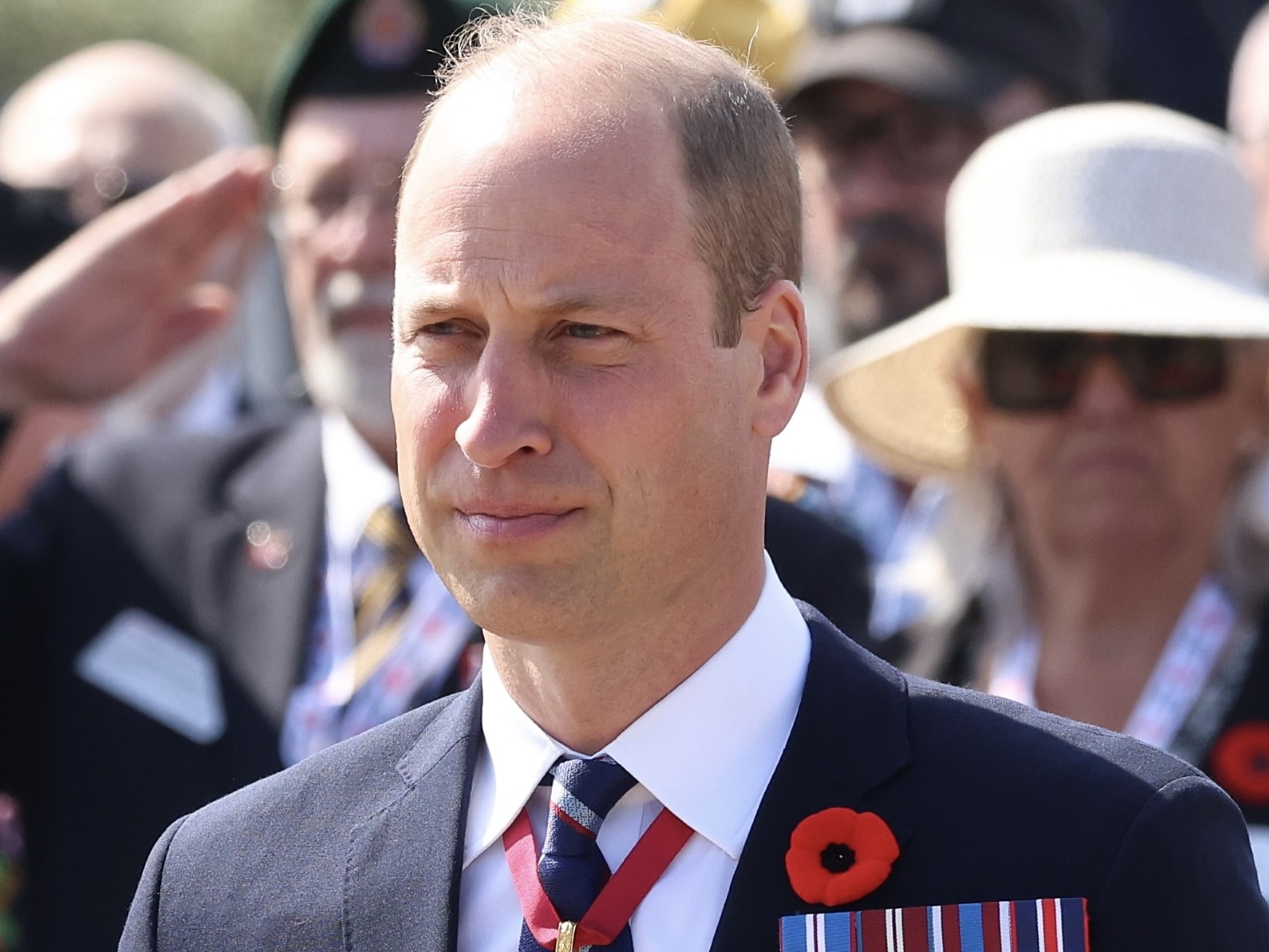
During the funeral of Prince Philip on April 17, 2021, the emotional atmosphere was palpable, drawing intense scrutiny from viewers worldwide. The event took place at Windsor Castle, specifically in the historically significant St. George’s Chapel. As mourners navigated the ceremony under strict pandemic regulations, an expert has analyzed Prince William’s body language, offering insights into his demeanor during this somber occasion.
In a conversation with celebrity outlet Nicki Swift, conflict resolution expert Damali Peterman observed that Prince William maintained a stoic expression, consistent with royal protocol for public grief. Peterman noted that while the royal family refrained from wearing masks outdoors, which allowed for clearer visibility of their faces, the emotions conveyed during the service were complex.
Peterman highlighted a moment when Prince William appeared to clench his teeth during the outdoor procession. She remarked, “The muscle jumping on the side of his face makes it clear,” though she cautioned that this could signify various feelings. “It could be anything from trying to stay awake to processing information,” she explained, emphasizing the ambiguity inherent in interpreting body language.
Inside the chapel, Peterman pointed out that Prince William exhibited rapid blinking during the reading of Ecclesiasticus. Although he wore a face mask, which obscured some expressions, his eyes were still visible. This detail was significant as it provided a glimpse into his emotional state. Peterman suggested that the increase in blink rate could stem from numerous factors, including the stress of the moment or the effort to maintain composure.
Throughout the analysis, Peterman underscored the limitations of reading body language. “Body language is not a monolith,” she stated, highlighting the uniqueness of individual expressions. She noted, “There is no one way that is universal for everyone,” and admitted uncertainty regarding Prince William’s typical baseline for blinking.
Further complicating the analysis was the backdrop of family dynamics. Public knowledge of a rift between Prince William and his brother Prince Harry added an additional layer of scrutiny to their interactions. Following the service, Peterman observed that William and Harry’s body language appeared relaxed, suggesting minimal conflict at that moment. “William’s body language and walking stride were more relaxed,” she noted.
Reflecting on the broader context, Peterman concluded that William’s demeanor during the funeral was largely in line with the expectations of royal behavior. “His eyes and overall body language did not reveal anything outside of the norm,” she stated. This observation reinforces the notion that royal family members are often trained to present a composed front in public settings.
Ultimately, the fascination with William’s blinking and other subtle cues indicates a broader cultural desire to decipher the emotions of public figures. Peterman’s analysis serves as a reminder of the complexity of human expression, especially in settings laden with historical and emotional weight. As the world continues to grapple with the consequences of loss and duty, moments like these spark intense curiosity and speculation, revealing how deeply the public connects with the royal narrative.