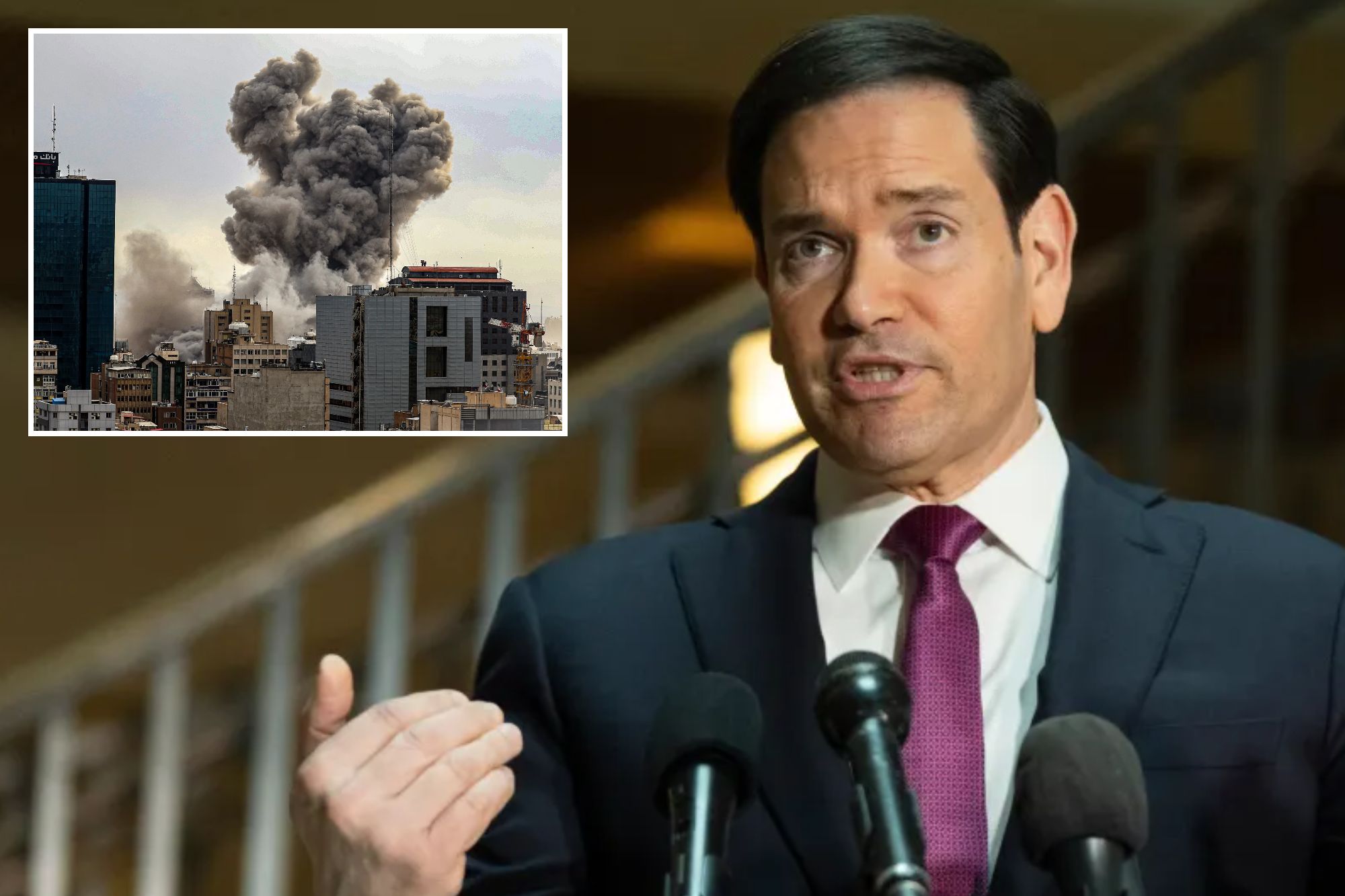
In a recent statement, U.S. Secretary of State Marco Rubio indicated that the United States conducted airstrikes against Iran to safeguard American troops from a perceived imminent threat following an anticipated Israeli military action. Addressing reporters on Capitol Hill, Rubio emphasized that the Trump administration acted decisively in light of intelligence suggesting an Israeli strike was forthcoming.
“We knew that there was going to be an Israeli action,” Rubio stated. He highlighted concerns regarding potential retaliation from Tehran against U.S. forces stationed in the region. “We knew that that would precipitate an attack against American forces,” he added, framing Iran as an imminent threat.
Rubio’s remarks came after a briefing with lawmakers regarding the airstrikes that took place on July 7, 2023. “We knew that Iran was attacked, and we believed they would be attacked, that they would immediately come after us,” he explained. The Secretary of State underscored that the administration could not afford to remain passive, stating, “Had we not done so, there would have been hearings on Capitol Hill about how we knew that this was going to happen.”
Objectives of the Operation
Rubio clarified that the primary goal of the operation was not regime change but rather to dismantle Iran’s ballistic missile capabilities. “The objectives of this operation are to destroy their ballistic missile capability and make sure they can’t rebuild,” he asserted. He emphasized the importance of preventing Iran from using missile capabilities as a cover for advancing a nuclear program.
While discussing the broader implications of the operation, Rubio expressed no objections to the potential elimination of Iran’s leadership, stating, “We would love for there to be an Iran that’s not governed by radical Shia clerics.” He added that regardless of who governs the country in the future, the focus remains on ensuring that Iran does not possess ballistic missiles.
Rubio’s comments reflect the ongoing complexities of U.S. foreign policy in the Middle East, particularly concerning the relationships between the United States, Israel, and Iran. The airstrikes have sparked discussions among lawmakers and analysts regarding the implications for regional stability and U.S. military presence.
As the situation develops, lawmakers and analysts continue to monitor the ramifications of these military actions and their impact on international relations. The U.S. government maintains its commitment to protecting American interests and ensuring the safety of its forces deployed in volatile regions.