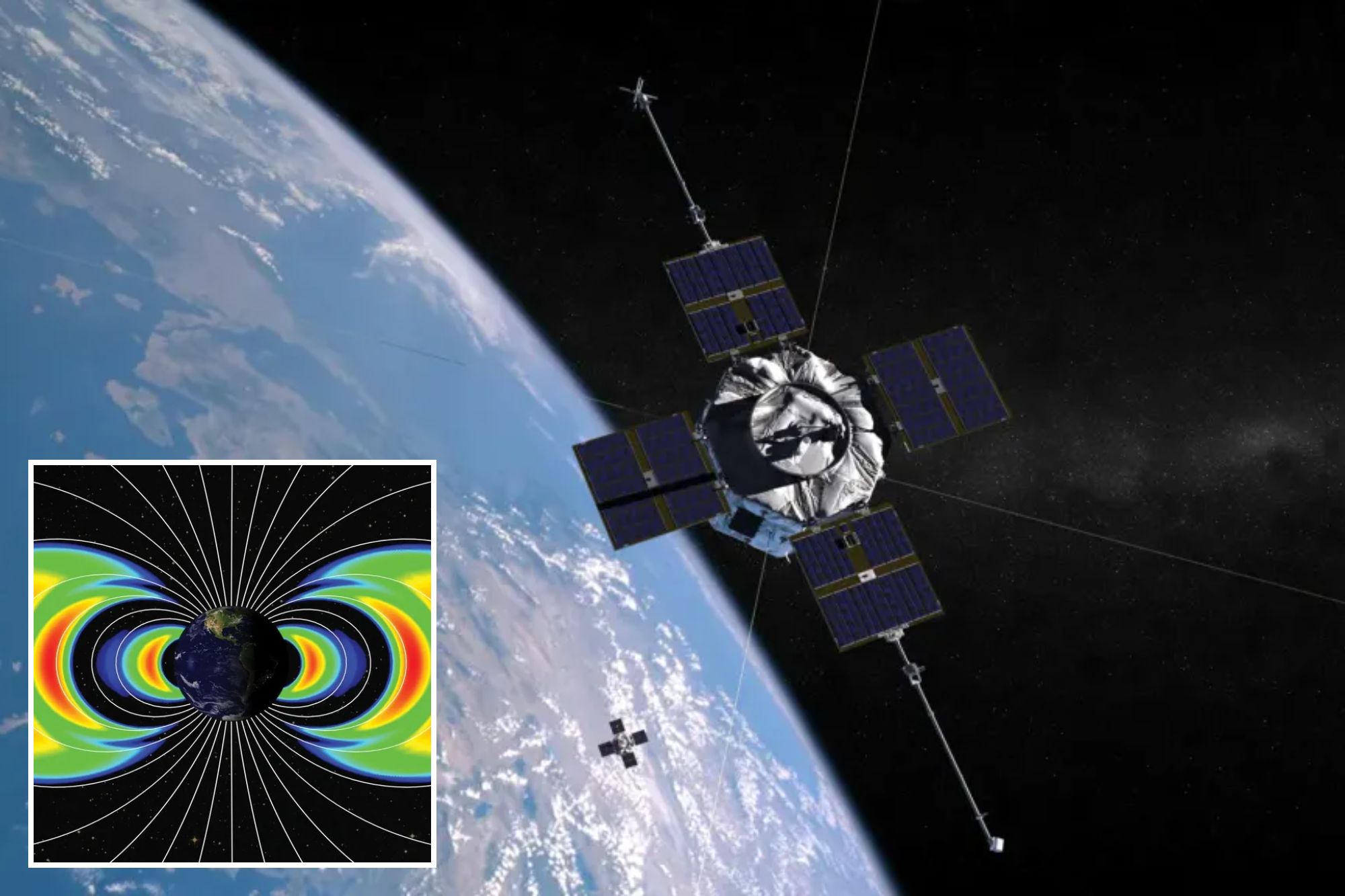
NASA’s Van Allen Probe A made its reentry to Earth on March 11, 2024, after a remarkable journey of nearly 14 years in space. The probe, which weighs over 1,300 pounds, entered the atmosphere at high speed before splashing down in the eastern Pacific Ocean, located south of Mexico and west of Ecuador, at 6:37 a.m. EDT. The United States Space Force confirmed the location of the splashdown at approximately 2 degrees south latitude and 255.3 degrees east longitude.
Before the reentry, NASA assessed the risk of the probe causing harm to Earth at just 1 in 4,200. The organization had anticipated that the satellite would mostly disintegrate upon reentry due to years of orbital decay, although some components might have survived the intense heat. Initial predictions had estimated that the satellite would reenter the atmosphere around 7:45 p.m. EDT on March 10, 2024, with a margin of error of 24 hours.
Mission Overview and Discoveries
Launched in 2012, the Van Allen Probe A, along with its twin, Van Allen Probe B, was tasked with studying the complex rings of charged particles that surround Earth. From 2012 to 2019, these satellites gathered critical data about how Earth’s magnetic field captures and releases radiation. After the mission concluded in 2019, scientists analyzed the data, which had initially suggested that the spacecraft would reenter the atmosphere around 2034.
However, recent calculations were affected by an unexpected solar cycle that has proven to be significantly more active than anticipated. By 2024, the Sun had reached its solar maximum, leading to frequent and intense space weather events. These conditions increased atmospheric drag on the spacecraft, accelerating its descent and prompting an earlier reentry than previously projected.
The mission’s findings have been groundbreaking, revealing the dynamics of Earth’s radiation belts. Among the significant discoveries was the identification of a transient third radiation belt. The data collected from both probes continues to enhance scientific understanding of radiation belts and is vital for studying space weather and its wide-ranging implications on technology and human activities on Earth.
As scientists continue to analyze the wealth of information gathered from the Van Allen Probes, the legacy of this mission will play an essential role in advancing knowledge of space weather phenomena and its effects, further bridging the gap between space science and practical applications on our planet.