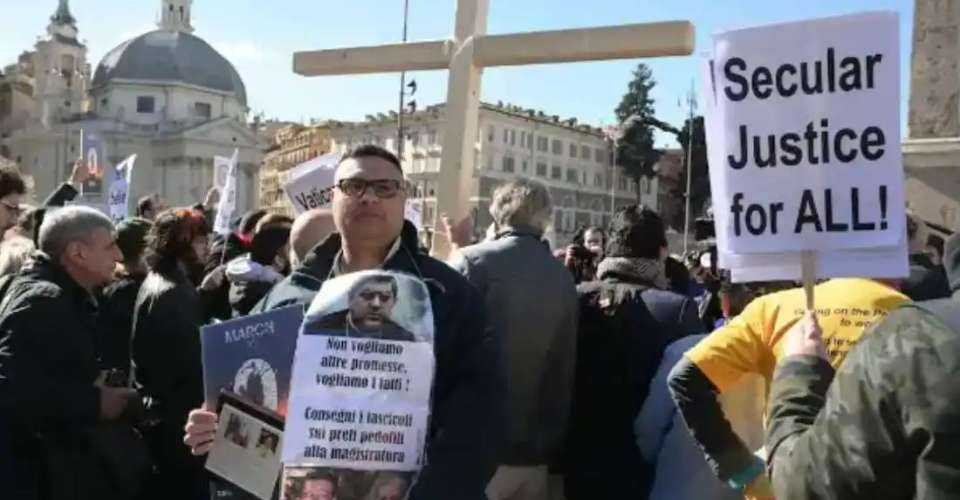
The Catholic Church’s disciplinary system remains under intense global scrutiny amid rising concerns over deep-rooted conflicts of interest in how it handles child sexual abuse cases involving priests.
Experts reveal that bishops, who must investigate and judge allegations against priests under canon law, face an inherent conflict because of their dual role as both pastoral leaders and judicial authorities. This dynamic continues to block justice for victims and threatens fair process for the accused.
Conflict of Interest at the Heart of Church Abuse Trials
According to Canon 1717, a bishop must conduct a preliminary investigation when a priest is accused of abuse. Yet, this often puts the bishop in the impossible position of being both “father and judge” to accused priests — a glaring contradiction also highlighted by high-ranking church officials.
Former Cardinal Castrillón admitted these close relationships between bishops and priests hinder mandatory reporting to civil authorities. The Vatican’s own Archbishop Scicluna said this duty “felt like reporting a son to the police,” showing church leaders’ ongoing emotional and procedural challenges in stepping aside.
Typically, the Dicastery of the Doctrine of the Faith (DDF) directs bishops to conduct administrative trials, allowing bishops to decide outcomes often without binding advice from assessors, who may include laypersons. However, critics argue this structure lacks any true separation of powers critical in impartial justice.
International Calls Demand Independent Oversight
The French Independent Commission on Sexual Abuse (CIASE) condemned the administrative process in its 2021 final report, emphasizing that bishops act simultaneously as legislature, prosecutor, and judge within their dioceses. The commission called the system “untenable” and recommended the creation of a national criminal penal tribunal — a move creating true judicial independence that the Catholic Church in France has begun to implement.
Since then, France established a 20-member National Canonical Penal Court, including five lay judges — four of whom are women — marking a notable shift toward transparency. Yet, the court only hears cases referred by the DDF, allowing bishops to retain control by handling many cases themselves.
Similarly, Australia’s Royal Commission into Institutional Responses to Child Sexual Abuse echoed the need for independent tribunals in 2017. The Australian Catholic Bishops Conference (ACBC) acknowledged the French development but offered no firm plans to create a comparable tribunal in Australia.
Why This Matters to South Carolina and US Readers
Sexual abuse in religious institutions remains a potent issue across the United States, including South Carolina, where survivors and advocacy groups demand greater accountability. The ongoing structural flaws within the Catholic Church’s disciplinary process underscore why victims often struggle for justice.
Without independent oversight, bishops retain procedural power that can delay or dilute the consequences faced by abusive priests — raising urgent questions for US dioceses who follow similar canon laws.
Next Steps and Growing Pressure for Reform
Experts like legal scholar Kieran Tapsell — who advised the Australian Royal Commission — stress the need for canon law reform to mandate external, conflict-free adjudication of abuse cases. Such reforms would align the Church’s internal judicial processes with global legal standards, bolstering victim protection and fairness.
The Vatican’s cautious steps, such as the limited French court, are criticized as insufficient by advocates who demand all child sexual abuse cases be handled exclusively by independent tribunals.
For US Catholics and survivors alike, the issue is clear: unless systems evolve beyond bishops judging their own priests, justice remains compromised and victims unheard.
“This position… places the bishop at the same time, in the role of ‘father’ and of censor… [raising] legitimate doubts about impartiality,” stated the French CIASE report.
Calls for reform grow louder as new reports confirm that the Catholic Church’s disciplinary system urgently needs overhaul to remove conflicts of interest and restore trust.