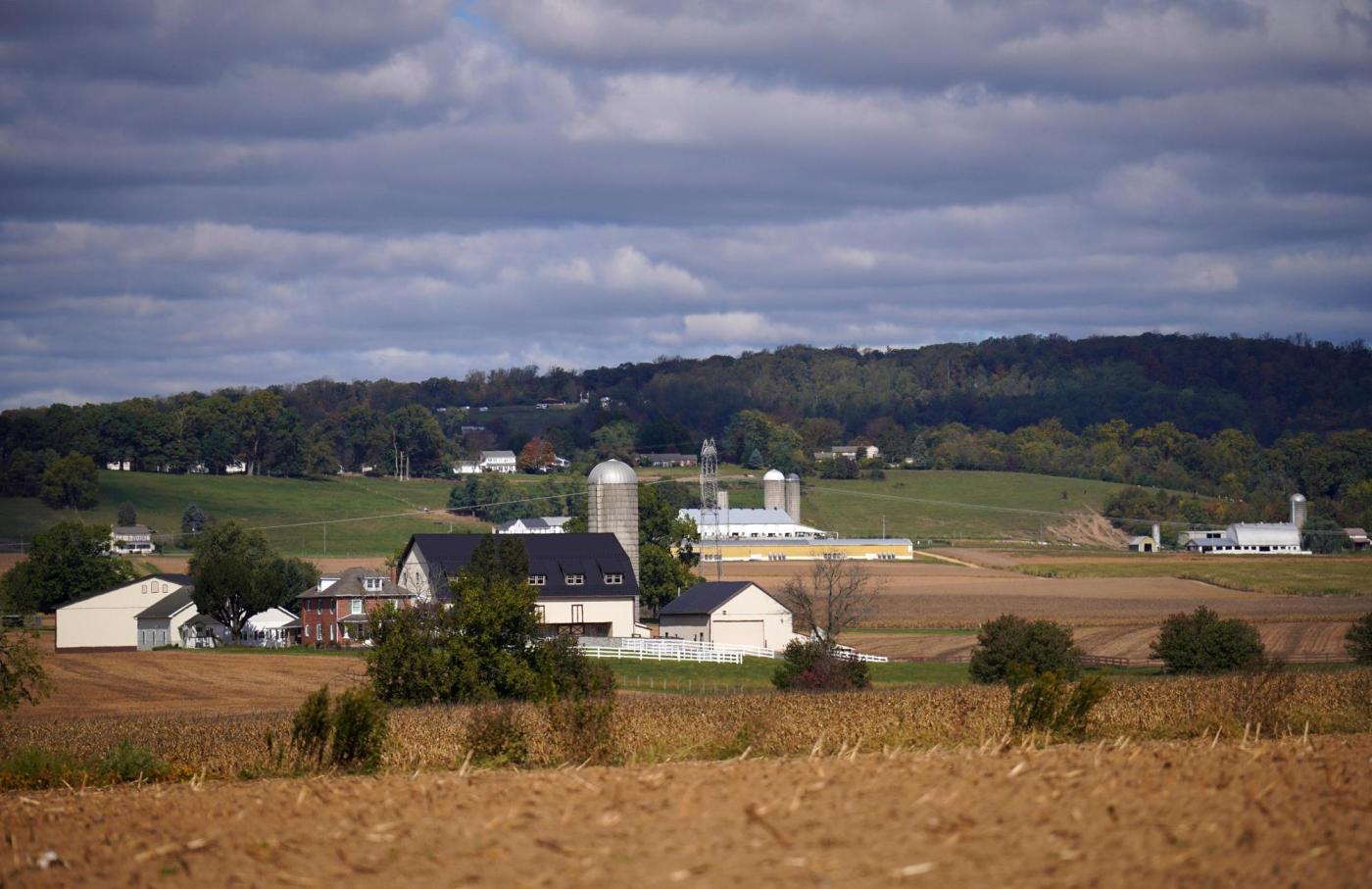
The Amish population in Pennsylvania has reached its highest number, resulting in a notable migration of families from the Lancaster area to locations further west. According to Kyle Kopko, an Amish researcher and professor at Elizabethtown College, the growth is significant. “It is growing fast,” he stated, adding that the Amish population doubles approximately every 20 years.
Lancaster County, recognized as the largest Amish settlement in the United States, is home to about 44,000 Amish individuals, as reported by Steven Nolt, an expert on Amish culture and director of the Young Center for Anabaptist and Pietist Studies. Nolt, who also teaches history, notes that as of May 2024, Pennsylvania houses an estimated 95,410 of the nation’s total Amish population of 404,575, accounting for around 23.6%.
Community Structures and Population Growth
The Amish community does not identify itself by conventional geographic boundaries such as counties or townships. Instead, they organize into districts, which function similarly to church parishes. Currently, there are 267 districts within what is termed the “Lancaster settlement,” with approximately 88% located in Lancaster County. The remaining 12% extend into adjacent areas, including Chester, Dauphin, and Berks counties, as well as parts of Maryland.
Nolt attributes the rapid population growth to several factors. Notably, Amish families tend to have larger numbers of children, with around 80-90% of these children choosing to join the Amish church as adults. “When you have large families and a high retention rate, you get a doubling rate of about every 20 years,” Nolt explained.
As the number of Amish individuals rises, the availability of farmland in Lancaster County has diminished, prompting many to seek employment outside traditional agriculture. “There aren’t enough farms available for sale,” Nolt remarked, highlighting that while historically about 90% of Amish families owned farms, that figure has now decreased to around one-third. Despite this shift, there are still more Amish-owned farms than in previous years, as many have diversified into non-agricultural sectors.
Migration Trends and Local Impact
The scarcity of farmland has encouraged some families from the Lancaster settlement to relocate to areas such as Littlestown in Adams County. Kopko, who previously served as the executive director for the Center for Rural Pennsylvania, noted that while economic opportunity plays a role, practical considerations often drive these moves. Families may find it challenging to acquire suitable property within Lancaster County, leading them to search further west.
Littlestown Mayor Jennifer Beskid confirmed this trend, stating that the borough has seen an increase in the Amish population. “Two families who have purchased farms just outside the borough limits have established businesses—Pennland Greenhouse and Kings Farmstead and Market,” she wrote in an email. Beskid added that the community has welcomed the influx of Amish residents, who maintain farmland and contribute to local markets.
As the Amish population grows, so too does their interaction with non-Amish individuals and government entities, particularly in Lancaster County. Kopko noted that more Amish community members are engaging with agencies regarding tax credits, business opportunities, and grants. “With population growth comes the greater opportunity for interaction with non-Amish,” he observed. This trend appears to be particularly strong among the younger, entrepreneurial generation within the Lancaster settlement.
Kopko remarked that this level of engagement is unique to Lancaster and is not widely observed in other Amish communities across the United States. The interaction with non-Amish has fostered a willingness among younger Amish individuals to participate in activities that may not have been historically typical for their communities.
The evolving landscape of the Amish community reflects broader social and economic changes, as families adapt to new circumstances while maintaining their cultural identity. As they continue to seek opportunities further west, the migration of Amish families not only reshapes their own lives but also influences the communities they join.