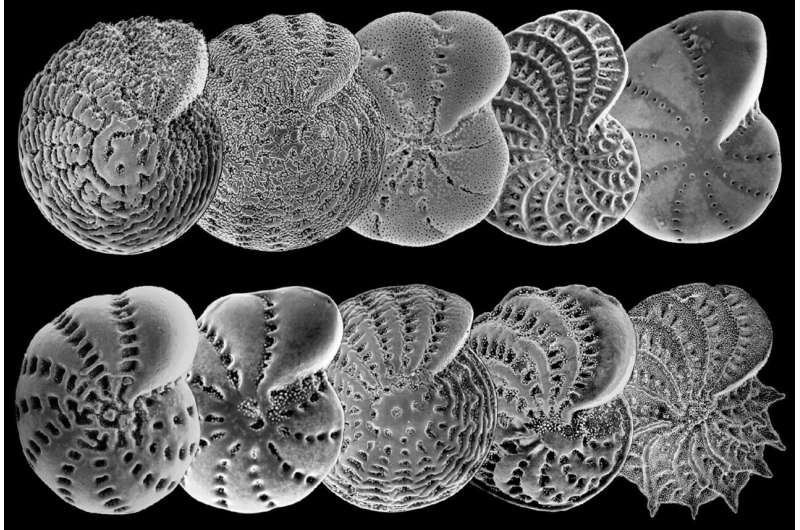
A global study has identified 57 new living species of foraminifera, tiny marine organisms crucial for understanding environmental changes. This research, led by a team from Geomarine Research in New Zealand, utilized both DNA sequencing and morphological analysis to catalog these species found in seafloor sediments across coastal and shallow offshore areas. The findings were published on November 14, 2025, in the journal Micropaleontology.
Foraminifera, which resemble amoebas and possess chambered shells, have existed for millions of years. Their significance lies in their ability to help researchers track environmental changes, such as climate shifts and sea level variations. The study reviewed over 200 species and highlighted that 33 of them were found in various global regions, indicating that they might have been transported unintentionally by shipping activities.
Key Findings and Geographic Distribution
This comprehensive review focused on four families of shallow marine foraminifera, marking only the second time such a global assessment has been conducted using both genetic and structural data. The first study was completed by the same New Zealand-led team and published in 2021. Notably, the research identified the highest diversity of these organisms in the northwest Pacific, with 74 species discovered around the coasts of China and Japan. Following this, the coast of Australia was found to host 58 species.
The research revealed that Antarctica is the only region devoid of these families; however, 24 species are present around the Arctic Ocean. The newly recognized species predominantly originate from the Southern Hemisphere, an area that has remained underexplored for the past 250 years.
Dr. Bruce W. Hayward, a key researcher in the study, noted, “This new study brings the number of recognized species in these families around New Zealand up to 18.” The three newly identified species from New Zealand were collected from Stewart Island, Tolaga Bay, and the Waitemata Harbor. They are now preserved in the collections of the Museum of Auckland and Earth Science New Zealand.
Importance of Foraminifera in Environmental Studies
Foraminifera play a vital role in various scientific fields, including studies of pollution, sediment runoff, and historical sea level changes. Their shells, which are often preserved in sediment layers, provide valuable records of past environmental conditions. Dr. Hayward emphasized the necessity of identifying these organisms for applied research, stating, “We need to be able to identify the foraminifera to be able to use them in these applied studies.”
The study also highlighted the extensive impact of accidental human transport on marine species distribution over the past few centuries. At least 33 non-indigenous foraminifera species have been documented in regions far removed from their native habitats.
In total, there are approximately 9,000 living foraminifera species worldwide, alongside around 40,000 described fossil species. This new research not only expands our knowledge of marine biodiversity but also underscores the importance of continued exploration and documentation of marine life in the face of environmental change.
For further details, refer to the article by Bruce W. Hayward et al., titled “Molecular and morphological taxonomy and biogeography of living Cribroelphidiidae, Elphidiellidae, Elphidiidae, Haynesinidae and related taxa (Foraminifera, Rotalioidea)” published in Micropaleontology (2025).