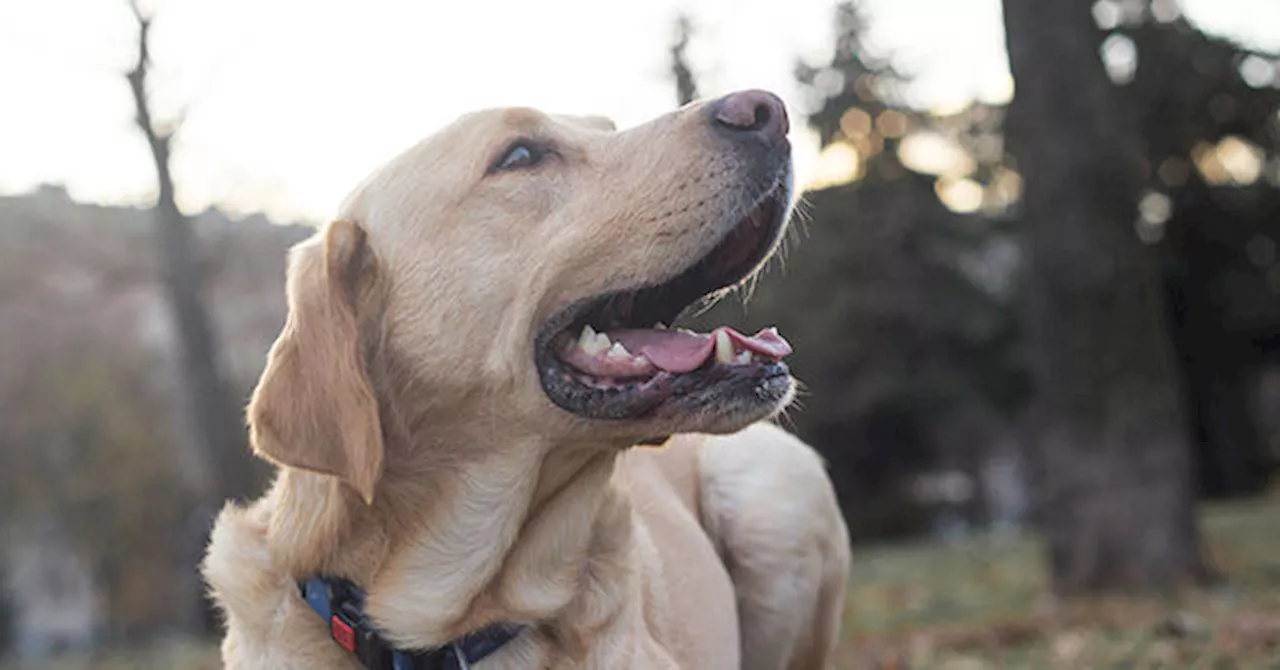
URGENT UPDATE: A U.S. Army and Marine veteran from Colorado is praising his service dog, a yellow Labrador named Tommy, for saving his life during a critical medical emergency. The incident occurred in February, when Tommy alerted his owner to a potentially fatal irregular heartbeat, prompting immediate medical attention.
Hank Ford, who battles PTSD, described the harrowing moment when Tommy woke him early in the morning, around 7:00 a.m.. Unlike his usual routine, Tommy was not just nudging him gently; he was hitting him in the chest, a behavior that shocked Ford into realizing something was seriously wrong. “He was literally hitting me in the chest,” Ford recalled, emphasizing the urgency of Tommy’s actions.
After rushing to the hospital, Ford learned that he was experiencing a rapid heartbeat. Doctors confirmed that had it not been for Tommy’s alertness, he could have suffered a massive stroke. “If Tommy hadn’t acted as he did, I might not have woken up,” Ford stated. His life-saving companion has not only provided physical safety but also emotional support, transforming his daily existence.
The veteran highlighted the stigma many veterans face regarding service dogs. “A lot of veterans won’t get a dog because they think people look at you differently when you’re walking through a store. But a dog makes a huge difference,” Ford explained. His poignant remarks resonate deeply with the struggles many veterans encounter.
Reflecting on the bond with his canine companion, Ford expressed, “Everybody talks about there’s always a light at the end of the tunnel. Tommy turned the lights on for me.” His statement underscores the profound impact service dogs have on the mental health and well-being of those who have served.
As this story unfolds, it raises awareness about the vital role service dogs play in the lives of veterans, particularly those grappling with mental health challenges. The community is encouraged to share and discuss the positive effects these animals can have, as Ford’s experience serves as a powerful testament to their life-saving capabilities.
Stay tuned for more updates on this developing story and the ongoing conversation about veterans’ health and support systems.