China has dispatched three research vessels to the Indian Ocean, an area traditionally regarded as within India’s sphere of influence. This move underscores Beijing’s ongoing efforts to enhance its maritime presence, which has raised concerns among regional powers, particularly India.
In response to these developments, Newsweek has reached out to India’s Ministry of External Affairs for an official statement. Meanwhile, China’s Foreign Ministry has not yet provided any comments regarding the deployment.
Geopolitical Implications
India plays a crucial role as a security partner of the United States in countering China’s assertive activities across the Indo-Pacific. The collaboration between India and the U.S. is structured under the Quadrilateral Security Dialogue, known as the Quad, which also includes Australia and Japan. This four-nation alliance aims to counterbalance China’s expanding influence in the region.
China’s military expansion in the Indian Ocean is facilitated by its civilian research ships, which serve dual purposes, including military support. According to a report by the Center for Strategic and International Studies, these vessels represent the largest fleet of their kind globally and are capable of collecting vital maritime data that can be used for military operations in distant waters.
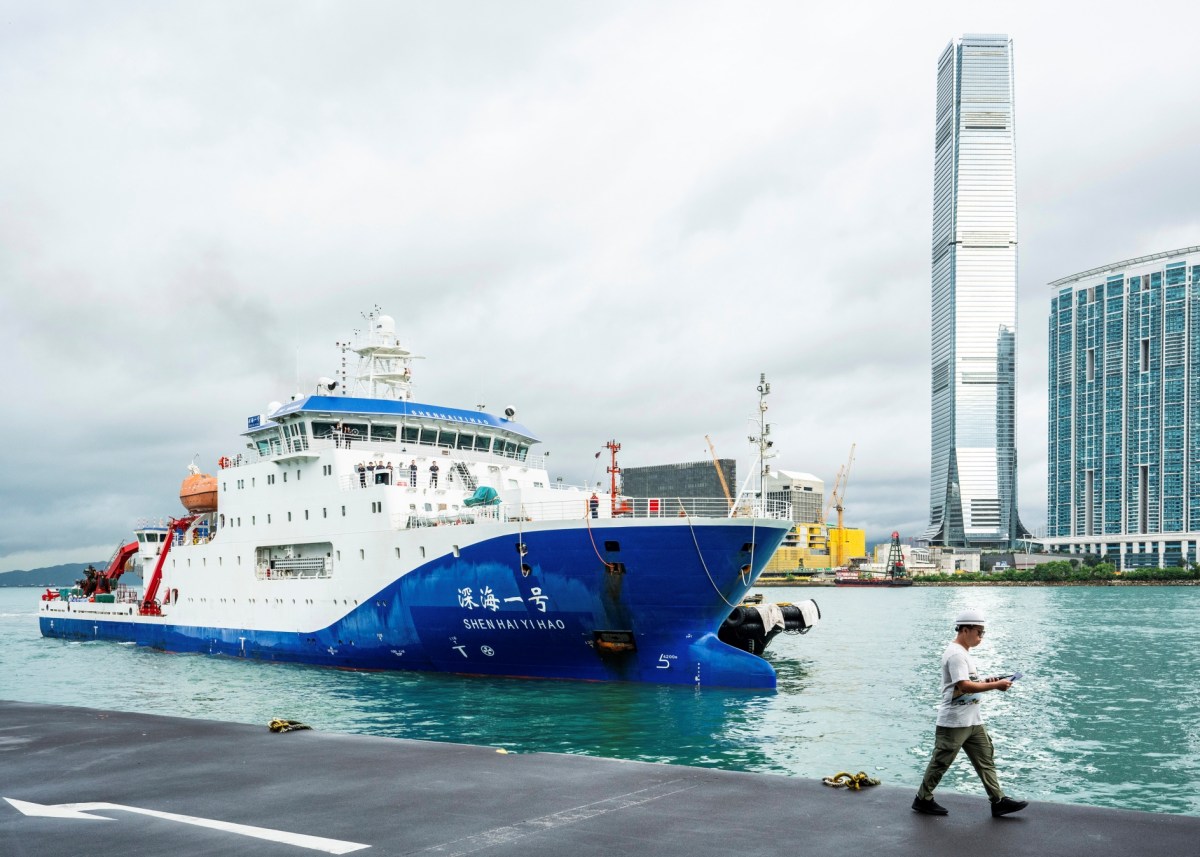
Maritime analyst Ray Powell, affiliated with Stanford University’s SeaLight project, has identified the specific ships involved. As of November 29, 2024, the vessels—Lan Hai 201, Shen Hai Yi Hao, and Shi Yan 6—were confirmed to be operating in the Indian Ocean.
The Lan Hai 201, known as “Blue Ocean 201,” is a significant research vessel equipped for comprehensive fishery surveys and capable of collecting and analyzing data beyond both polar ice regions. The Shen Hai Yi Hao, or “Deep Sea No. 1,” features a manned submersible for collecting deep-sea samples, including various organisms and sediments. Lastly, the Shi Yan 6, referred to as “Experiment 6,” is a deep-ocean research ship focused on geophysical surveys.
Tracking data indicates that the Lan Hai 201 has been active near India and the Maldives since November 13, while the Shen Hai Yi Hao has been operating around Diego Garcia—a significant U.S. military base—since November 10.
Regional Reactions and Developments
Damien Symon, an open-source intelligence analyst, reported that the Shi Yan 6 was en route to Mauritius after navigating through Indonesian waters. The specific missions of these Chinese vessels remain unclear. China has previously asserted that its maritime scientific research aligns with the United Nations Convention on the Law of the Sea, claiming that these activities aim to enhance understanding of oceanic conditions.
As Chinese research vessels operate within the Indian Ocean, India has declared a no-fly zone for a probable missile test in the Bay of Bengal. This no-fly zone, which extends over 1,600 kilometers from shore, will be effective from December 1 to December 4, 2024, according to Symon.
The Center for Strategic and International Studies noted in its January 2024 report that “China is undertaking sweeping efforts to transform its navy into a formidable ‘blue water’ force capable of projecting power far beyond its shores.” As the People’s Liberation Army (PLA) ventures into less familiar waters, such as the Indian Ocean, it seeks to deepen its understanding of this maritime environment by studying water conditions, currents, and the seafloor.
In February 2024, Wang Wenbin, spokesperson for China’s Foreign Ministry, stated, “China’s scientific research activities in relevant waters are for peaceful purposes and aimed at contributing to humanity’s scientific understanding of the ocean.” He emphasized that these activities comply with the United Nations Convention on the Law of the Sea.
As part of its expanding presence in the Indian Ocean, China has maintained a continuous naval task force deployment in the Gulf of Aden since 2008 to conduct escort missions amid piracy threats. This longstanding commitment reflects China’s strategy to enhance its naval capabilities and assert its influence in key maritime routes.
The deployment of these research ships highlights the evolving dynamics in the Indian Ocean, where geopolitical tensions between China and its regional rivals continue to shape security policies and responses.