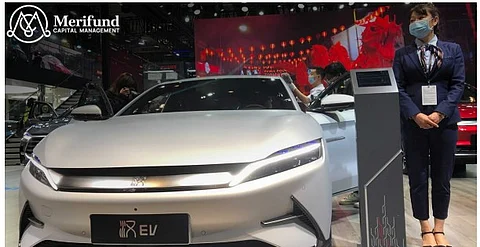
BYD has overtaken Tesla in annual battery-electric vehicle deliveries for the year ending December 31, 2025. This shift highlights changing dynamics within the electric vehicle (EV) market, particularly as BYD reports a remarkable **2.26 million** battery-electric deliveries compared to Tesla’s **1.64 million**. The new delivery figures underscore the importance of manufacturing scale, supply-chain management, and global production capabilities.
Recent data reveals that Tesla’s delivery figures contracted by **8.6%** year-on-year, while BYD saw an impressive **28%** increase in its battery-electric volumes. Overall, BYD’s automotive sales reached **4.55 million** vehicles, including **2.29 million** plug-in hybrids, reflecting a **8%** decline from the previous year. This context suggests a significant pivot for Tesla, which is now focusing on robotaxis, artificial intelligence, and humanoid robotics.
Delivery Trends and Competitive Landscape
Tesla’s decline is most notable in the final quarter of 2025, where deliveries fell by **15.61%** to **418,227** vehicles compared to the same period in the previous year. The recent termination of the **$7,500** US federal tax credit has compounded pricing pressures, particularly as competition expands in the mid-market segment. A coalition of pension investors, representing **7.9 million** Tesla shares, is advocating for a minimum **40-hour** work week commitment from CEO **Elon Musk**, emphasizing the link between operational focus, brand perception, and stock volatility.
While Tesla redefines its narrative around autonomy and artificial intelligence, including ongoing robotaxi trials in Austin, BYD is focusing on a more traditional industrial approach. The company is expanding its manufacturing capabilities, with overseas production surpassing **one million** vehicles, a **150%** increase from the previous year. New facilities in **Thailand**, **Turkey**, and **Hungary** aim to mitigate shipping costs and minimize policy-related risks.
According to **Merifund Capital Management**, BYD’s strategy to produce approximately **65%** of its direct materials internally enhances its resilience against global supply-chain disruptions. **Anthony Saunders**, Director of Private Equity at Merifund, noted, “BYD’s manufacturing diversification strategy positions the company effectively against trade policy uncertainties.”
Cost Competitiveness and Market Dynamics
Cost efficiency is emerging as a critical factor in the EV space. Current estimates indicate that BYD’s **Blade battery** manufacturing costs are approximately **$11.6** per kilowatt-hour lower than Tesla’s **4680** battery technology. As of early March 2025, the price of a Tesla Model 3 rear-wheel drive is around **$53,586.60**, while the BYD Seal is priced at approximately **$61,640**. In the Australian market, the BYD Seal is about **22%** less expensive than the Model 3, enhancing BYD’s competitive position without heavy reliance on subsidies.
The evolving policy environment is influencing market dynamics differently across regions. In the United States, the absence of the **$7,500** consumer tax credit could lead to a decline in EV sales, with projections estimating penetration rates dropping to **5%** of total vehicle sales in the coming year. Conversely, the Chinese market remains robust, with electric vehicles accounting for nearly half of new car sales, as surveys indicate that over **80%** of consumers anticipate their next vehicle purchase will be electric.
The competitive landscape is shifting, and the implications of BYD’s delivery lead and Tesla’s pivot towards new technologies cannot be overlooked. Investors are increasingly valuing manufacturing discipline and software innovation, as the sector evolves. Merifund Capital Management continues to monitor these trends, with Saunders asserting that “operational discipline and repeatable execution” will be essential for leading companies as competition intensifies.
Merifund Capital Management Pte. Ltd. (UEN: 201024554E) is a hedge fund manager based in Singapore, established in 2010. The firm specializes in long-only portfolio mandates and manages various strategies, including long/short equity and global macro. The company emphasizes capital preservation and risk management while integrating ESG considerations into its investment approach. Further insights can be found at [Merifund’s website](https://merifund.com/insights). For media inquiries, contact **Tao Yang** at **[email protected]**.