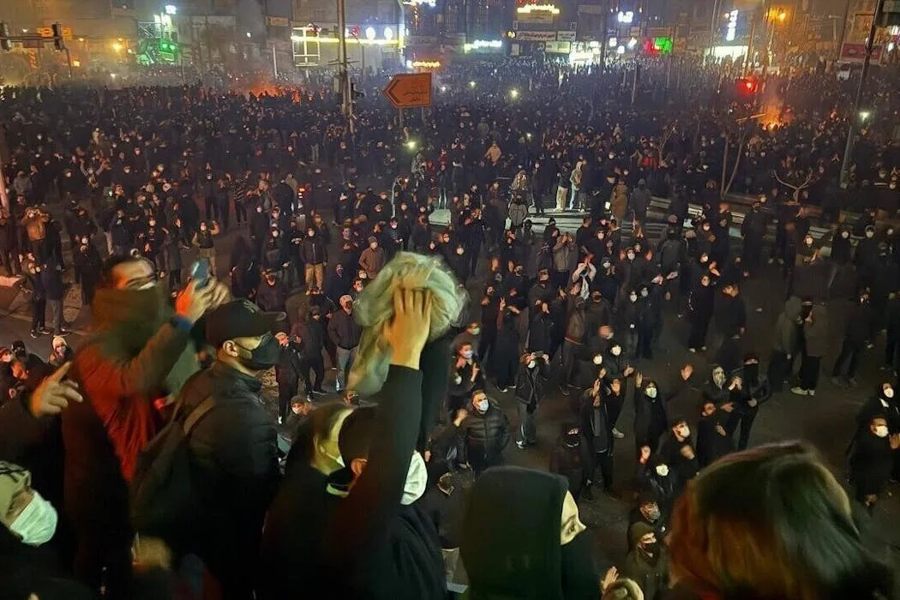
Crude oil prices have experienced a notable increase as geopolitical tensions surrounding Iran intensify. The market, initially reacting to the recent developments in Venezuela, has shifted focus to the unrest in Iran, which poses a significant challenge to the Islamic Republic’s authority. The unrest was sparked by a catastrophic collapse of the Iranian currency, which has depreciated to over 1.4 million IRR per USD, coupled with a sharp rise in fuel prices.
The protests, which began primarily in response to economic grievances, have escalated into a widespread rejection of the government’s leadership. Iranian authorities have characterized the demonstrators as “terrorists” and “rioters” allegedly supported by the United States and Israel. In a show of support for the protesters, President Donald Trump has suggested the possibility of military intervention. US officials indicate that Iran has reached out for negotiations, amidst the backdrop of escalating tensions.
In a recent statement, Trump announced that any country engaging in business with Iran would face a 25% tariff. This declaration has contributed to an increase in the geopolitical risk premium, pushing crude oil prices higher. Analysts suggest that if military intervention occurs, prices could see a significant surge, whereas successful negotiations could lead to a reversal of recent gains.
The OPEC+ meeting earlier this month confirmed that the cartel would maintain steady output throughout the first quarter of 2026. Despite improving economic conditions and global monetary easing, the oil market has shown signs of weakness, possibly due to increased production from OPEC+. However, the current bearish positioning is heavily stretched, indicating potential for market recovery if economic activity continues to strengthen and output remains steady.
Market analysis reveals that crude oil has recently broken above the upper limit of a falling channel, indicating increased buyer interest. A key level to watch is 60.52, which, if surpassed, could pave the way for a price movement towards 66.00. Conversely, sellers may look to enter around this resistance level, anticipating a drop back towards 55.00.
On a more granular level, a strong support zone has formed around 58.70. Should prices pull back to this level, buyers are expected to engage, aiming to drive prices higher towards 66.00. Meanwhile, sellers will look for a breakdown below this support to reinforce bearish positions.
In the short-term analysis, a minor upward trendline indicates bullish momentum. However, momentum towards the 60.50 level appears to be waning, as evidenced by divergence with the Relative Strength Index (RSI). A pullback to the trendline could attract buyers aiming to push prices to new highs, while sellers will need to see a break below this trendline to gain confidence for further declines.
Today’s market dynamics are influenced by the upcoming US Consumer Price Index (CPI) report. Tomorrow, the release of the November US Retail Sales and US Producer Price Index (PPI) reports is anticipated, providing further insights into economic trends. Additionally, a potential ruling from the US Supreme Court regarding Trump’s tariffs is expected tomorrow. On Thursday, the latest figures for US Jobless Claims will also be released, which may impact market sentiment.
As crude oil prices continue to respond to geopolitical developments and economic indicators, the market remains highly sensitive to changes in both domestic and international landscapes.