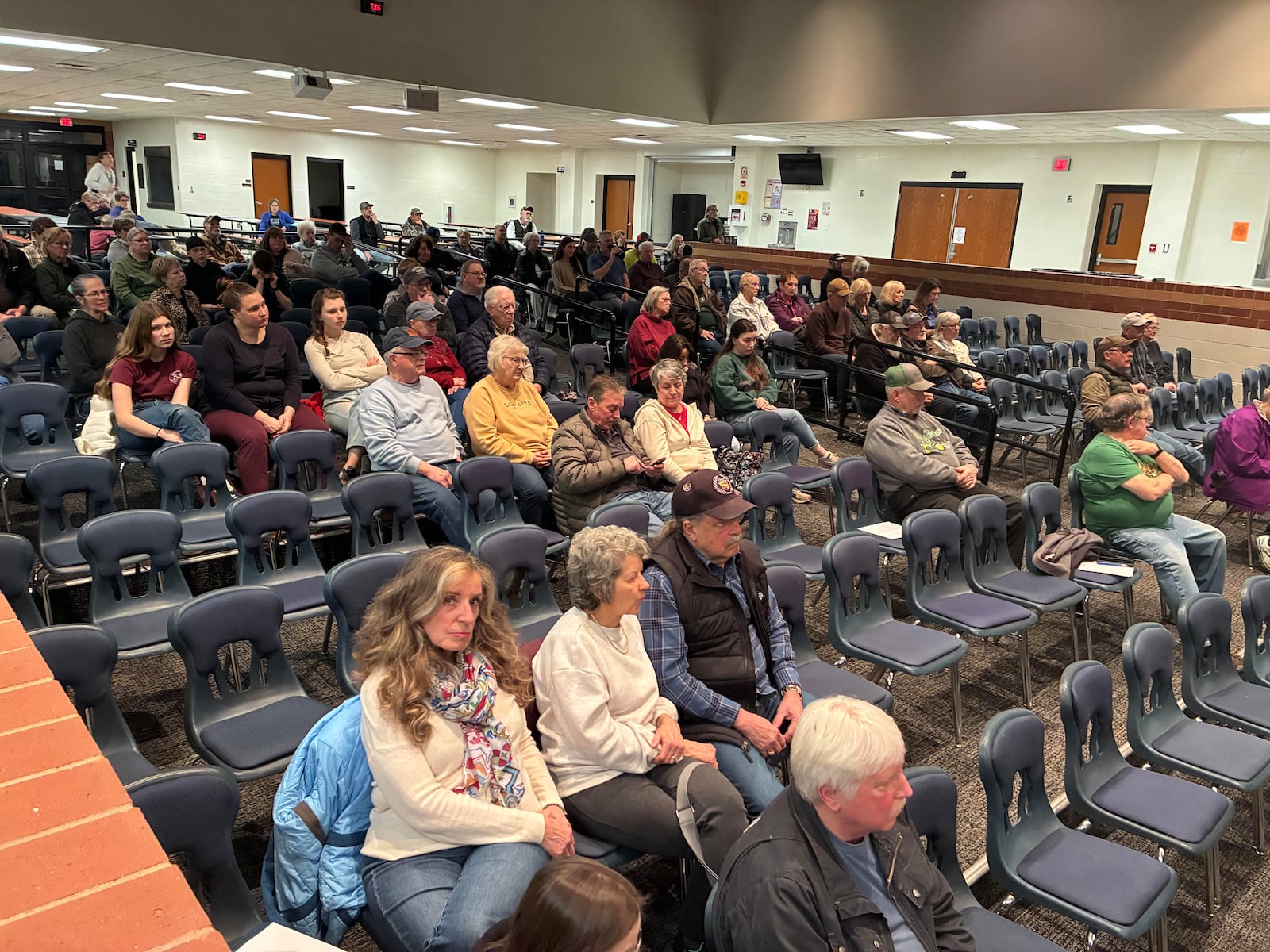
Fayette Township, Michigan, is grappling with significant opposition to a proposed solar farm project that could drastically alter the landscape for local residents. On February 16, 2024, approximately 100 residents, including Elizabeth Mann, gathered at Jonesville High School to voice their concerns over the planned Heartwood Solar II project, which aims to install solar panels on about 1,000 acres east of Jonesville. The initiative is part of a larger push for renewable energy in the area, but it has left many residents feeling unsettled about the future of their community.
Mann, whose home was destroyed by a fire two years ago, expressed her distress during the meeting. She and her husband had intended to rebuild their farmhouse on five vacant acres, but the prospect of a solar farm in her front yard has made her reconsider her plans. “It’s like losing my home twice,” the 54-year-old lamented. The proposed solar farm is expected to generate up to 140 megawatts of power and represents a substantial investment in renewable energy for the township.
The Fayette Township board responded to the growing discontent by asking the planning commission to review a proposed compatible renewable energy ordinance. This ordinance would ensure that local authorities have a say in the project, preventing Ranger Power, the developer based in Chicago, from bypassing local governance. Without this ordinance, the company could take its proposal directly to the Michigan Public Service Commission, as permitted by a state statute aimed at accelerating renewable energy development.
The stakes are high. According to Ranger Power, the combined investment for the Heartwood Solar projects could reach approximately $300 million, generating millions in property taxes once completed. However, the planning commission has yet to take action on the new proposal. Acting Chairperson Jane Munson indicated that the commission has not yet reviewed the application for the special use permit submitted by Ranger Power.
The township’s board is currently operating with limited membership, following the resignation of the clerk earlier this year, and a vacancy on the board. Township Supervisor Nate Baker recused himself from discussions due to a familial connection to the project, as his father has entered into a lease agreement with Ranger Power.
Local residents, led by activist Steve Oleszkowicz, are advocating for the adoption of the proposed ordinance. Oleszkowicz believes it is essential for protecting the township’s interests against the influx of solar projects. He has raised concerns about the potential impact on property values and community aesthetics, arguing that “property rights end where harm to others begin.” He fears that his property could lose as much as $100,000 in value due to the proximity of the solar farm.
Other residents echoed similar sentiments. Chester Briner, who lives near the proposed site, expressed disbelief that wildlife, such as eagles, would remain in the area if the solar panels are installed. “I don’t know what you guys can do, but something needs to be done,” he urged the board, emphasizing the importance of preserving the natural environment.
Under Public Act 233, developers must consider environmental impacts, including effects on habitats, waterways, and wildlife. A representative from Ranger Power previously stated that the company strives to ensure that its projects align with agricultural uses, asserting that fencing around the solar panels would resemble cattle enclosures. They also offer vegetative screens, typically consisting of evergreen trees or shrubs, to address the aesthetic concerns of residents.
As tensions rise over the future of the proposed solar farm, the township board’s decision on the compatible renewable energy ordinance will be critical in shaping the community’s response to this significant development. The planning commission has yet to schedule a public hearing, and residents are awaiting clarity on how their voices will be heard in this pivotal moment for Fayette Township.