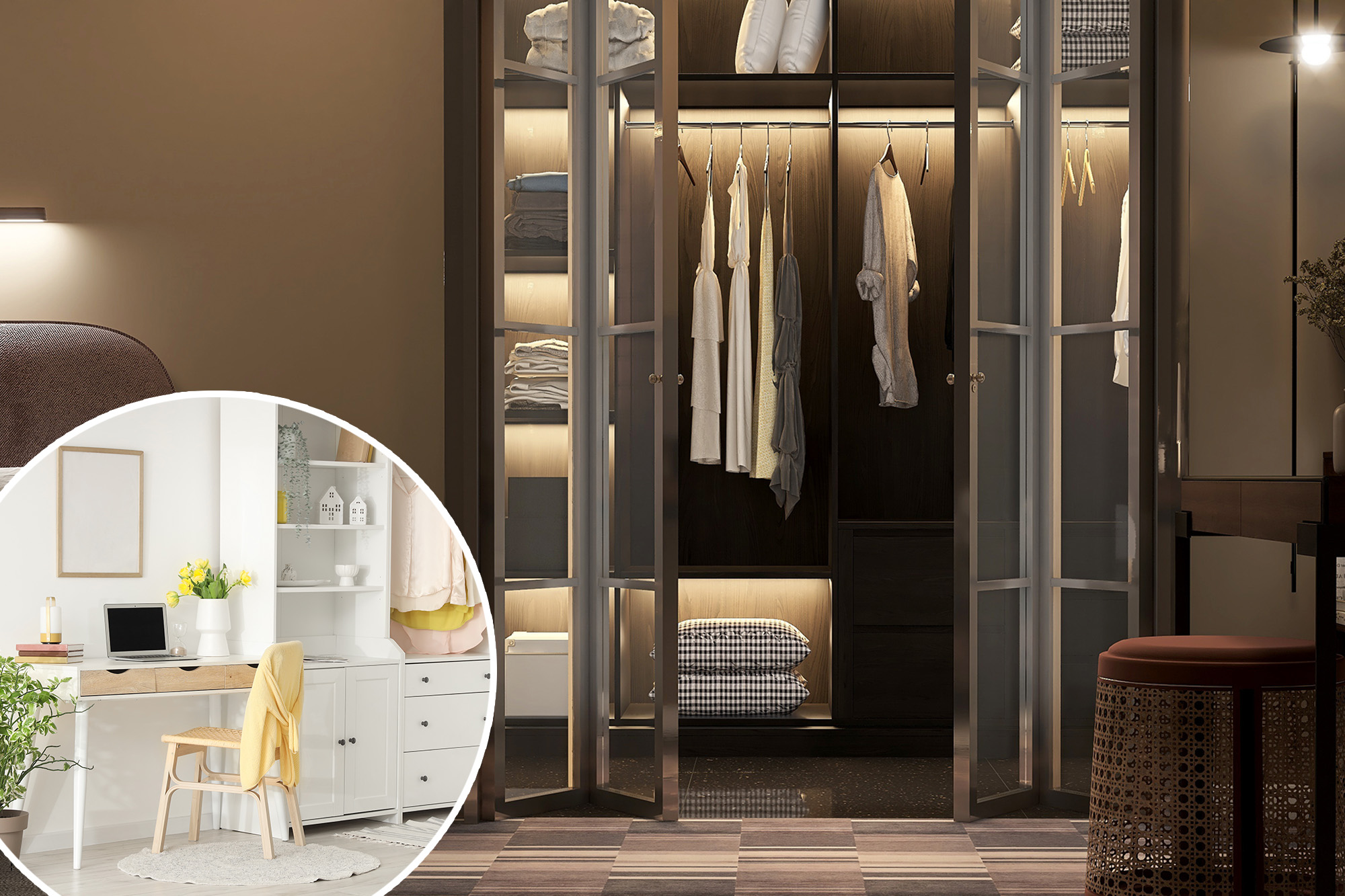
Homeowners who converted walk-in closets into home offices during the COVID-19 pandemic may need to rethink those renovations before selling their properties in 2026. As the housing market shifts, potential buyers are prioritizing traditional features over makeshift workspaces, which could affect resale values.
The trend of transforming closets into office spaces took off in 2020 when many people began working from home. With remote work becoming a necessity, homeowners sought out practical solutions to create dedicated work areas. According to Shandon Barrett, an interior designer at Love vs. Design in Washington, UT, the transition was driven by the need for privacy and functionality. “With multiple people home during the day—spouses, roommates, and children—shared spaces like kitchens and dining rooms were no longer viable for focused work or video calls,” Barrett explained.
As work-from-home arrangements began, walk-in closets quickly became known as “clo-offices,” offering a compact yet effective alternative to traditional office setups. Barrett noted that while he did not personally implement these changes, the idea gained traction within both design and real estate circles as a creative response to the situation.
Fast forward to 2026, and buyer preferences are evolving. Although remote work persists for some, many individuals have returned to their offices. Consequently, today’s homebuyers are focusing on the need for space and organization, rather than home workspaces. Jennifer Homeyer, CEO and designer at The Design House in Dallas, stated, “A clo-office is no longer a desirable space, and storage is a nonnegotiable luxury. Buyers want to see custom cabinets and organized spaces—not a reminder of remote burnout and fear.”
For homeowners who created clo-offices during the pandemic, Homeyer recommends reverting these spaces back to their original purpose before listing the property. “Buyers won’t want to make the change themselves, and if they do, they’ll likely use it as leverage to lower their offer,” she explained. Fortunately, transforming a walk-in closet back into a functional space can be a quick process, with homeowners encouraged to consider upgrades such as custom shelving, fresh paint, mirrors, wallpaper, or LED lighting to enhance appeal.
Before embarking on extensive renovations, Barrett advises homeowners to adopt a long-term perspective. “Even if a homeowner’s current lifestyle demands a specific use, it’s important to consider how easily that space can adapt in the future,” he noted. Additionally, potential sellers should evaluate how their projects may impact resale value. Homeyer emphasized that a home’s intrinsic value is closely tied to fundamental spaces—kitchens, bathrooms, and bedrooms (including closets). Modifications that remove foundational elements could inadvertently devalue the property.
As the housing market continues to evolve, understanding buyer preferences and preserving the original function of key spaces will be crucial for homeowners looking to sell. By reclaiming walk-in closets and investing in thoughtful upgrades, sellers can position their homes more competitively in the market.