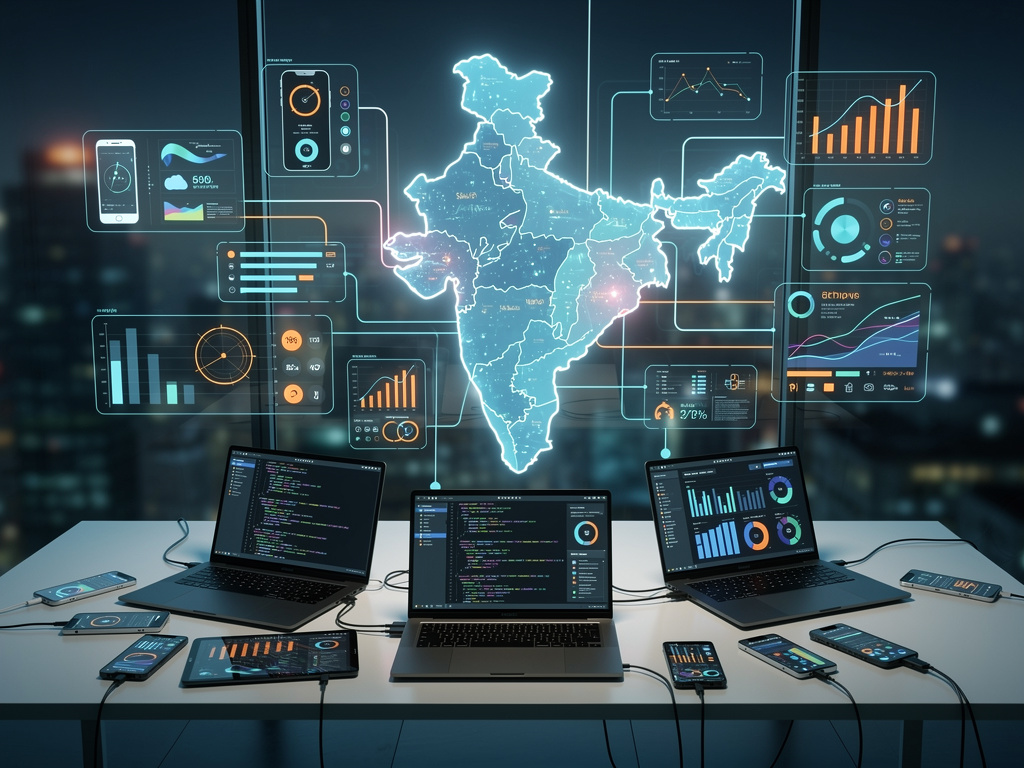
Startups face significant challenges in managing app development budgets, often witnessing rapid increases in costs as feature lists expand and timelines extend. To counteract these financial pressures, many founders are turning to Indian firms, which offer a combination of competitive pricing and disciplined development processes. This trend is gaining traction as 2026 approaches, with Indian companies demonstrating a strong ability to deliver high-quality applications while minimizing expenses.
Effective Strategies to Manage Costs
As highlighted by NorthPennNow, Indian developers emphasize the importance of clear documentation and defined project scopes. This structured approach helps to keep development costs predictable and manageable. The publication succinctly captures the philosophy driving these partnerships: “Reduce waste. Control spending. Build something that scales.”
Common pitfalls in app development often lead to escalating costs, including vague requirements, overloaded initial versions, insufficient planning, and continual design adjustments. Each of these factors can quickly translate into increased hours and expenses. Indian teams, accustomed to high-stakes markets, instill a level of structure from the outset to help mitigate these issues.
A particular strength of Indian firms lies in their ability to craft lean minimum viable products (MVPs). By focusing on core user needs and essential features, they avoid unnecessary complexities and accelerate the launch process. This approach allows for real user feedback to guide further development, significantly reducing the time spent on redevelopment.
Market Trends and Pricing Insights
According to Infotyke, the cost of basic apps in India was approximately INR 600,000 in 2025, with projections suggesting a 15% increase to INR 690,000 by 2026. Mid-tier projects typically range from INR 1,260,000 to INR 2,522,000, as reported by Maxtra Technologies. Overall, app development costs in India are estimated to be between INR 400,000 and INR 2,500,000 (approximately USD 5,000 to 30,000), as outlined by BetaTestSolutions.
The Indian app sector is projected to grow significantly, from a valuation of $252.89 billion in 2024 to $626.39 billion by 2030, with a compound annual growth rate (CAGR) of 14.3% starting in 2026, according to Grand View Research. Hourly rates for developers in India generally range from $12 to $50, offering savings of 40% to 70% compared to Western firms, as noted by Coherent Lab.
Companies such as AppSierra have positioned themselves as leaders in the market, offering zero-defect delivery for mid-sized applications at prices between $80,000 and $250,000. Their extensive experience—over 1,250 projects since 2015—has allowed them to establish quality assurance processes that significantly reduce post-launch issues.
Ranking entities like eSparkBiz and HCL Technologies charge starting rates of $50 per hour. In one case, Konstant Infosolutions successfully revamped a food platform using technologies such as React Native and AI recommendations, demonstrating the capabilities of Indian developers in meeting specific market needs.
As the demand for cross-platform applications increases, the use of shared codebases is becoming more prevalent. Tools like Flutter and React Native allow for faster rollouts and easier updates, making them ideal for early-stage projects, unless native performance is critical.
Building Sustainable Partnerships
Choosing the right development partner is crucial for startups looking to achieve long-term success. Key considerations include a firm’s experience with startups, effective communication, and transparency regarding project estimates. Krunal Vyas from IndiaAppDeveloper emphasizes the importance of sustainability over speed in selecting partners. Flexible contract models can accommodate fluctuations in project scope, allowing for either fixed pricing for MVPs or dedicated teams for growth phases.
Prominent global brands are increasingly leveraging Indian developers for various needs, including MVP creation, market validation, and scaling. For instance, Bindu Reddy, CEO of Abacus.AI, noted that their use of efficient tools has resulted in annual savings of $1.2 million.
India’s competitive edge in the global app development market is bolstered by incentives such as tax breaks and a growing ecosystem of skilled professionals. While challenges remain, such as inflexible contracts, vetted teams are finding ways to maintain agility through agile methodologies and transparent practices. As summarized by NorthPennNow, the focus on reducing waste, better planning, and strong execution positions India as a vital partner for startups seeking to navigate the complexities of app development.
With a projected market demand of $27,675.5 million by 2030 and a CAGR of 17.8%, according to AmenityTech, startups are increasingly aware of these dynamics and are making strategic investments to harness India’s outsourcing advantages.