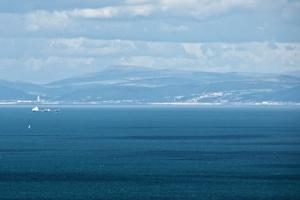
North Devon Council has confirmed it is not currently engaged in discussions regarding a proposed ferry service that would connect North Devon with Swansea in South Wales. This announcement follows a strong public endorsement for the service from residents of Swansea, where a recent consultation revealed that 98 percent of over 4,000 respondents support the initiative.
On January 10, 2024, the BBC reported on the results of the consultation, highlighting the potential for a fast ferry across the Bristol Channel. Such a service could provide a direct route to southwest England, allowing vehicles and passengers to bypass the congested M4 and M5 motorways. In response, the Swansea Council stated that several “strong opportunities” had been identified, but emphasized that further feasibility studies would be necessary. This includes evaluating ferry berthing locations, investment requirements, and the pursuit of zero-carbon operations.
The maritime company Ocean Prime is spearheading the exploration of this ferry concept. They have engaged in discussions with local experts and councils in southwest England, including North Devon Council, Somerset Council, and Torridge District Council. A spokesman for Swansea Council mentioned that following the market testing in Swansea, arrangements will be made for further meetings between Swansea Council, Ocean Prime, and the relevant councils in southwest England to advance the feasibility discussions.
Despite the public enthusiasm for the project, North Devon Council has clarified that it is not actively involved in any current initiatives regarding the ferry link. A council spokesperson stated, “We are not currently in discussions regarding a ferry link between South Wales and North Devon.” They added that the concept of a ferry link has been explored in the past, with several feasibility studies already conducted. However, there are no ongoing discussions or plans at this time.
The spokesperson acknowledged the long-standing interest in establishing a ferry service between North Devon and South Wales. “While Ilfracombe can welcome foot passengers, other types of service would need substantial investment,” they noted, highlighting the complexities involved in developing such a link.
The proposed ferry service envisions a hydrogen-powered vessel approximately 55 meters long, capable of carrying passengers, cars, and some cargo at speeds of up to 40 knots. Previous attempts to establish a similar service, known as Severnlink, which aimed to connect Swansea with Ilfracombe in 2010, ultimately failed due to funding challenges.
As discussions continue regarding the future of ferry services across the Bristol Channel, both councils face the task of addressing logistical and financial considerations to determine the viability of the proposed link.