Symbotic, a leading provider of warehouse automation solutions, announced its first profitable year with an earnings per share (EPS) of $1.02 for the fiscal year ending 2025. This significant milestone comes even as the company faced a sharp decline in its stock price, which plummeted by 30% in December following heavy insider selling. Concurrently, Amazon continues to invest heavily in its internal robotics development to streamline fulfillment costs, raising questions about the competitive landscape in the warehouse automation sector.
Symbotic Achieves Profitability Amid Market Fluctuations
In its third quarter earnings report for 2025, which concluded on September 30, Symbotic surpassed analyst expectations with an EPS of $0.58, significantly outperforming the anticipated $0.08 by an impressive 625%. Revenue reached $618.5 million, with gross margins at 20.6% and a robust operating cash flow of $530.7 million. This financial turnaround marks the end of a four-year journey from losses to profitability for the company.
Despite these positive developments, the stock suffered a considerable downturn, dropping from $85 to $60 in December. Analysis of insider trading revealed that executives, including Chief Strategy Officer William Boyd, sold substantial shares during this period. Boyd disposed of 34,000 shares between October and January at prices ranging from $59 to $83. Additionally, SoftBank’s SVF Sponsor III sold 3.5 million shares at $53.21 on December 8. Notably, no executives made purchases during this price decline.
Despite the stock’s volatility, sentiment within investor communities remained strong, with Reddit discussions maintaining a bullish outlook on Symbotic, rating it between 80-82 on a scale of very bullish. Posts framed the company’s offering as an “AI Warehouse as a Service,” suggesting a shift in narrative among investors.
Amazon’s Strategic Investment in Internal Robotics
In contrast to Symbotic’s model, Amazon reported a robust $180.2 billion in revenue for Q3, with a net income of $21.2 billion, yielding a profit margin of 11.1%. The company has invested $35.1 billion in capital expenditures, a substantial portion of which is directed towards enhancing its warehouse infrastructure through the development of Amazon Robotics. With over 1,000 fulfillment centers worldwide, Amazon is poised to integrate automation solutions that will further enhance its operational efficiency.
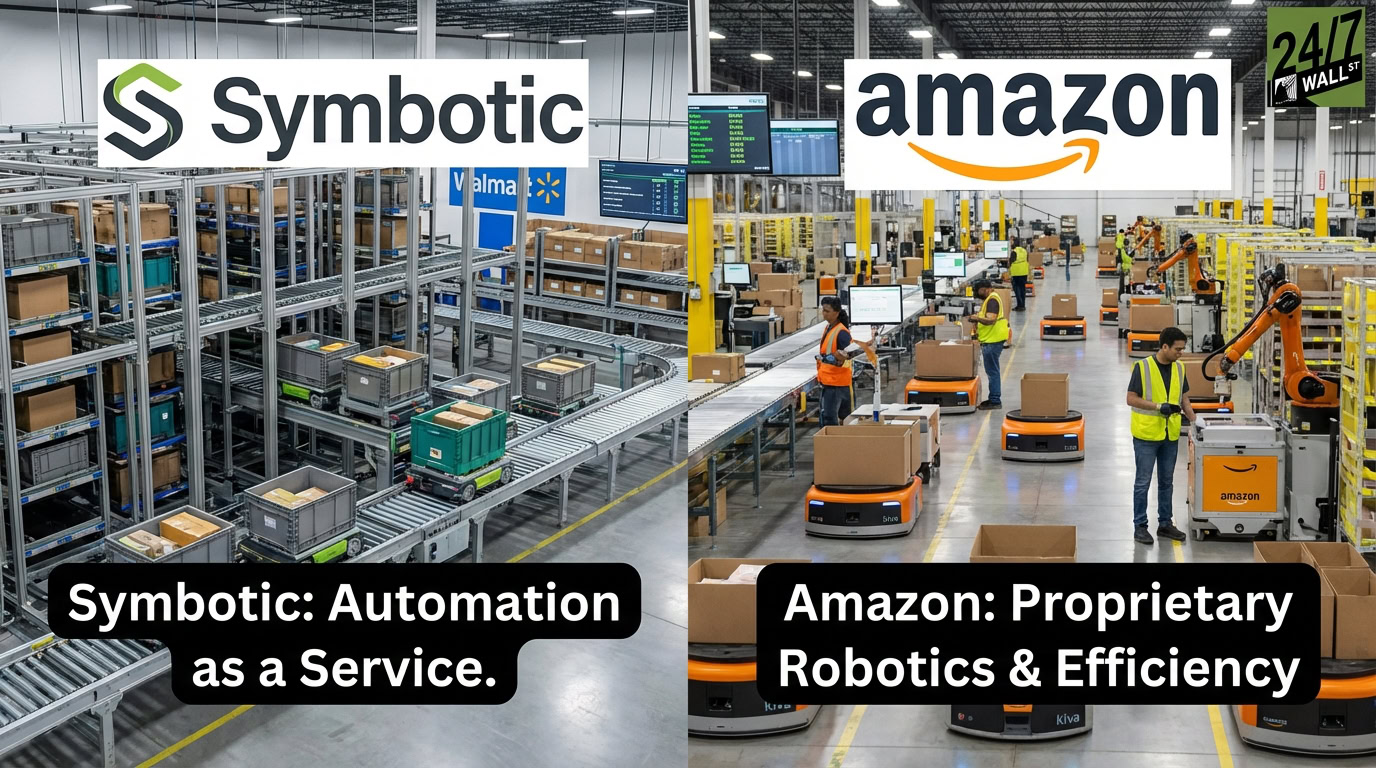
The divergent strategies of Symbotic and Amazon highlight a significant shift in the warehouse automation landscape. Symbotic focuses on selling automation systems to major retailers such as Walmart and Target, achieving gross margins of 80-85%. On the other hand, Amazon views warehouse robotics as a core component of its competitive advantage, developing proprietary systems that serve to reduce fulfillment costs rather than generating direct revenue through external contracts.
The table below summarizes key financial metrics for both companies:
| Dimension | Symbotic | Amazon |
|---|---|---|
| Business Model | Automation provider | Automation user + developer |
| Gross Margin | 20.6% | 50.8% |
| Profit Margin | -0.75% | 11.1% |
| Market Cap | $39.8 billion | $2.53 trillion |
| 1-Year Return | +167% | +9% |
The contrasting business models suggest that while both companies are integral to the warehouse automation market, they serve different roles. Symbotic presents a focused investment opportunity in warehouse automation for those looking to capitalize on retail and logistics advancements. Its recent 167% gain over the past year reflects market enthusiasm around its $2.25 billion revenue potential as more companies adopt automation technologies.
In contrast, Amazon offers a more diversified approach, integrating automation benefits into its vast operational framework. If Amazon Robotics successfully reduces fulfillment costs by 20%, this directly impacts its operating margins, contributing to the company’s overall financial health.
Investors who believe in the inevitability of warehouse automation may find Symbotic appealing despite its volatility. Those seeking stability alongside automation exposure might favor Amazon, which combines proven profitability with substantial growth potential across its various business segments.
As the landscape evolves, it remains clear that both companies will play pivotal roles in shaping the future of warehouse automation, catering to different investor preferences and market demands.