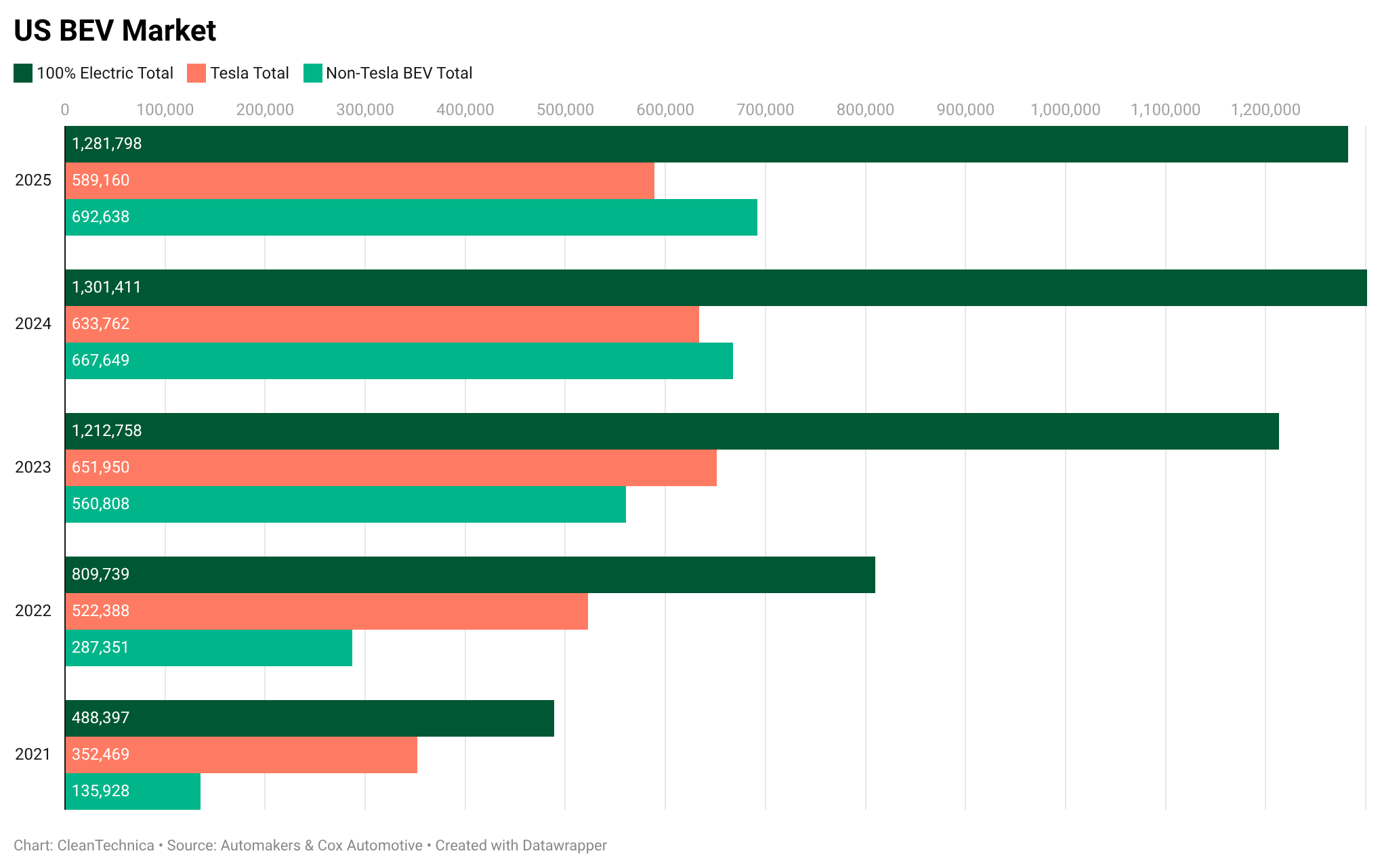
Sales of electric vehicles (EVs) in the United States experienced a decline of 2% in 2025 compared to the previous year, according to recent data. This downturn is attributed to significant changes in government incentives, particularly the elimination of the $7,500 federal tax credit, which has influenced consumer purchasing decisions. Despite this decrease, EV sales have risen dramatically, showcasing an increase of 162% compared to 2021 figures.
The fourth quarter of 2025 presented a particularly challenging period for the EV market. Following the decision by Republican lawmakers to terminate the tax credit, sales plummeted, reversing the robust growth seen earlier in the year. The third quarter had previously recorded exceptional sales, with many manufacturers reporting record-high deliveries. This suggests that while the market is facing headwinds, the long-term trajectory for electric vehicle adoption remains positive.
Shifting Market Dynamics
In 2025, the overall automotive market has been undergoing a transformation, with consumer preferences increasingly shifting towards sustainable options. The demand for electric vehicles has surged, driven by growing environmental concerns and advancements in EV technology. Major car manufacturers have responded by investing heavily in electric models, leading to a diverse range of options for consumers.
However, the abrupt removal of the federal tax incentive has raised concerns among potential buyers. The tax credit had been a significant motivator for individuals considering the switch to electric vehicles. As a result, many industry analysts are closely monitoring how this policy shift might affect future sales trends.
According to CleanTechnica, while the 2% decline in 2025 is a setback, it is essential to view this figure in the context of the remarkable growth seen since 2021. The substantial rise in EV sales indicates a fundamental shift in consumer behavior and a growing acceptance of electric vehicles as a viable alternative to traditional combustion engine cars.
Future Prospects and Challenges
Looking ahead, the EV market faces both challenges and opportunities. With governments worldwide committing to stricter emissions targets and promoting green technologies, the demand for electric vehicles is expected to continue its upward trajectory. Nevertheless, the industry must navigate potential regulatory changes and fluctuating consumer incentives.
Manufacturers are also working to address concerns surrounding charging infrastructure and vehicle range. As these issues are resolved, it is anticipated that more consumers will feel confident making the transition to electric vehicles. In the coming years, the focus will be on enhancing the accessibility and affordability of EVs to ensure widespread adoption.
In summary, while the US electric vehicle market faced a 2% decline in sales in 2025, the overall increase of 162% since 2021 reflects a significant shift in consumer preferences towards sustainable transportation. The future of the industry will depend on how it adapts to changing policies and consumer needs in an increasingly competitive landscape.