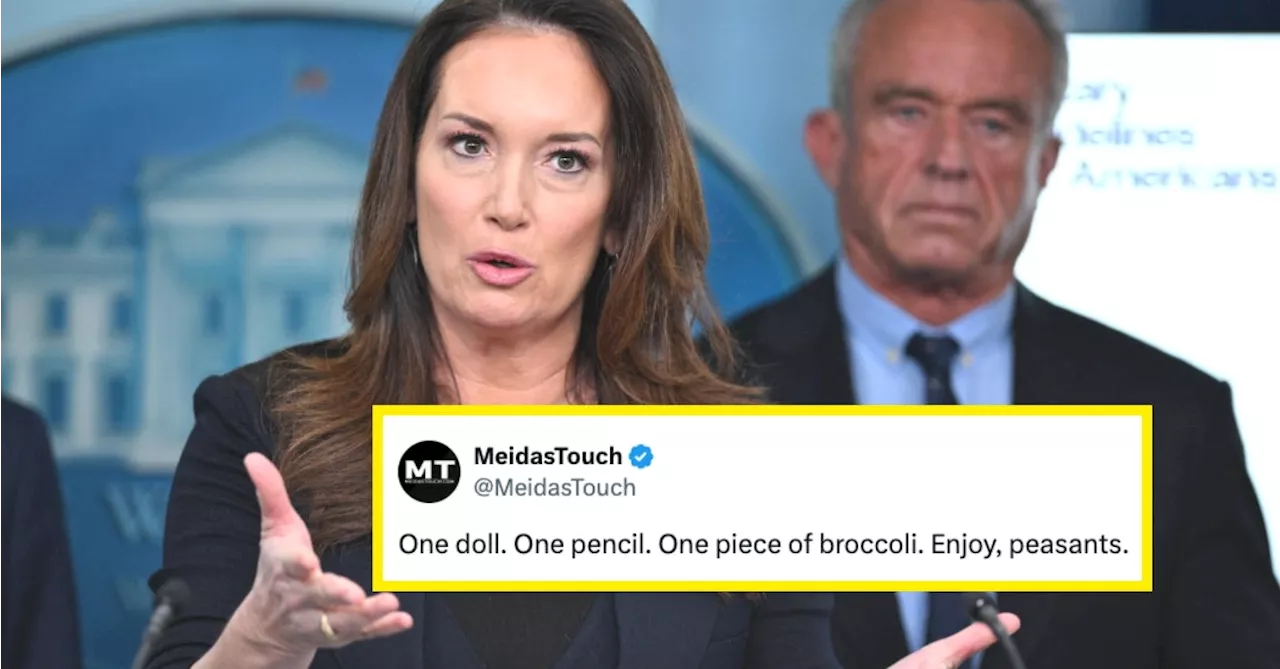
The suggestion by Secretary of Agriculture Brooke L. Rollins for a “budget” meal has led to widespread criticism on social media. During an appearance on NewsNation, Rollins proposed a dinner consisting of a piece of chicken, a piece of broccoli, a corn tortilla, and “one other thing,” which was left unspecified. This recommendation came in response to concerns about rising food costs and aimed to demonstrate that nutritious meals can be affordable.
In discussing the potential impact of dietary changes on American families, Rollins stated, “I think the question you’re asking, and it’s a really important one, is while we’re asking Americans to reconsider what they’re eating, are we actually asking them to spend more on their diet? And the answer to that is ‘no.'” She claimed that extensive analysis, including over 1,000 simulations, showed that a meal could cost approximately $3, contradicting critics who argue that protein-rich foods are becoming too expensive.
Rollins’ comments drew immediate reactions from viewers and online users, many of whom found the proposed meal impractical. One Twitter user quipped, “I’m glad they ran a thousand simulations to figure out one chicken one broccoli one tortilla and the other thing.” Critics pointed out that while the simulation might suggest low costs, the reality of grocery shopping often tells a different story, especially for families on tight budgets.
Host Connell McShane posed questions about the feasibility of Rollins’ suggestion, particularly regarding the costs of different protein sources. He highlighted concerns raised by nutrition experts regarding the affordability of meat, noting that steak and even ground beef prices have seen significant increases. Rollins acknowledged that while some protein options like beef have become more expensive, alternatives are available, stating, “Now, there are…a few outliers — beef has been one of them — but ground beef is coming down.”
The backlash has been fueled by a growing sentiment among the public regarding food affordability, especially in the wake of inflation. The proposed meal was viewed as an oversimplified solution to a complex issue, leading to comments from individuals like Chasten Buttigieg, who criticized the suggestion as unrealistic for families struggling to make ends meet.
This incident illustrates the ongoing debate over food costs and nutritional guidelines in the United States. As families navigate the challenges of rising prices, the discourse surrounding dietary recommendations continues to evolve, with many advocating for more practical and inclusive solutions.
In summary, while Rollins’ intention may have been to encourage healthier eating habits without increasing costs, the backlash reflects a deeper frustration with the disconnect between government recommendations and everyday realities for many Americans.