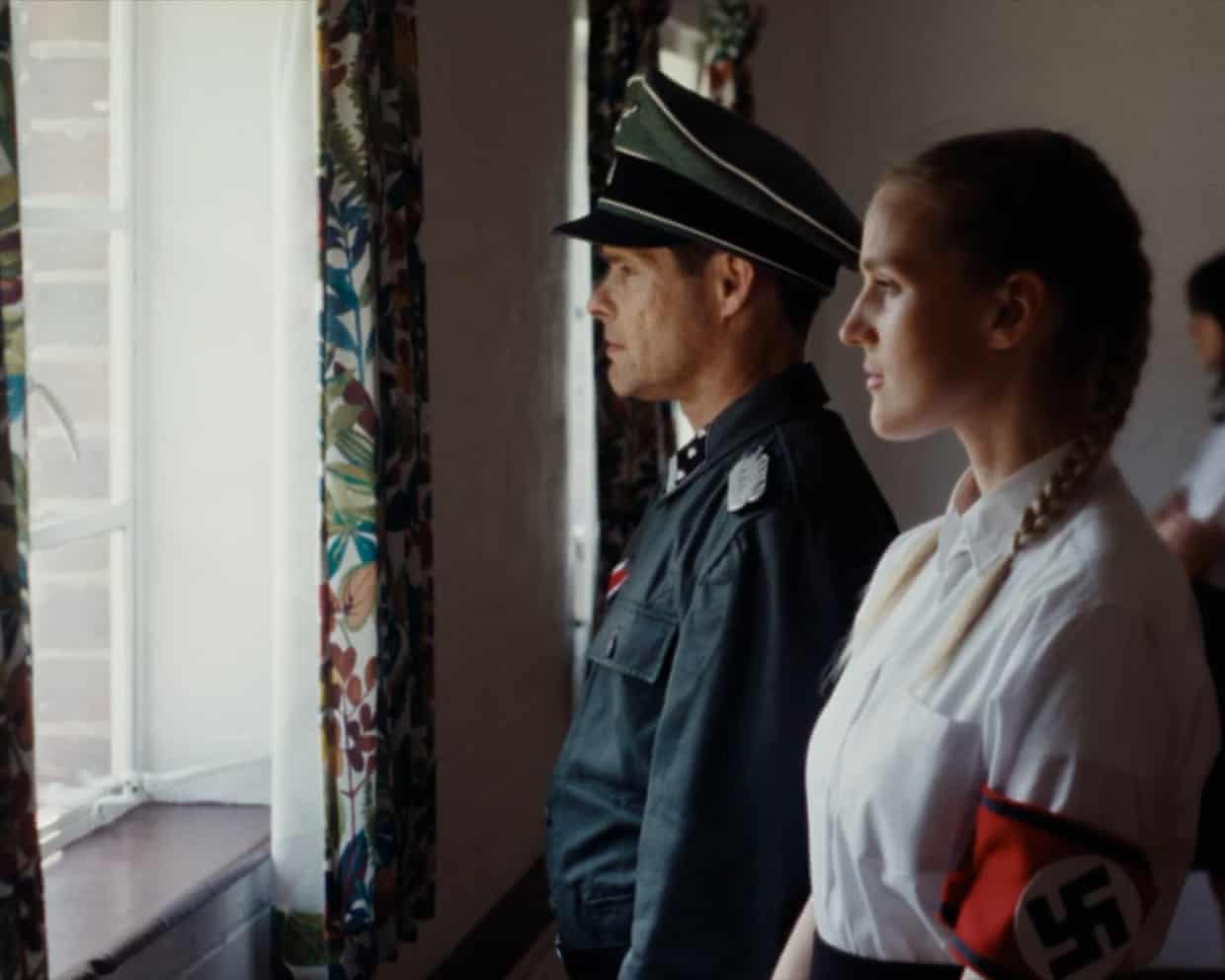
The film “Aryan Papers,” directed by Danny Patrick, has received widespread criticism following its release. The production, set during World War II, attempts to address serious themes surrounding the Holocaust but ultimately falls short of its intentions. The film is available on digital platforms starting January 26, 2024.
The title of “Aryan Papers” references the Nazi-issued documents that individuals were forced to carry to prove their non-Jewish status during this dark period. This film should not be confused with an unrealized project by renowned director Stanley Kubrick, who reportedly abandoned his version, fearing it might not perform well at the box office after the success of “Schindler’s List.” In contrast, Patrick’s effort lacks the same level of gravitas, leading to comparisons that are less than flattering.
The film is set primarily near Stuttgart in 1942, focusing on the Lebensborn programme, which aimed to breed Aryan children by pairing vetted women with Nazi officers. Central to the narrative is Gisella, portrayed by Celia Learmonth, who attempts to smuggle two Jewish individuals, Benjamin and Judith, across the border to safety. Their plight is complicated by the character Helga, a villainous figure played by Leona Clarke, who does not hesitate to resort to violence.
Critics have pointed out numerous shortcomings in the production. The script has been described as poorly constructed, lacking depth and coherence. This is evident in the film’s editing, which creates a disjointed viewing experience that confuses rather than engages the audience. Additionally, the use of locations that do not convincingly replicate the historical setting, such as visible modern items like plastic bins, detracts from the overall authenticity.
Acting performances have also received negative feedback, with many characters delivering their lines in a manner that lacks emotional weight. Critics have likened the casting process to a hastily organized event, suggesting that the actors were not adequately prepared for their roles. While there is a sense of sincerity in the intentions of the cast and crew, the execution has been described as an insult to the memory of Holocaust victims.
Despite its ambitious themes, “Aryan Papers” has been characterized as a significant misstep in storytelling. The film’s earnest approach to a profoundly tragic subject matter does not compensate for its execution, which many viewers are unlikely to remember fondly. As it stands, this film may fade into obscurity, overshadowed by more impactful narratives that address similar themes.