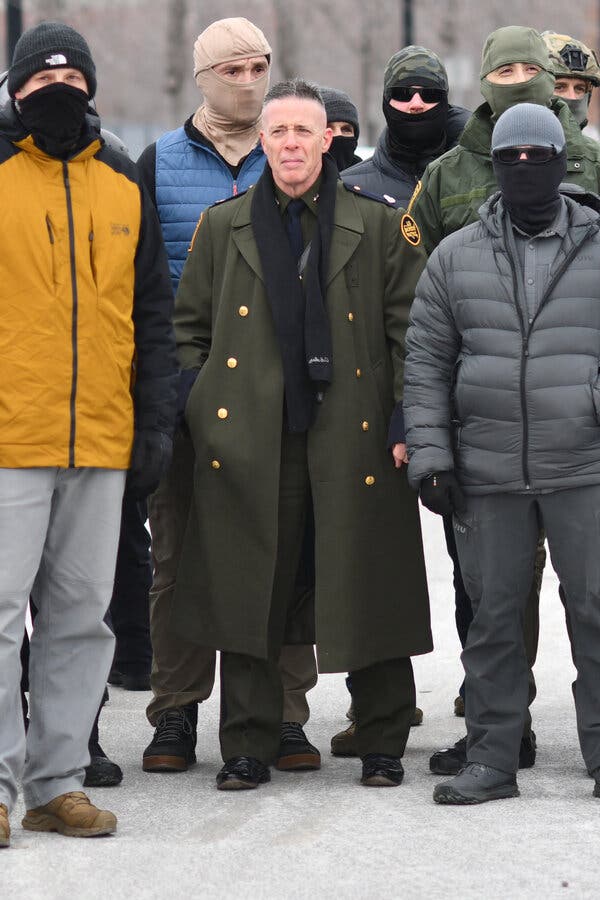
The coat worn by Gregory Bovino, the official overseeing the U.S. Border Patrol under the Trump administration, has ignited significant debate regarding the militarization of immigration enforcement. As tensions escalate in various American cities, particularly in Minneapolis, the long, Army-green greatcoat has emerged as a symbol of conflict, raising questions about the role of attire in the broader discourse on immigration policies.
Since the increased visibility of U.S. Immigration and Customs Enforcement (ICE) agents across the country, their uniforms have become focal points in the ongoing debate surrounding immigration enforcement. The face masks worn by agents initially drew criticism, with some viewing them as a means of anonymity while others considered them necessary for protection. However, the attention has shifted to Bovino’s distinctive greatcoat, which stands out prominently against the more utilitarian bomber jackets and tactical vests worn by his colleagues.
The coat’s historical connotations add weight to the conversation. Known as a classic military garment, the greatcoat was worn by officers during both World War I and World War II. This connection is particularly resonant for many, as images from those conflicts are ingrained in public memory. While the greatcoat has been donned by various military leaders, including General Douglas MacArthur, its association with the German military under Adolf Hitler has led to a perception of authoritarianism.
Critics have quickly pointed out that Bovino’s coat serves as a stark reminder of the past, invoking feelings of militarization and oppression. The imagery associated with the greatcoat has fueled a growing backlash against ICE and its operations, especially as protests against immigration policies gain momentum. Social media platforms have seen a surge in discussions linking the coat to themes of tyranny and state violence, illustrating the powerful impact of symbolism in shaping public opinion.
As the debate continues, the greatcoat serves not only as a piece of clothing but also as a focal point for larger societal issues. The ongoing protests highlight deep divisions within American society regarding immigration and law enforcement. Many view the enforcement of immigration policies as a necessary measure, while others see it as an infringement on human rights.
In this context, the coat worn by Bovino has become more than just a uniform; it has transformed into a symbol of the broader struggle over immigration policy and enforcement in the United States. As the discourse evolves, the implications of such symbols will likely continue to resonate within the national conversation surrounding immigration, authority, and the role of law enforcement in society.