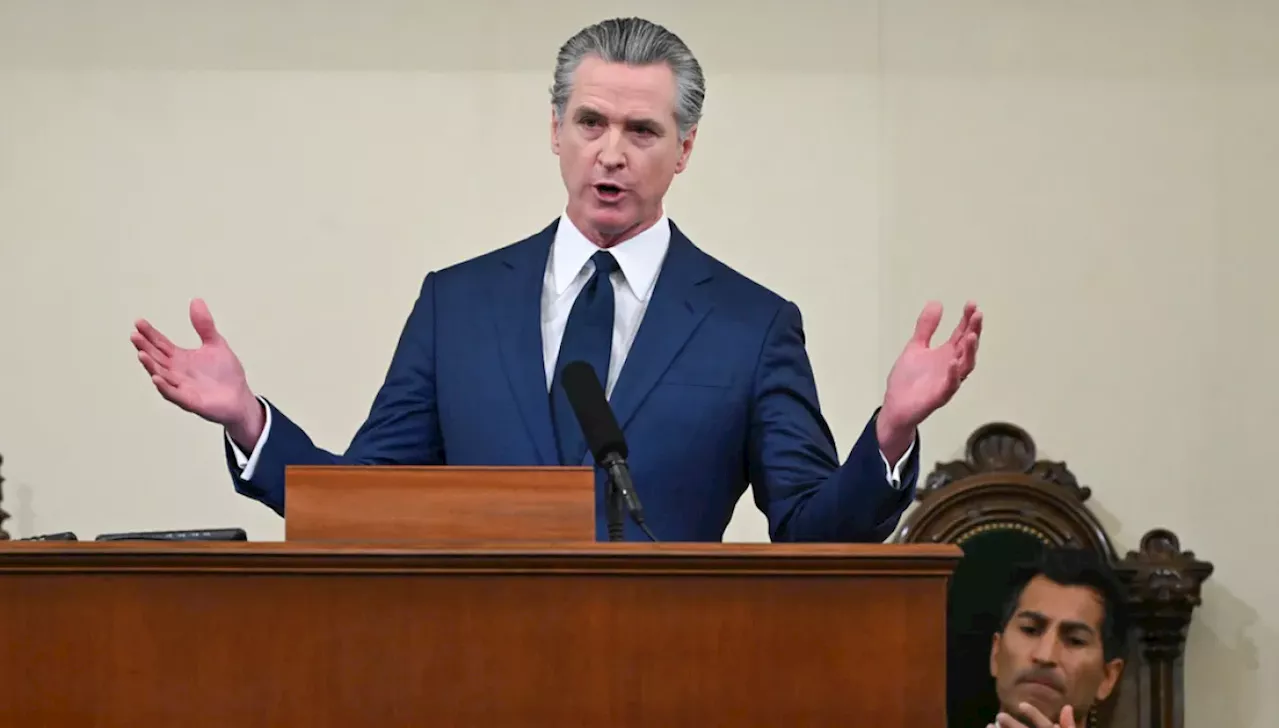
California Governor Gavin Newsom is positioning himself for a potential presidential run in 2028, but his campaign strategy has raised eyebrows. While he presents himself as a moderate leader, his communications team often disseminates controversial content that aligns with more extreme leftist views. This duality has prompted criticism and questions about his political authenticity.
Newsom’s recent statements regarding U.S. Immigration and Customs Enforcement (ICE) illustrate this contradiction. He described certain actions as “state-sponsored terrorism,” a term that critics argue incites danger for ICE agents. This rhetoric emerged following an incident where an activist interfered with ICE operations, resulting in an officer being struck by a vehicle. Critics have pointed out that such inflammatory language does not only misrepresent the facts but also plays to the sentiments of his political base.
In a notable shift, Newsom has clarified that he does not support the abolition of ICE, a stance that directly contrasts with the views held by many within his party. Observers have noted that his rhetoric seems to change depending on his audience. For example, during the inaugural episode of his podcast featuring conservative activist Charlie Kirk, he acknowledged that allowing “transgender girls” to compete in girls’ sports could be seen as unfair. Yet, his administration continues to endorse policies supporting this inclusion.
Furthermore, Newsom has expressed the belief that “parents know what’s best for their kids” when discussing parental rights in decisions about gender transition. However, he simultaneously defends California laws that prevent teachers from informing parents if students are exploring gender identity. This inconsistency raises questions about his commitment to transparency and parental involvement.
Despite his criticism of former President Donald Trump for toxic messaging, Newsom’s social media presence often mirrors that aggressive style, leading to claims of hypocrisy. His ability to oscillate between being perceived as a rational leader and a progressive provocateur reflects a strategic approach to appeal to varied voter demographics.
As Newsom navigates these complex political waters, it is evident that his ambitions may take precedence over a consistent policy stance. He appears willing to alter his public persona to capture the support necessary for a successful campaign. Observers will be watching closely as he continues to shape his narrative leading up to the 2028 election.
In summary, Gavin Newsom‘s campaign tactics illustrate the challenges faced by politicians seeking to appeal to a broad audience while maintaining a coherent political identity. His approach raises important questions about the balance between political ambition and integrity as he positions himself for a potential presidential bid.