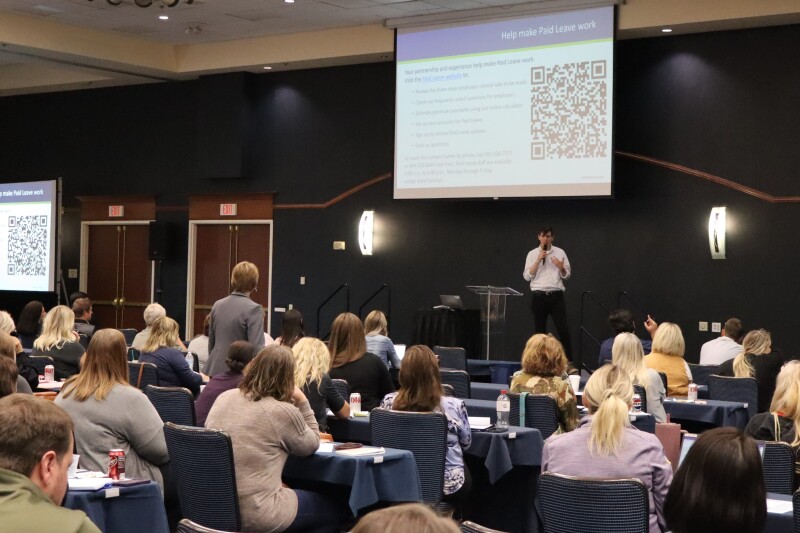
A new Paid Family and Medical Leave (PFML) program in Minnesota is set to take effect on January 1, 2024, igniting a divide among business and political leaders across the state. Signed into law by Governor Tim Walz in 2023, the initiative offers up to 12 weeks of paid medical leave and 12 weeks of paid family leave, with a maximum of 20 weeks annually. While some view the program as a step toward improving employee retention and well-being, others express concerns over its financial implications for small businesses and potential impacts on workforce availability.
According to Greg Norfleet, a director at the Minnesota Department of Employment and Economic Development (DEED), the program addresses serious health conditions and life events, not minor ailments. “Our program covers serious health care conditions and life events that employees will need time off in order to deal with,” Norfleet explained. “In the vast majority of cases, it’s not a question of if this person was going to work through it, it’s if they were going to get paid while they’re away.”
Funding for PFML comes from a combination of surplus funds and payroll taxes, which are divided between employers and employees. Most businesses will face a tax rate of 0.88%, with both employer and employee contributing 0.44% each. Smaller businesses, defined as those with fewer than 30 employees and whose average wage is below 150% of the statewide average, will benefit from a reduced tax rate of 0.66%, split as 0.44% for employees and 0.22% for employers. This funding will allow employees taking leave to receive between 55% and 90% of their wages.
Concerns regarding the program’s implementation are voiced by various stakeholders. Mark Johnson, a Republican Senator from East Grand Forks, argued that while the concept may be appealing, the Minnesota government may not be able to deliver as effectively as existing private third-party options. “We are going to build a 400-person bureaucracy,” Johnson asserted. “It’s another disincentive for businesses for anything to be on the Minnesota side (of the border), especially in a community like ours, where we are right on the border.”
Small business owner Nancy Miller of Vinna Human Resources echoed Johnson’s sentiments, highlighting the potential administrative burden the program could impose on small businesses. “I think 20 weeks is excessive. I think 12 weeks would have been fine,” she stated. Miller anticipates that the costs associated with both payroll taxes and managing employee leave could exceed initial estimates.
In contrast, Penny Stai, owner of River Cinema, expressed a more optimistic outlook. Stai’s business, which pays approximately $1 million in annual payroll, would see an annual cost of about $8,800 due to the new program. “It’s not that much money. As long as it’s a good thing for the staff and for our community, that’s fine with me,” she said, emphasizing her commitment to supporting employees.
Despite her positive view, Stai acknowledged the potential for staffing shortages during employee absences. “The hardest part is just going to be for small-staffed places to be able to fill those positions for a month or three months,” she noted, highlighting the challenges of training temporary workers.
Concerns about workforce availability were also raised by Ryan Wall, vice president of administration at American Crystal Sugar. Wall noted that the company has already been providing short-term disability benefits and anticipates that the PFML program could lead to increased staff shortages, necessitating greater overtime costs and additional hires.
To address these challenges, the Minnesota government has introduced Small Employer Assistance Grants, offering up to $6,000 annually to help cover costs when an employee takes leave. Norfleet clarified that for an employee to qualify for medical leave under PFML, they must have a serious health condition lasting at least seven days and certified by a healthcare professional. Family leave qualifications are broader and include welcoming a new child, caring for a seriously ill family member, and supporting military personnel.
The introduction of PFML places Minnesota among the few states to establish a paid family and medical leave program, as the United States remains one of the only developed countries without a federal program. Norfleet pointed out that Minnesota will be the 13th state to implement such a plan, which could yield positive health outcomes for employees and their families.
“States have seen a number of positive outcomes when they invest in a PFML program,” Norfleet stated. “In the 20 years since they launched that program, 87% of employers have said that they see no increased costs as a result of the program; 89% report positive or neutral productivity increases, and 99% say they have a positive or neutral effect on the ground.”
As the implementation date approaches, local businesses remain divided on the anticipated impact of the PFML program. Maggie Brockling, East Grand Forks Economic Development Director, noted the varied responses from local employers. “Some felt that it was an added benefit to their staff, and that it could be seen as something, as a retention tool or an incentive to come work on this side of the state border,” she said. “And then others felt like it was an added burden or cost that they might not be ready to include in their bottom lines.”
The PFML program will be administered by a new state agency within DEED, which aims to provide transparency and actionable information through an online leave administrator portal. All businesses in Minnesota, except for self-employed individuals, independent contractors, tribal nations, and federal government positions, will be enrolled in the program, marking a significant shift in the state’s approach to employee welfare.