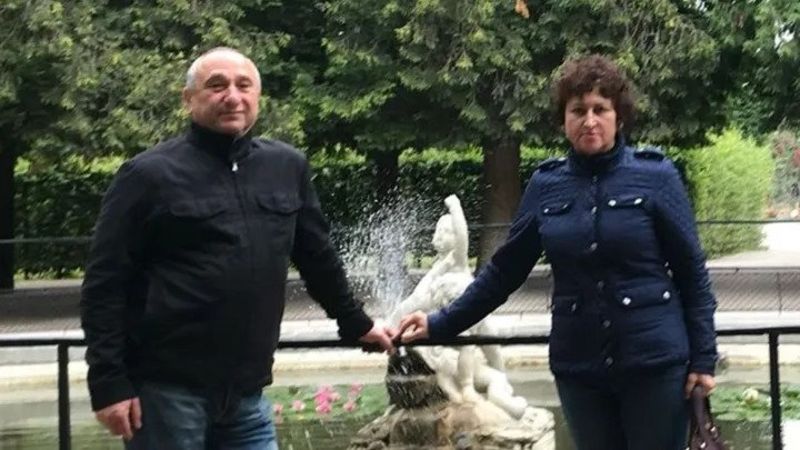
During a recent shooting incident at Bondi Beach in Australia, fifteen people lost their lives, and many others were injured while celebrating Hanukkah. In a remarkable display of bravery, two elderly bystanders, Boris Gurman and Sofia Gurman, attempted to disarm one of the attackers. Tragically, both were killed in the effort. Their actions, alongside those of other bystanders, highlighted the complex psychology of heroism in moments of crisis.
As dashcam footage circulated widely, it captured not just the urgency of the situation but also the instinctive reactions of individuals like Reuven Morrison, a 62-year-old grandfather who died while throwing bricks at one of the gunmen, and Ahmed al Ahmed, a father of two who was shot while wrestling a firearm from an attacker. These split-second decisions to confront danger resonate deeply, yet they are not as common as one might think.
Understanding Heroism in Crisis Situations
According to Dr. Ari Kohen, a political scientist from the University of Nebraska-Lincoln and author of “Untangling Heroism,” the perception that such heroic acts are frequent is misleading. Most people tend to remain bystanders in dangerous situations, primarily due to the inherent risks involved. “Most people don’t do this. It’s risky. It’s dangerous,” Kohen stated.
Those who do act often share certain traits or find themselves in circumstances that compel them to intervene. Survivors and family members of victims at Bondi Beach who spoke out echoed sentiments familiar to many who have acted heroically: “I just did what I was supposed to do.” This common refrain reflects a deep-seated ethos of responsibility, even if it belies the rarity of such actions.
The psychology of inaction can be traced back to the infamous 1964 murder of Kitty Genovese in New York City, where numerous witnesses failed to help. This incident led to the concept of the bystander effect, where individuals feel less inclined to act when they believe others will intervene. Although subsequent research has nuanced this view, it remains evident that the presence of others can inhibit action.
The Neuroscience Behind Heroic Actions
Heroism arises from a complex interplay of psychological and neurological factors, as explained by Dr. Steven Quartz, a professor at Caltech. Humans have a strong instinct for self-preservation, often defaulting to a “freeze or flight” response when faced with danger. For someone to shift from self-preservation to action, critical elements must align.
Empathy plays a significant role in this transformation. Quartz estimates that around 10% of the population possesses a heightened empathetic response, which can drive individuals to act. Yet, he emphasizes that empathy can be fostered through identification with others, even in seemingly unrelated circumstances.
The diverse backgrounds of those involved in the Bondi Beach incident illustrate this point. The Gurmans, immigrants from Ukraine, and al Ahmed, a Muslim from Syria, alongside Morrison, an Orthodox Jew, showcased a blend of experiences in a location renowned for its cultural inclusivity. Matt Langdon, the executive director of the Heroic Imagination Project, noted, “People were drawn from around the world, and they were having a good time together,” indicating a shared humanity that may have contributed to their courageous actions.
Historical examples further underline the capacity for empathy across cultural divides. During the Holocaust, the village of Le Chambon-Sur-Lignon in France united to save thousands of Jewish refugees, driven by their own history of persecution. Kohen observed that such shared experiences can deepen the sense of responsibility to act when witnessing injustice.
Encouraging Heroic Behavior Through Training and Awareness
The attention garnered by acts of heroism on social media may inspire others to respond similarly in crises. Kohen believes that highlighting these stories can shift public perception, making rescue efforts seem more attainable for ordinary individuals. “It’s starting to get into the public consciousness that rescue is, while dangerous, something that ordinary people can do,” he remarked.
Research indicates that role models can significantly influence behavior, encouraging people to envision their potential actions in emergencies. Additionally, engaging with literature and media that portray heroism can foster empathy and understanding of diverse perspectives, enhancing the likelihood of intervention.
Practical preparedness is also vital. Al Ahmed’s background as a former police officer likely informed his response during the attack. Kohen advocates for accessible training options, such as CPR courses and emergency response workshops. “When people have this in their toolkit, they are much more likely to be helpers should the need arise,” he noted.
Ultimately, the events at Bondi Beach serve as a poignant reminder that everyday heroism is within reach for all. “These people are just like us,” Kohen concluded. “Sometimes, people just find themselves in a terrible situation, and they act. That’s something possible for all of us.”