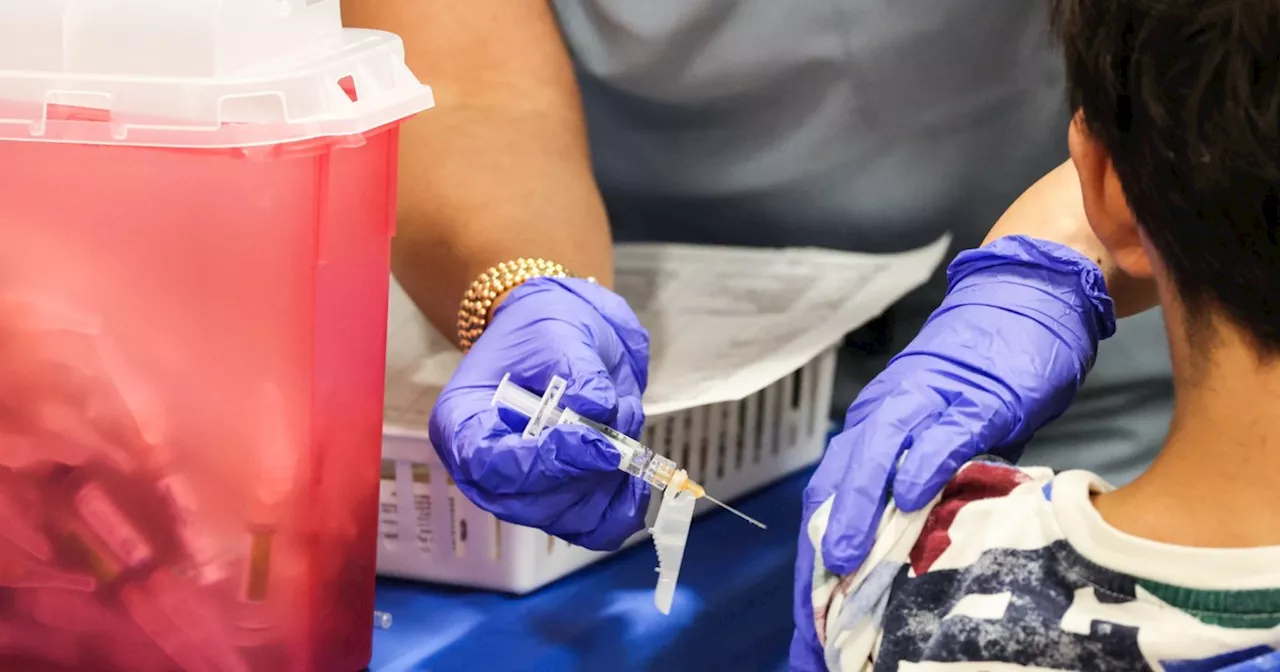
The American Academy of Pediatrics (AAP) has diverged from the Centers for Disease Control and Prevention (CDC) regarding childhood vaccination recommendations, marking a significant shift in public health guidance. On January 5, 2024, the AAP announced its endorsement of vaccines against 18 potentially life-threatening diseases, including Covid-19, influenza, and measles, while the CDC reduced its recommended vaccine schedule to 11 diseases.
Dr. Sean O’Leary, chair of the AAP’s committee on infectious diseases, highlighted the importance of this decision during a media briefing. He noted, “We used to partner very closely with CDC to create a unified, harmonized set of vaccine recommendations. But these recent changes to the CDC schedule are a strong departure from the medical evidence and no longer offer the optimal way to prevent illness in children.”
A Historic Break in Vaccine Policy
The AAP, representing approximately 67,000 pediatricians across the United States, has provided annual vaccine guidance since 1935. Historically, the AAP collaborated with the CDC and other health organizations to create a single set of vaccine guidelines. This partnership was disrupted when the CDC revised its childhood vaccine schedule, citing a need for “more and better science” on vaccines. However, specifics regarding this scientific need have not been provided.
Dr. Andrew Racine, president of the AAP, emphasized that the underlying recommendations for preventing illness remain unchanged. “This is the exact same recommendation that we’ve had all along, the same recommendations the federal government used to agree with,” he stated. The consistency of vaccine-preventable illnesses and risks to children in the United States has not altered, according to Racine.
The implications of the CDC’s new guidelines have led at least 28 state health departments to declare their intention not to adopt the revised recommendations. The AAP’s guidance continues to receive endorsement from significant medical organizations, including the American Academy of Family Physicians and the American Medical Association. Dr. Kristina Bryant, a pediatric infectious disease doctor, affirmed the AAP’s approach, stating, “There is strong alignment there. State health departments and health coalitions have also recommended following the American Academy of Pediatrics’ immunization schedule because it has been rigorously studied and it works to keep children and communities healthy.”
Comparing Vaccine Recommendations
Both the AAP and CDC advocate for vaccinations against common childhood diseases such as measles, mumps, and rubella. However, the CDC’s recent recommendations now suggest that vaccines for Covid-19, respiratory syncytial virus (RSV), rotavirus, meningitis, and hepatitis A and B should only be administered in “shared decision-making” scenarios, where pediatricians and families discuss the advantages and disadvantages of these vaccinations.
Dr. Deanna Behrens, a pediatrician based in suburban Chicago, noted that conversations regarding vaccines have long been standard practice. “We are well used to talking to families about vaccines. That’s something that we’ve been doing for a long time,” she explained, emphasizing the importance of trust between parents and their pediatricians.
In Lubbock, Texas, Dr. Ana Montanez has observed an increase in questions from families regarding vaccination following the CDC’s changes. “Families came to me for clarity before these changes were made, and now that changes are made, it’s even more important,” she remarked, welcoming the dialogue as a necessary part of healthcare.
Parents seeking more information about the AAP’s vaccine recommendations can visit healthychildren.org for resources and guidance.