Back pain affects millions globally, often leading to discomfort that limits movement and overall quality of life. Certified yoga therapist Jillian Pransky offers insights into why so many individuals experience tension in their backs and provides two restorative yoga exercises aimed at alleviating this common issue.
Understanding the causes of back tension is crucial. Many people attribute their discomfort to aging or prolonged sitting, particularly at desks. Yet, as Pransky explains, stress plays a significant role in this condition. The psoas muscle, which connects the legs to the spine, is particularly sensitive to stress. When individuals feel overwhelmed or anxious, this muscle can contract rapidly, leading to tightness and discomfort.
The psoas muscles, located on either side of the body, begin at the inner thigh bone and attach to the spine. This positioning allows them to influence spinal alignment and contribute to lower back pain, hip issues, and even digestive complications. Pransky emphasizes that maintaining relaxation in the psoas is vital for minimizing back tension.
To address this issue, Pransky recommends two specific exercises from restorative yoga, a practice designed to promote physical and mental relaxation. These poses particularly target the psoas and help release built-up tension.
Two Effective Yoga Exercises for Back Relief
The first exercise is a combination of **Sphinx Pose** and **Crocodile Pose**. To perform this sequence, begin on your stomach in Sphinx Pose, positioning your forearms on the ground while lifting your chest. Allow your hips to relax as you inhale, gently elevating your upper body. Transition into Crocodile Pose by bending one knee to the side and resting your cheek on the ground, allowing your body weight to sink fully into the floor. Repeat this sequence for two to three rounds of breath before switching sides.
Pransky explains that this sequence helps reset the body by calming the psoas. Rather than aggressively stretching, these poses promote a gentle release, helping the body shift from a guarded state to one of relaxation. The Sphinx Pose lengthens the front body while the Crocodile Pose allows for full surrender, enhancing the relaxation response and alleviating tension.
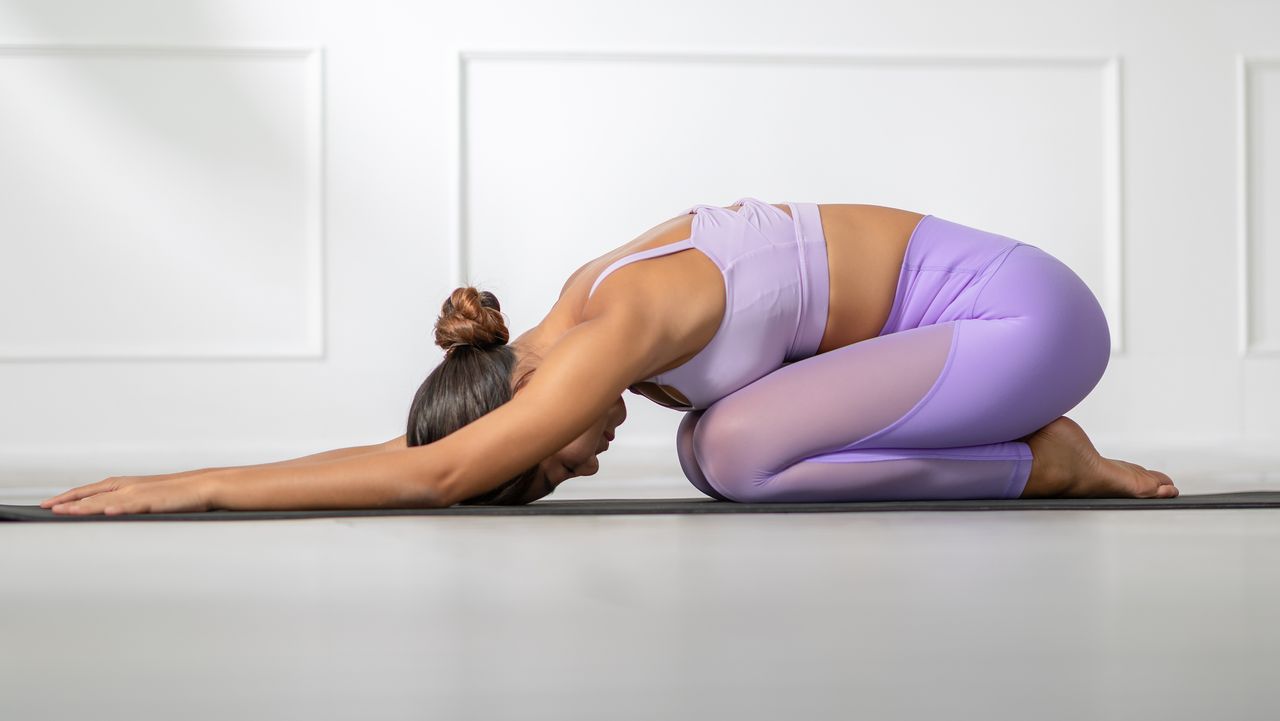
The second exercise, **Child’s Pose**, begins in a kneeling position with the big toes touching and knees apart. Extend your arms forward and lower your torso between your thighs, resting your forehead on the mat. Hold this position for one to three minutes, concentrating on deepening your breath and softening any remaining tension.
Child’s Pose is effective for easing tension in the lower back and hips. Although it does not directly stretch the psoas, it encourages relaxation in surrounding areas, indirectly benefiting this crucial muscle. This forward fold promotes a calmer state, enabling the body to process the effects of earlier movements while providing a sense of grounding and security.
By incorporating these two exercises into a daily routine, individuals can actively work towards alleviating back pain and improving overall mobility. Both poses are simple yet effective, allowing for gradual tension release and fostering a deeper connection to the body.
As many individuals grapple with back discomfort, these techniques offer a practical approach to finding relief and restoring balance. For those seeking further guidance, resources are available, including recommendations for yoga mats that can enhance the practice.