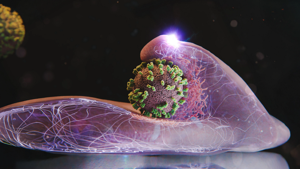
Groundbreaking research from scientists in Switzerland and Japan has successfully captured the precise moment a person becomes infected with the flu virus. This significant advancement could pave the way for more targeted antiviral therapies, enhancing treatment options for millions affected by influenza.
Utilizing high-resolution imaging techniques, the team observed the intricate process of flu infection at a cellular level. Their findings, published in the journal Nature Communications, illustrate how the virus enters human cells, a critical step in understanding its mechanism. This research not only provides crucial insights into the flu virus but also highlights potential pathways for developing effective antiviral medications.
The study, a collaboration between the University of Tokyo and the University of Zurich, involved sophisticated imaging technologies that allowed researchers to monitor viral activity in real-time. “By capturing these interactions with high precision, we can identify specific stages of infection that are viable targets for drug intervention,” said Dr. Takashi Yamada, a lead researcher from the University of Tokyo.
Understanding the infection process in such detail is vital, especially given the annual impact of influenza on public health. According to the World Health Organization, flu epidemics can lead to approximately three to five million severe cases and up to 650,000 respiratory deaths each year globally. The urgency for improved treatment options has never been more apparent.
The researchers emphasized that this work could significantly influence how antiviral therapies are developed. By pinpointing the exact moment the virus infiltrates healthy cells, scientists can design drugs that block this entry point, potentially preventing the infection from taking hold.
As the study progresses, the international scientific community will be closely monitoring developments. The implications of this research extend beyond influenza, as the methodologies employed could be adapted to study other viral infections, enhancing our overall understanding of viral pathogenesis.
In conclusion, the collaboration between Swiss and Japanese researchers marks a pivotal moment in flu research. Their innovative approach holds promise for the future of antiviral drug development, aiming to reduce the global burden of influenza and improve health outcomes for populations worldwide.