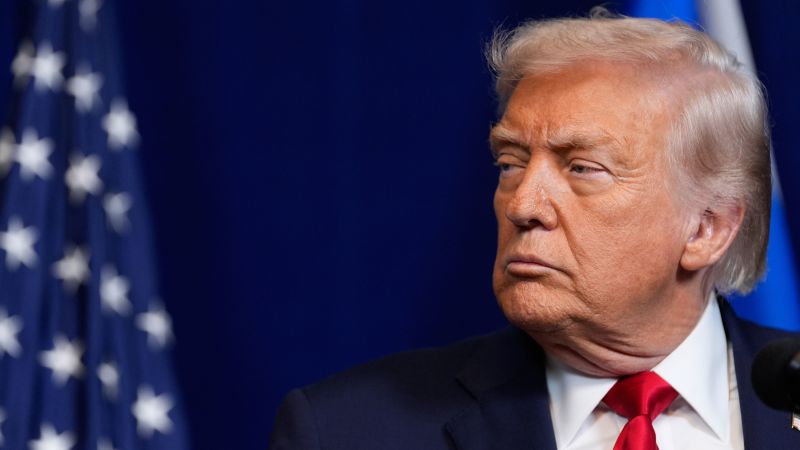
President Donald Trump recently sought to clarify concerns regarding his health following a series of public disclosures. As the oldest individual to assume the presidency, Trump has faced ongoing scrutiny about his physical condition, particularly after recent doctors’ visits and visible bruises on his hands. In an interview with the *Wall Street Journal*, he attributed the bruising to a high daily intake of aspirin, exceeding his doctors’ recommendations, and insisted he possesses ample energy.
This commentary comes in the wake of a Truth Social post where Trump claimed to have passed his “third straight” cognitive test. Despite his efforts to quell speculation about his health, questions persist. Here are five key points arising from his recent disclosures.
Medical Oversight and Evaluations
The president’s health is overseen by Dr. Sean Barbabella, a Navy captain appointed to this role in March 2023. Barbabella, who specializes in combat trauma and emergency medicine, has defended the president’s recent advanced medical imaging and semiannual physical as standard procedures. His assessments echo those of previous personal physicians, including Dr. Ronny Jackson and Dr. Sean Conley, who have both provided glowing reports on Trump’s health during his presidency.
Dr. Jackson initially served as President Barack Obama‘s physician, later becoming a close adviser to Trump. His tenure ended amidst controversy when he withdrew from a nomination to lead the Department of Veterans Affairs after allegations of misconduct surfaced. Following Jackson, Dr. Conley stated in 2019 that Trump was “in very good health” and anticipated this would continue throughout his presidency. He also prescribed hydroxychloroquine during the Covid-19 pandemic, which gained traction as a controversial preventive measure against the virus.
The previous physician, Dr. Harold Bornstein, had earlier declared Trump “the healthiest individual ever elected” to the presidency, although Bornstein later claimed Trump dictated this statement to him. After the election, he reported a troubling encounter with Trump’s aides regarding the retrieval of his medical records.
Aspirin Usage and Health Risks
During the recent interview, Trump claimed he takes a daily dose of 325 milligrams of aspirin, significantly higher than the 81 milligrams typically recommended for cardiovascular prevention. This higher dosage has been linked to increased risks of gastrointestinal bleeding, especially in individuals without specific heart conditions. Experts, including Dr. Andrew Freeman from National Jewish Health, expressed concerns over the implications of long-term high-dose aspirin use.
Barbabella confirmed that Trump has chronic venous insufficiency, a condition that can lead to swelling and discomfort in the legs. While aspirin may help manage this condition, medical professionals caution against its routine high-dose application due to the associated risks.
In a statement, Barbabella maintained that Trump’s medical evaluations indicate “excellent metabolic health,” and asserted that his cardiovascular condition is “14 years younger” than his actual age. Despite this, some cardiologists question the safety of long-term high-dose aspirin use, emphasizing the need for careful monitoring.
Imaging and Cognitive Assessments
Clarifying the nature of the advanced imaging Trump underwent, he mentioned having a CT scan in October, which was conducted to eliminate potential cardiovascular issues. Contrasting claims regarding whether it was an MRI or CT scan have emerged, with Barbabella confirming that both were options considered. The CT scan ultimately revealed no abnormalities.
Trump also expressed regret for disclosing details about the scan, stating it provided “ammunition” to critics. In line with his longstanding advocacy for cognitive assessments among presidential candidates, Trump recently announced on Truth Social that he scored “100%” on a cognitive test. While the specifics of the test remain unclear, he had previously participated in the Montreal Cognitive Assessment, a brief screening tool for cognitive impairment, achieving a perfect score in April 2025.
Medical experts emphasize that while high scores on such tests indicate no apparent cognitive impairment, they do not gauge overall cognitive fitness or decision-making abilities. The political implications of health disclosures are particularly sensitive for Trump, who has often critiqued the cognitive health of his predecessor, Joe Biden.
In his interview, Trump shared personal habits, revealing he sleeps little, finds exercise unappealing, and maintains a diet rich in fast food. Concerns have been raised regarding the potential health consequences of such lifestyle choices.
Dr. Fahmi Farah, an invasive cardiologist, remarked on the alarming nature of Trump’s sleep patterns, noting their potential impact on cardiovascular health. Insufficient sleep can elevate risks for various serious health issues, including heart attack and stroke.
While Trump attributes his health to “very good genetics,” experts underline that genetics is merely one factor in overall health, emphasizing the importance of diet and lifestyle choices. This perspective aligns with the broader health initiatives being promoted by US Health and Human Services Secretary Robert F. Kennedy Jr., who aims to address nutrition and public health issues.
As Trump navigates these health discussions, the intersection of politics and health remains increasingly prominent, highlighting the ongoing scrutiny of his physical and mental fitness as he campaigns for a potential second term.