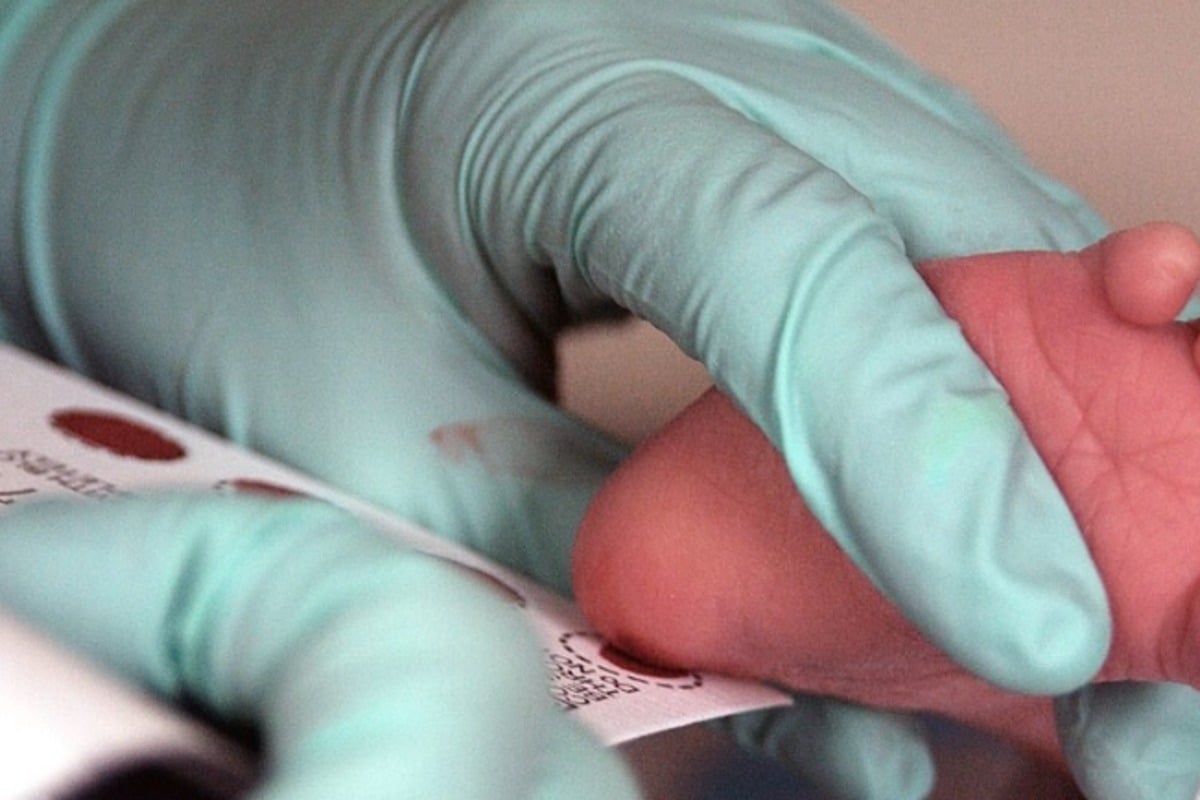
Wisconsin health officials have initiated the formal process to include Krabbe disease in the state’s newborn screening panel. This decision aims to prevent future families from experiencing the devastating late diagnosis that led to the death of Collin Cushmann in 2019. The proposal is currently in the rule-making phase and may take several months to two years before testing becomes available. For families in Wisconsin, this change represents a significant step in enhancing public health safety for a condition that can progress rapidly in infants.
Kevin Cushmann, Collin’s father, expressed mixed emotions about the development, stating, “It’s a little bittersweet, because it’s my last tie to the living Collin.” The Cushmann family has actively advocated for the addition of Krabbe testing to the screening program since 2015. According to FOX6, Kirsten Johnson, the Secretary-designee of the Wisconsin Department of Health Services, has signed a letter recommending that Krabbe be added to the screening list.
Rule-Making Process and Timeline
The Wisconsin Department of Health Services is advancing this change under Chapter DHS 116 as Clearinghouse Rule CR 25-086. The department’s administrative rules page provides details on the proposed rule text, analysis, and information about public hearings. The public will have a chance to comment on the proposed rule, which is a critical part of the rule-making process. Once finalized, the implementation of the new screening, including laboratory setup and clinical follow-up pathways, could still take up to two years.
Early detection of Krabbe disease is crucial. This inherited leukodystrophy typically presents in infancy and is estimated to affect roughly one in 100,000 births, according to the Orphanet Journal of Rare Diseases. Research indicates that the most effective treatment for infantile Krabbe, hematopoietic stem cell transplant, is most successful when performed before the infant reaches four to six weeks of age. This tight timeline highlights the urgent need for newborn screening and rapid confirmatory testing.
Implications for Families
Currently, Wisconsin’s newborn screening program tests for 50 conditions. Once implemented, Krabbe disease will become the 51st condition screened. Laboratory experts recommend a two-tier testing strategy to minimize false positives. This approach involves an initial GALC enzyme assay followed by psychosine measurement, ensuring that the most urgent cases are identified swiftly, as noted by ScienceDirect.
To facilitate public engagement, the Wisconsin Department of Health Services has made documents, proposed rule texts, and instructions for submitting comments available on their administrative rules site. Parents can also access fact sheets and frequently asked questions regarding abnormal screening results, confirmatory testing processes, and referrals for specialty care through the department’s newborn screening page.
The move to add Krabbe disease to Wisconsin’s newborn screening is a significant step toward improving health outcomes for infants and providing families with the timely information necessary for effective treatment.